


Page 113 - JSOM Summer 2019
P. 113
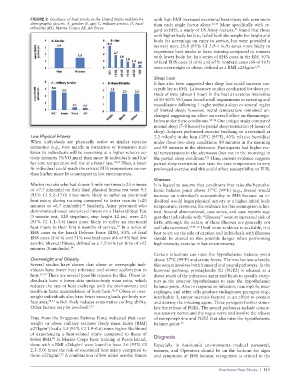
FIGURE 2  Incidence of heat stroke in the United States military by   with high BMI increased exertional heat injury risk even more
              demographic factors. A, gender; B, age; C, military service, D, race/  than each single factor alone. 32,33  More specifically with re-
              ethnicity; MC, Marine Corps; AF, Air Force.
                                                                 gard to EHS, a study of US Army recruits,  found that those
                                                                                                  43
                                                                 with higher body fat (i.e., failed both the weight for height and
                                                                 body fat screenings on entry to service, but were provided a
                                                                 waiver) were 21.4 (95% CI 3.9–116.9) times more likely to
                                                                 experience heat stroke in basic training compared to trainees
                                                                 with lower body fat. In a series of EHS cases in the IDF, 50%
                                                                 of fatal EHS cases (3 of 6) and 65% nonfatal cases (68 of 105)
                                                                 were overweight or obese, defined as a BMI >25kg/m .
                                                                                                          2 34
                                                                 Sleep Loss
                                                                 It has also been suggested that sleep loss could increase sus-
                                                                 ceptibility to EHS. Laboratory studies conducted for short pe-
                                                                 riods of time (about 1 hour) in the heat at exercise intensities
                                                                 of 50–60% VO max found small impairments in sweating and
                                                                             2
                                                                 vasodilation following 1 night without sleep or several nights
                                                                 of  limited  sleep;  however,  rectal  temperature  remained  un-
                                                                 changed suggesting no effect on overall effect on thermoregu-
                                                                 lation under these conditions. 44–46  One unique study compared
                                                                 normal sleep (7–8 hours) to partial sleep restriction (4 hours of
                                                                 sleep). Subjects performed exercise (walking on a treadmill at
              Low Physical Fitness                               2.2 miles/h) in the heat (35°C [95°F], 40% relative humidity)
              When individuals are physically active at similar exercise   under these two sleep conditions: 80 minutes in the morning
              intensities  (e.g.,  foot  march  in  formation  or  formation  run)   and 80 minutes in the afternoon. Participants had higher rec-
              lesser fit individuals will be exercising at a higher relative ac-  tal temperatures in the afternoon (but not in the morning) in
              tivity intensity (%VO max) than more fit individuals and his/  the partial sleep condition. / Thus, current evidence suggests
                                                                                      47
                              2
              her core temperature will rise at a faster rate. 30,31  Thus, a lesser   partial sleep restriction can raise the core temperature in very
              fit individual could reach the critical EHS temperature sooner   prolonged exercise and this could affect susceptibility to EHS.
              than his/her more fit counterpart in hot environments.
                                                                 Illnesses
              Marine recruits who had slower 3-mile run times (>23 minutes   It is logical to assume that conditions that raise the hypotha-
              or >7.7 min/mile) on their final physical fitness test were 9.5   lamic balance point above 37°C (99°F) (e.g., fevers) would
              (95% CI 5.2–17.0) times more likely to suffer an exertional   increase an individual’s susceptibility to EHS because an in-
              heat injury during training compared to faster recruits (<20   dividual would begin physical activity at a higher initial body
              minutes or <6.7 min/mile).  Similarly, Army personnel who   temperature. However, the evidence for this assumption is lim-
                                   32
              demonstrated lower entry-level fitness on a Harvard Step Test   ited. Several observational, case series, and case reports sug-
              (5-minute test, 120 steps/min, step height 12 in.) were 2.0   gest that individuals with “illnesses” were at increased risk of
              (95%  CI  1.1–3.6) times  more  likely  to  suffer  an  exertional   EHS, although the nature of these illnesses are generally not
              heat injury in their first 6 months of service.  In a series of   well characterized. 34,48–52  Until more evidence is available, it is
                                                 33
              EHS  cases  in  the  Israeli  Defense  Force  (IDF),  83%  of  fatal   best to err on the side of caution and individuals with illnesses
              EHS cases (5 of 6) and 71% nonfatal cases (66 of 93) had low   should be alerted to this possible danger when performing
              aerobic physical fitness, defined as a 1.5-mile run time of >12   high intensity exercise in hot environments.
              minutes (8 min/mile). 34
                                                                 Certain infections can raise the hypothalamic balance point
              Overweight and Obesity                             above 37°C (99°F) and create fevers. The mechanism whereby
              Several studies  have shown that obese or overweight indi-  this occurs involves both humoral and neural pathways. In the
              viduals have lower heat tolerance and slower acclimation to   humoral pathway, prostaglandin E2 (PGE2) is released as a
              heat. 35–37  There are several possible reasons for this. Obese in-  direct result of the infectious agent and binds to specific recep-
              dividuals have a lower skin surface:body mass ratio, which   tors in the anterior hypothalamus to raise the hypothalamic
              reduces the rate of heat exchange with the environment and   balance point. Also in response to infection, neutrophils, mac-
              results in faster accumulation of body heat. 38,39  Obese or over-  rophages, and other cells produce endogenous pyrogens (e.g.,
              weight individuals also have fewer sweat glands per body sur-  interleukin 1, tumor necrosis factors) in an effort to contain
              face area, 40,41  which likely reduces evaporative cooling ability.   and destroy the infecting agent. These pyrogens further stimu-
              Other factors may be involved. 7,37                late the release of PGE2. The neural pathways include cutane-
                                                                 ous sensory nerves and the vagus nerve and involve the release
              Data from the Singapore Defense Force indicated that over-  of norepinephrine and PGE2 that also raise the hypothalamic
              weight or obese military trainees (body mass index [BMI]   balance point. 53
              ≥27kg/m ) had a 3.5 (95% CI 1.9–6.6) times higher likelihood
                    2
              of experiencing a heat-related injury compared to those of
              lower BMI.  In Marine Corps basic training at Parris Island,   Diagnosis
                       42
              those with a BMI >26kg/m  were found to have 3.6 (95% CI   Especially in  hot-humid environments  medical  personnel,
                                   2
              2.5–5.0) times the risk of exertional heat injury compared to   trainers, and Operators should be on the lookout for signs
              those <22kg/m .  A combination of low initial aerobic fitness   and symptoms of EHS because recognition is critical to the
                         2 32
                                                                                           Exertional Heat Stroke  |  111

