


Page 75 - JSOM Winter 2018
P. 75
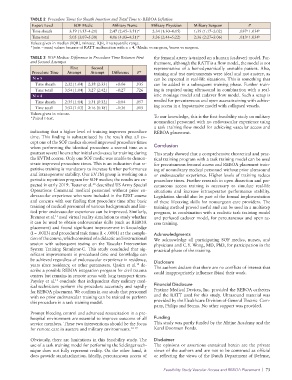
TABLE 2  Procedure Times for Sheath Insertion and Total Time to REBOA Inflation
              Expert Level     SOF Medic       Military Nurse  Military Physician  Military Surgeon     P
              Time sheath     3:59 (1:55–4:21)  2:47 (2:45–3:51)*  2:34 (1:30–4:15)  1:39 (1:17–2:02)  .037  / .034 b
                                                                                                       a
                                                                                                       a
              Time total      5:05 (3:07–5:38)  4:06 (4:03–4:51)*  3:36 (2:44–5:22)  2:36 (2:27–3:06)  .013  / .034 b
              Values given in median (IQR), min:sec. IQR, iInterquartile range.
                                                                       b
              *(min – max) values because of RATT malfunction with n = 4.  Medic vs surgeon,  nurse vs surgeon.
                                                         a
              TABLE 3  SOF Medics: Difference in Procedure Time Between First   the femoral artery is trained on a human (cadaver) model. Fur-
              and Second Attempts                                thermore, although the RATT is a flow model, the model is not
                              First    Second                    representative of a hemodynamically unstable patient. Also,
              Procedure Time  Attempt  Attempt  Difference  P*   training and test environments were ideal and not austere, as
              N = 5                                              can be expected in real-life situations. This is something that
                 Time sheath  2:32 [1:04]  2:38 [2:33]  +0:06  .935  can be added in a subsequent training phase. Further train-
                 Time total  3:54 [1:04]  3:27 [2:42]  –0:27  .726  ing is required using ultrasound in combination with a real-
              N = 4                                              istic moulage model and cadaver flow model. Such a setup is
                 Time sheath   2:35 [1:14]  1:31 [0:32]  –1:04   .057  needed for percutaneous and open access training with achiev-
                 Time total  3:52 [1:13]  2:16 [0:18]  –1:36  .015  ing access in a hypotensive model with collapsed vessels.
              Values given in min:sec.
              *Paired t-test.                                    To our knowledge, this is the first feasibility study on military
                                                                 nonmedical personnel with no endovascular experience using
                                                                 a task training flow model for achieving vascular access and
              indicating that a higher level of training improves procedure   REBOA placement.
              time. This finding is substantiated by the result that all ex-
              cept one of the SOF medics showed improved procedure times
              when performing the identical procedure a second time as a   Conclusion
              posttest several hours after initial endovascular training during   This study showed that a comprehensive theoretical and prac-
              the EVTM course. Only one SOF medic was unable to demon-  tical training program with a task training model can be used
              strate improved procedure times. This is an indication that re-  for percutaneous femoral access and REBOA placement train-
              petitive training is mandatory to increase further performance   ing of nonmilitary medical personnel without prior ultrasound
              and intraoperator stability. Our EVTM group is working on a   or endovascular experience. Higher levels of training reduce
              periodic repetition program for SOF medics; the results are ex-  procedure times. Further research in open dissection and per-
              pected in early 2019. Teeter et al.  described US Army Special   cutaneous access training is necessary to simulate real-life
                                       10
              Operations Command medical personnel without prior en-  situations and increase intraoperator performance stability.
              dovascular experience who were included in the BEST course   Legislation should also be part of the formal implementation
              and concurs with our finding that procedure time after basic   of these lifesaving skills for nonsurgeon care providers. The
              training of medical personnel of various backgrounds and lim-  training method proved useful and can be used in a multistep
              ited prior endovascular experience can be improved. Similarly,   program, in combination with a realistic task training model
              Brenner et al.  used virtual reality simulation to study whether   and perfused cadaver model, for percutaneous and open ac-
                        11
              it can be used to obtain endovascular skills (such as REBOA   cess training.
              placement) and found significant improvement in knowledge
              (I = .0013) and procedural task times (I < .0001) at the comple-  Acknowledgments
              tion of the course, which consisted of a didactic and instructional   We acknowledge all participating SOF medics, nurses, and
              session with subsequent testing on the Vascular Intervention   physicians and C.Y. Wong, MD, PhD, for participation in the
              System Training Simulator-C. This study concluded that sig-  practical phase of the training.
              nificant improvements in procedural time and knowledge can
              be achieved regardless of endovascular experience in residency,
              years since residency, or other parameters. Qasim et al.  de-  Disclosure
                                                         12
                                                                 The authors declare that there are no conflicts of interest that
              scribe a possible REBOA integration program for civil trauma   could inappropriately influence (bias) their work.
              centers but remains in remote areas with long transport times.
              Paysley et al.  conclude that independent duty military med-
                        13
              ical technicians perform the procedure accurately and rapidly   Financial Disclosure
              for REBOA placement. We confirm in our study that personnel   Prytime Medical Devices, Inc. provided the REBOA catheters
              with no prior endovascular training can be trained to perform   and the RATT used for this study. Ultrasound material was
              this procedure in a task training model.           provided by the Healthcare Division of General Electric  Com-
                                                                 pany, Philips and Secma. No other support was provided.
              Prompt bleeding control and advanced resuscitation in a pre-
              hospital environment are essential to improve outcome of all   Funding
              service members. These two interventions should be the focus   This study was partly funded by the Alrijne Academy and the
              for remote care in austere and military environments. 14–17  Karel Doorman Fonds.

              Obviously, there are limitations in this feasibility study. The   Disclaimer
              use of a task training model for performing the Seldinger tech-  The opinions or assertions contained herein are the private
              nique does not fully represent reality. On the other hand, it   views of the authors and are not to be construed as official
              does provide standardization. Ideally, percutaneous access of   or reflecting the views of the Dutch Department of Defense,

                                                                     Feasibility Study Vascular Access and REBOA Placement  |  73

