


Page 73 - JSOM Winter 2018
P. 73
model could be used for training to acquire the skills needed
              to adequately place an endovascular sheath in a femoral ar-  BOX 1
              tery model and subsequently place a REBOA catheter in aortic
              zone I (Figure 1) by military nonmedical personnel with lim-  Instructions for Achieving Vascular Access
              ited or no endovascular experience.                             and REBOA Placement

                                                                       chieving vascular access is the first step in REBOA
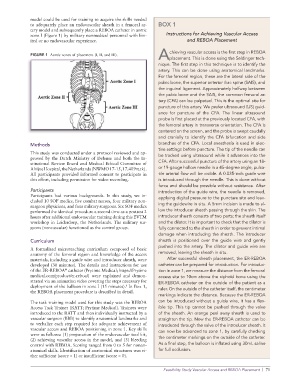
              FIGURE 1  Aortic zones of placement (I, II, and III).
                                                                  Aplacement. This is done using the Seldinger tech-
                                                                  nique. The first step in this technique is to identify the
                                                                  artery. This can be done using anatomical landmarks.
                                                                  For the femoral region, these are the lateral side of the
                                                                  pubic bone, the superior anterior iliac spine (SAIS), and
                                                                  the inguinal ligament. Approximately halfway between
                                                                  the pubic bone and the SAIS, the common femoral ar-
                                                                  tery (CFA) can be palpated. This is the optimal site for
                                                                  puncture of this artery. We prefer ultrasound (US) guid-
                                                                  ance for puncture of the CFA. The linear ultrasound
                                                                  probe is first placed at the previously located CFA, with
                                                                  the femoral artery in transverse orientation. The CFA is
                                                                  centered on the screen, and the probe is swept caudally
                                                                  and cranially to  identify the  CFA  bifurcation  and side
              Methods                                             branches of the CFA. Local anesthesia is used in elec-
                                                                  tive settings before puncture. The tip of the needle can
              This study was conducted under a protocol reviewed and ap-
              proved by the Dutch Ministry of Defense and both the In-  be tracked using ultrasound while it advances into the
              stitutional Review Board and Medical Ethical Committee of   CFA. After successful puncture of the artery using an 18-
              Alrijne Hospital, the Netherlands (NWMO 17-15, 17.409rt.tk).    or 19-gauge hollow needle in a 45-degree angle, pulsa-
              All participants provided informed consent to participate in   tile arterial flow will be visible. A 0.035-inch guide wire
              this effort, including permission for video recording.  is introduced through the needle. This is done without
                                                                  force and should be possible without resistance. After
              Participants                                        introduction of the guide wire, the needle is removed,
              Participants had various backgrounds. In this study, we in-  applying digital pressure to the puncture site and leav-
              cluded 10 SOF medics, five combat nurses, four military non-
              surgeon physicians, and four military surgeons. Six SOF medics   ing the guidewire in situ. A 5mm incision is made to al-
              performed the identical procedure a second time as a posttest 2   low the introducer sheath passing through the skin. The
              hours after additional endovascular training during this EVTM   introducer sheath consists of two parts: the sheath itself
              workshop in Leiderdorp, the Netherlands. The military sur-  and the dilator. It is important to check that the dilator is
              geons (nonvascular) functioned as the control group.  fully connected to the sheath in order to prevent intimal
                                                                  damage when introducing the sheath. The introducer
              Curriculum                                          sheath is positioned over the guide wire and gently
                                                                  pushed into the artery. The dilator and guide wire are
              A formalized microteaching curriculum composed of basic
              anatomy of the femoral region and knowledge of the access   removed, leaving the sheath in situ.
              materials, including a guide wire and introducer sheath, were   After successful sheath placement, the ER-REBOA
              developed (30 minutes). The details and instructions for use   catheter can be prepared for introduction. For introduc-
              of the ER-REBOA  catheter (Prytime Medical; https://Prytime   tion in zone 1, we measure the distance from the femoral
                            ®
              medical.com/product/er-reboa/) were explained and demon-  access site to 10cm above the xiphoid bone using the
              strated via an animation video covering the steps necessary for   ER- REBOA catheter on the outside of the patient as a
              deployment of the balloon in zone I (15 minutes).  In Box 1,
                                                     6
              the REBOA placement procedure is described in detail.  ruler. On the outside of the catheter itself, the centimeter
                                                                  markings indicate the distance. Because the  ER- REBOA
              The task training model used for this study was the REBOA   can be introduced without a guide wire, it has a flex-
              Access Task Trainer (RATT; Prytime Medical). Trainees were   ible tip. This tip cannot be pushed through the valve
              introduced to the RATT and then individually instructed by a   of the sheath. An orange peel away sheath is used to
              vascular surgeon (BBB) to identify anatomical landmarks and   straighten the tip. Now the ER- REBOA catheter can be
              to verbalize each step required for adequate achievement of   introduced through the valve of the introducer sheath. It
              vascular access and REBOA positioning in zone 1. Key skills   can now be advanced to zone 1, by carefully checking
              were as follows: (1) preparation of the endovascular tool kit,
              (2) achieving vascular access in the model, and (3) bleeding   the centimeter markings on the outside of the catheter.
              control with REBOA. Scoring ranged from 0 to 5 for nonan-  As a final step, the balloon is inflated using 30mL saline
              atomical skills. Identification of anatomical structures was ei-  for full occlusion.
              ther sufficient (score = 1) or insufficient (score = 0).

                                                                     Feasibility Study Vascular Access and REBOA Placement  |  71

