


Page 95 - JSOM Summer 2018
P. 95
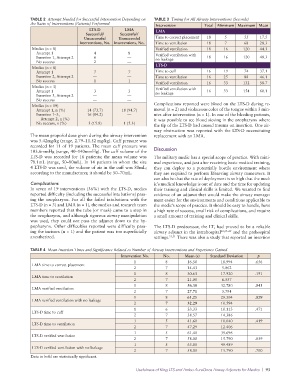
TABLE 2  Attempt Needed for Successful Intervention Depending on   TABLE 3  Timing for All Airway Interventions (Seconds)
              the Ratio of Interventions (Patients) Performed    Intervention        Total  Minimum Maximum Mean
                                      LTS-D          LMA         LMA
                                    Successful/    Successful/
                                    Unsuccessful   Unsuccessful   Time to correct placement  18  5    55    17.5
                                  Interventions, No. Interventions, No.  Time to ventilation  18  7   68    28.3
              Medics (n = 8)                                     Verified ventilation  18    16      120    44.3
                Attempt 1               4             8          Verified ventilation with
                Insertion 1, Attempt 2  6             —          no leakage           18     16      120    48.3
                No success              2             —
              Medics (n = 8)                                     LTS-D
                Attempt 1               7             7          Time to cuff         16     19       74    37.1
                Insertion 2, Attempt 2  —             —          Time to ventilation  16     25       88    46.1
                No success              1             1
                                                                 Verified ventilation  16    33      132    58.7
              Medics (n = 3)                                     Verified ventilation with
                Attempt 1               3             3          no leakage           16     33      154    60.1
                Insertion 3, Attempt 2  —             —
                No success             —              —
              Medics (n = 19)                                    Complications reported were blood on the LTS-D during re-
                Attempt 1, n (%)     14 (73.7)     18 (94.7)     moval (n = 2) and violaceous color of the tongue within 3 min-
                Insertion 1–3,       16 (84.2)        —          utes after intervention (n = 1). In one of the bleeding patients,
                  Attempt 2, n (%)                               it was possible to see blood sieving in the oropharynx where
                No success, n (%)    3 (15.8)       1 (5.3)      the tip of the LTS-D had caused trauma on insertion. One air-
                                                                 way  obstruction  was  reported  with  the  LTS-D  necessitating
              The mean propofol dose given during the airway intervention   replacement with an LMA.
              was 5.42mg/kg (range, 2.79–11.52 mg/kg). Cuff pressure was
              recorded for 11 of 19 patients. The mean cuff pressure was
              103.6mmHg (range, 40–140mmHg). The cuff volume of the   Discussion
              LTS-D was recorded for 16 patients; the mean volume was   The military medic has a special scope of practice. With mini-
              78.1mL (range, 50–80mL). In 14 patients in whom the size   mal experience, and just after receiving basic medical training,
              4 LTS-D was used, the volume of air in the cuff was 80mL;   they can deploy to a potentially hostile environment where
              according to the manufacturer, it should be 50–70mL.  they are required to perform lifesaving airway maneuvers. It
                                                                 can also be that the rate of deployment is so high that the med-
              Complications                                      ic’s medical knowledge is out of date and the time for updating
              In seven of 19 interventions (36%) with the LTS-D, medics   their training and clinical skills is limited. We wanted to find
              reported difficulty (including the successful intubations) pass-  evidence of an adjunct that would make the airway manage-
              ing the oropharynx. For all the failed intubations with the   ment easier for the environments and conditions applicable to
              LTS-D (n = 3) and LMA (n = 1), the medics and research team   the medic’s scope of practice. It should be easy to handle, have
              members reported that the tube (or mask) came to a stop in   a high rate of success, small risk of complications, and require
              the oropharynx, and although rigorous airway manipulation   a small amount of training and clinical skills.
              was used, they could not pass the adjunct down to the hy-
              popharynx. Other difficulties reported were difficulty pass-  The LTS-D predecessor, the LT, had proved to be a reliable
              ing the incisors (n = 1) and the patient was too superficially   airway adjunct in the intrahospital 22,27–29  and the prehospital
              anesthetized.                                      settings. 21,31  There was also a study that reported an insertion


              TABLE 4  Mean Insertion Times and Significance Related to Number of Airway Interventions and Experience Gained
                                                   Intervention No.  No.     Mean (s)   Standard Deviation  p
                                                        1            8        16.50         10.994        .656
              LMA time to correct placement
                                                        2            7        14.43          5.062
                                                        1            8        30.63         17.920        .191
              LMA time to ventilation
                                                        2            7        21.00          6.557
                                                        1            8        56.38         32.780        .043
              LMA verified ventilation
                                                        2            7        27.71          5.794
                                                        1            8        61.25         29.504        .029
              LMA verified ventilation with no leakage
                                                        2            7        32.29         10.594
                                                        1            6        33.33         10.113        .471
              LTS-D time to cuff
                                                        2            7        38.57         14.386
                                                        1            5        41.60         10.040        .419
              LTS-D time to ventilation
                                                        2            7        47.29         12.406
                                                        1            5        61.40         39.696
              LTS-D verified ventilation
                                                        2            7        58.00         15.790        .839
                                                        1            5        65.80         49.489
              LTS-D verified ventilation with no leakage
                                                        2            7        58.00         15.790        .700
              Data in bold are statistically significant.

                                                         Usefulness of King LTS and Ambu AuraOnce Airway Adjuncts for Medics  |  93

