


Page 137 - JSOM Summer 2018
P. 137
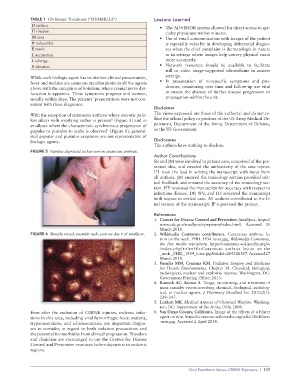
TABLE 1  Cholinergic Toxidrome (“DUMBELLS”)        Lessons Learned
              D iarrhea                                            •  The ADVISSOR system allowed for direct access to spe-
              U rination                                             cialty physicians within minutes.
              M iosis                                              •  Use of email communication with images of the patient
              B radycardia                                           is especially valuable in developing differential diagno-
              E mesis                                                ses when the chief complaint is dermatologic in nature
              L acrimation                                           or in settings where images help convey physical exam
              L ethargy                                              more accurately.
              S alivation                                          •  Network resources should be available to facilitate
                                                                     still or video image-supported telemedicine in austere
              While each biologic agent has its distinct clinical presentation,   settings.
              fever and malaise are common manifestations in all the agents   •  In presentation of nonspecific symptoms and pro-
              above with the exception of botulism, where cranial nerve dys-  dromes, monitoring over time and follow-up are vital
              function is apparent. These symptoms progress and worsen,   to ensure the absence of further disease progression or
              usually within days. The patients’ presentations were not con-  propagation within the unit.
              sistent with these diagnoses.
                                                                 Disclaimer
              With the exception of cutaneous anthrax where necrotic pain-  The views expressed are those of the author(s) and do not re-
              less ulcers with overlying eschar is present  (Figure 5) and in   flect the official policy or position of the US Army Medical De-
                                               2
              smallpox where the characteristic synchronous progression of   partment, Department of the Army, Department of Defense,
              papules to pustules to scabs is observed  (Figure 6), general-  or the US Government.
                                             1
              ized papular and pustular eruptions are not representative of
              biologic agents.                                   Disclosures
                                                                 The authors have nothing to disclose.
              FIGURE 5  Painless depressed eschar seen in cutaneous anthrax.
                                                                 Author Contributions
                                                                 SB and JM were involved in patient care, conceived of the pre-
                                                                 sented idea, and ensured the authenticity of the case report.
                                                                 HL took the lead in writing the manuscript with input from
                                                                 all authors. JM ensured the toxicology section provided crit-
                                                                 ical feedback and ensured the accuracy of the toxicology sec-
                                                                 tion. HY reviewed the manuscript for accuracy with respect to
                                                                 infectious disease. DP, WV, and DF reviewed the manuscript
                                                                 with respect to critical care. All authors contributed to the fi-
                                                                 nal version of the manuscript. JP supervised the project.

                                                                 References
                                                                 1.  Centers for Disease Control and Prevention. Smallpox. https://
                                                                   www.cdc.gov/smallpox/symptoms/index.html. Accessed 26
                                                                   March 2018.
              FIGURE 6  Sharply raised, pustular rash, seen on day 6 of smallpox.  2.  Wikimedia  Commons  contributors.  Cutaneous  anthrax  le-
                                                                   sion on the neck. PHIL 1934 lores.jpg, Wikimedia Commons,
                                                                   the free media repository,  https://commons.wikimedia.org/w
                                                                   /index.php?title=File:Cutaneous_anthrax_lesion_on_the
                                                                   _neck._PHIL_1934_lores.jpg&oldid=204326307. Accessed 27
                                                                   March 2018.
                                                                 3.  Fuenfer MM, Creamer KM. Pediatric Surgery and Medicine
                                                                   for Hostile Environments. Chapter 38: Chemical, biological,
                                                                   radiological, nuclear and explosive injuries. Washington, DC:
                                                                   Government Printing Office; 2013.
                                                                 4.  Ramesh AC, Kumar S. Triage, monitoring, and treatment of
                                                                   mass casualty events involving chemical, biological, radiolog-
                                                                   ical, or nuclear agents. J Pharmacy Bioallied Sci. 2010;2(3):
                                                                   239–247.
                                                                 5.  Lenhart MK. Medical Aspects of Chemical Warfare. Washing-
                                                                   ton, DC: Department of the Army, USA; 2008.
              Even after the exclusion of CBRNE injuries, endemic infec-  6.  San Diego County, California. Image of the effects of a blister
              tions in this area, including viral hemorrhagic fever, malaria,   agent on skin. https://commons.wikimedia.org/wiki/File:Blister
              trypanosomiasis, and schistosomiasis, are important diagno-  -arm.jpg. Accessed 2 April 2018.
              ses  to  consider,  in regard  to both  isolation  precautions  and
              the potential for morbidity from clinical progression. Travelers
              and clinicians are encouraged to use the Centers for Disease
              Control and Prevention resources before departure to endemic
              regions.


                                                                               Viral Exanthem Versus CBRNE Exposure  |  135

