


Page 38 - JSOM Spring 2018
P. 38
As the current major conflict dissipates in the Middle East,   FIGURE 1  7F ER-REBOA.
          more remote operations will take place with limited, embed-
          ded, fixed hospitals. Field bleeding control, specifically for
          NCTH, may be a bridge to get a wounded Soldier to a facility
          capable of surgical care. Independent duty military medical
          technicians (IDMTs) are specialized paramedics with more ad-
          vanced training who typically are embedded in Special Forces
          units and who may be the first advanced medic reaching in-
          jured casualties.

          Simulation training is a well-established method of training                                         Courtesy of Prytime Medical Devices, Inc.
          for skill development in the novice as well as the expert. This
          training has been used in aviation,  military operations,  and in
                                                    6
                                    5
          emergency medical services, as well as specifically with REBOA
          training.  We investigated IDMTs’ ability to learn and perform
                 7
          REBOA correctly and rapidly, as assessed by simulation.  FIGURE 2   Plastic mannequin covering (left) over vascular model.
                                                             Vascular model without covering (right).
          Methods
          Ethical approval was obtained from the University of Mary-
          land School of Medicine Institutional Review Board to assess
          for quality assurance and performance.

          Student Selection
          Eleven US Air Force (USAF) IDMTs without prior endovascu-
          lar experience participated. All IDMTs were certified as such
          by the USAF. Participants were excluded if they had taken any
          similar endovascular course or previously had similar instruc-
          tion in devices such as the REBOA. Participants were taken
          through the didactic portion of the class in groups of one, two,
          or three; then they were individually observed and monitored
          performing the procedure.

          Instructor
          To limit instructor bias, one faculty member from the Division
          of Trauma and Critical Care at the RA Cowley Shock Trauma
          Center, University of Maryland Medical Center, Baltimore,
          Maryland, conducted all teaching and evaluation throughout   questions relevant to indications, safe use of REBOA in the
          the entire course. This instructor is a clinically active trauma   clinical setting, anatomy, and technical aspects. The didactic
          surgeon with multiple REBOA placements in patients and is   portion of the course consisted of a slide program derived
          an instructor for the American College of Surgeons Basic En-  from the BEST course. These slides included indications, steps,
          dovascular Skills for Trauma (BEST) Course.        pitfalls, and anatomy for common femoral cannulation.

          Device and Simulator                               After this session, the participants performed ER-REBOA
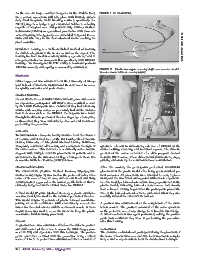
          The ER-REBOA  (Prytime  Medical Devices, http://prytime   placement in the plastic model after being given standard pa-
          medical.com/; Figure 1) was used as the preferred balloon be-  tient scenarios. All placements were intended for zone 1 place-
          cause of its ease of use, 7F size, and current Food and Drug   ment, and this was timed and repeated with six sets of patients.
          Administration approval as the lowest profile balloon that is   For this model, a femoral arterial line was prepositioned in the
          clinically being used in the United States for REBOA.  plastic model, indicating femoral arterial access had already
                                                             been achieved. Timing began when the participants placed the
          A fixed model (Prytime Medical Devices), a plastic simulator   wire in the femoral arterial catheter and ended when they suc-
          vascular model, was used for the technical portion of the class.   cessfully inflated the ER-REBOA balloon.
          This model (Figure 2) consists of plastic femoral vasculature
          joining an aortic confluence with anatomically correct dis-  A posttest was administered at the completion of the simu-
          tances for the renal arteries and the aortic arch vessels. A man-  lation session. The posttest consisted of the same questions
          nequin torso was used to cover the model to keep the plastic   as the pretest to record any change from baseline knowledge.
          vasculature hidden during placement.               A Likert evaluation was again performed, asking the partici-
                                                             pants how confident they were in performing the procedure
          Course                                             after this training.
          A questionnaire was administered before the didactic portion
          and skill session of the course to assess the IDMT’s age, years   Evaluations
          as an IDMT, and experience with this technique. The partici-  The examiner evaluated each participant during the placement of
          pants rated their comfort with the procedure using a Likert   the device. The examiner recorded time from insertion to comple-
          scale of 1 to 5. A pretest was administered that consisted of   tion, as well as any deviations from the standardized technique.


          34  |  JSOM   Volume 18, Edition 1/Spring 2018

