


Page 101 - JSOM Spring 2018
P. 101
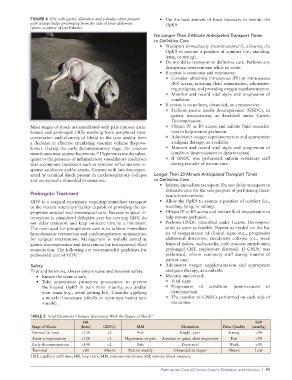
FIGURE 4  K9s with gastric dilatation and volvulus often present   •  Use the least amount of force necessary to restrain the
              with a large bulge protruding from the side of their abdomen    OpK9.
              (photo courtesy of Lee Palmer).
                                                                 No Longer Than 2-Minute Anticipated Transport Times
                                                                 to Definitive Care
                                                                   •  Transport immediately (‘scoop-and-run’), allowing the
                                                                     OpK9 to assume a position of comfort (i.e., standing,
                                                                     lying, or sitting).
                                                                   •  Do not delay transport to definitive care. Perform any
                                                                     therapeutic interventions while en route.
                                                                   •  If canine is conscious and responsive:
                                                                      o o Consider obtaining intravenous (IV) or intraosseous
                                                                        (IO) access, initiating fluid resuscitation, administer-
                                                                        ing analgesia, and providing oxygen supplementation.
                                                                      o o Monitor  and record vital  signs  and progression  of
                                                                        condition.
                                                                   •  If canine is recumbent, obtunded, or unresponsive:
                                                                      o o Perform gastric needle decompression (GNDC), or
                                                                        gastric trocarization,  as described  under  Gastric
                                                                        Decompression.
              Most stages of shock are manifested with pale mucous mem-  o o Obtain IV or IO access and initiate fluid resuscita-
              branes and prolonged CRTs resulting from peripheral vaso-  tion to help restore perfusion.
              constriction and shunting of blood to the core and/or from   o o Administer oxygen supplementation and appropriate
              a decrease in effective circulating vascular volume (hypovo-  analgesia therapy, as available.
              lemia). During the early decompensatory stage, the mucous   o o Monitor  and record vital  signs  and progression  of
              membranes may appear hyperemic.  Hyperemia results subse-  condition (improvement or deterioration).
                                         29
              quent to the presence of inflammatory vasodilatory mediators   o o If GNDC was performed, inform veterinary staff
              that accompany conditions such as systemic inflammatory re-  during transfer of patient care.
              sponse syndrome and/or sepsis. Canines with late decompen-
              sated or terminal shock present in cardiorespiratory collapse   Longer Than 20-Minute Anticipated Transport Times
              and are typically obtunded to comatose.            to Definitive Care
                                                                   •  Initiate immediate transport. Do not delay transport to
                                                                     definitive care for the sole purpose of performing thera-
              Prehospital Treatment                                  peutic interventions.
              GDV is a surgical emergency requiring immediate transport   •  Allow the OpK9 to assume a position of comfort (i.e.,
              to the nearest veterinary facility capable of providing the ap-  standing, lying, or sitting).
              propriate surgical and postsurgical care. Because surgical in-  •  Obtain IV or IO access and initiate fluid resuscitation to
              tervention is considered definitive care for treating GDV, do   help restore perfusion.
              not delay transport and keep on-scene time to a minimum.   •  Perform GNDC (described under Gastric Decompres-
              The main goal for preoperative care is to achieve immediate   sion) as soon as feasible. Repeat as needed on the ba-
              hemodynamic restoration and cardiorespiratory optimization   sis of reappearance of clinical signs (e.g., progressive
              for surgical intervention. Management is initially aimed at   abdominal distention, circulatory collapse [i.e., weak
              gastric decompression and intravenous (or intraosseous) fluid   femoral pulses, tachycardia, pale mucous membranes,
              resuscitation. The following are recommended guidelines for   prolonged CRT, respiratory distress]). If GNDC was
              prehospital care of GDV. 5                             performed, inform veterinary staff during transfer of
                                                                     patient care.
              Safety                                               •  Administer oxygen supplementation and appropriate
              First and foremost, always ensure scene and personal safety:  analgesia therapy, as available.
                •  Ensure the scene is safe.                       •  Monitor and record:
                •  Take appropriate protective precautions to prevent   o o Vital signs
                  the injured OpK9 in pain from injuring you and/or   o o Progression  of  condition  (improvement  or
                  your team (e.g., avoid getting bit). Consider applying   deterioration)
                  a muzzle if necessary (ideally an open-type basket type   o o The number of GNDCs performed on each side of
                  muzzle).                                              the canine


              TABLE 2  Vital Parameter Changes Associated With the Stages of Shock 25
                                   HR                                                                     SBP
              Stage of Shock      (bpm)     CRT(s)       MM                 Mentation        Pulse Quality  (mmHg)
              Normal (at rest)     <130      <2          Pink              Bright, alert       Strong      >90
              Acute compensatory   >120      <1      Hyperemic or pale  Anxious or quiet, alert responsive   Fair  >90
              Early decompensatory  >140     >2           Pale              Depressed           Weak       <90
              Terminal             <80      Absent    Pale to muddy      Obtunded to stupor    Absent     Low
              CRT, capillary refill time; HR, heart rate; MM, mucous membrane; SBP, systolic blood pressure.

                                                                   Prehospital Care of Canine Gastric Dilatation and Volvulus  |  95

