


Page 67 - Journal of Special Operations Medicine - Fall 2017
P. 67
before treatment or a significant deviation from protocol oc-  The  time  it  took  to pack  both  the  test  product  and  Kerlix
              curred. An overview of the experimental protocol is shown in    backing was defined as pack time. Hemostasis was defined as
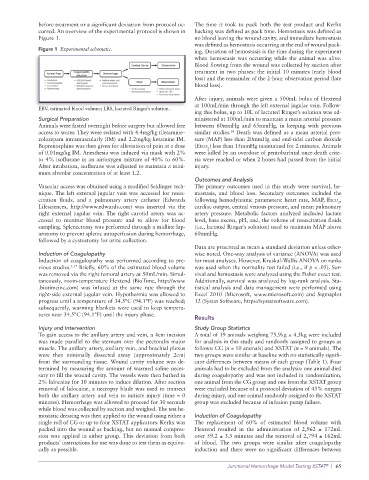
              Figure 1.                                          no blood leaving the wound cavity, and immediate hemostasis
                                                                 was defined as hemostasis occurring at the end of wound pack-
              Figure 1  Experimental schematic.                  ing. Duration of hemostasis is the time during the experiment
                                                                 when hemostasis was occurring while the animal was alive.
                                                                 Blood flowing from the wound was collected by suction after
                                                                 treatment in two phases: the initial 10 minutes (early blood
                                                                 loss) and the remainder of the 2-hour observation period (late
                                                                 blood loss).
                                                                 After injury, animals were given a 500mL bolus of Hextend
                                                                 at 100mL/min through the left external jugular vein. Follow-
              EBV, estimated blood volume; LRS, lactated Ringer’s solution.
                                                                 ing this bolus, up to 10L of lactated Ringer’s solution was ad-
              Surgical Preparation                               ministered at 100mL/min to maintain a mean arterial pressure
              Animals were fasted overnight before surgery but allowed free   between 60mmHg and 65mmHg, in keeping with previous
              access to water. They were sedated with 4.4mg/kg tiletamine–  similar studies.  Death was defined as a mean arterial pres-
                                                                            18
              zolazepam intramuscularly (IM) and 2.2mg/kg ketamine IM.   sure (MAP) less than 20mmHg and end-tidal carbon dioxide
              Buprenorphine was then given for alleviation of pain at a dose   (Etco ) less than 15mmHg maintained for 2 minutes. Animals
                                                                     2
              of 0.01mg/kg IM. Anesthesia was induced via mask with 2%   were killed by an overdose of pentobarbital once death crite-
              to 4% isoflurane in an air/oxygen mixture of 40% to 60%.   ria were reached or when 2 hours had passed from the initial
              After intubation, isoflurane was adjusted to maintain a mini-  injury.
              mum alveolar concentration of at least 1.2.
                                                                 Outcomes and Analysis
              Vascular access was obtained using a modified Seldinger tech-  The primary outcomes used in this study were survival, he-
              nique. The left external jugular vein was accessed for resus-  mostasis, and blood loss. Secondary outcomes included the
              citation fluids, and a pulmonary artery catheter (Edwards   following hemodynamic parameters: heart rate, MAP, Etco ,
                                                                                                                2
              Lifesciences,  http://www.edwards.com) was inserted via the   cardiac output, central venous pressure, and mean pulmonary
              right external jugular vein. The right carotid artery was ac-  artery  pressure.  Metabolic  factors  analyzed  included  lactate
              cessed  to  monitor  blood pressure  and to  allow  for blood   level, base excess, pH, and, the volume of resuscitation fluids
              sampling. Splenectomy was performed through a midline lap-  (i.e., lactated Ringer’s solution) used to maintain MAP above
              arotomy to prevent splenic autoperfusion during hemorrhage,   60mmHg.
              followed by a cystostomy for urine collection.
                                                                 Data are presented as mean ± standard deviation unless other-
              Induction of Coagulopathy                          wise noted. One-way analysis of variance (ANOVA) was used
              Induction of coagulopathy was performed according to pre-  for most analyses. However, Kruskal-Wallis ANOVA on ranks
              vious studies. 5,17  Briefly, 60% of the estimated blood volume   was used when the normality test failed (i.e., if p < .05). Sur-
              was removed via the right femoral artery at 50mL/min. Simul-  vival and hemostasis were analyzed using the Fisher exact test.
              taneously, room-temperature Hextend (BioTime, http://www   Additionally, survival was analyzed by log-rank analysis. Sta-
              .biotimeinc.com)  was  infused  at  the  same  rate  through  the   tistical analysis and data management were performed using
              right-side external jugular vein. Hypothermia was allowed to   Excel  2010  (Microsoft,  www.microsoft.com)  and Sigmaplot
              progress until a temperature of 34.5°C (94.1°F) was reached;   12 (Systat Software, https://systatsoftware.com).
              subsequently, warming blankets were used to keep tempera-
              tures near 34.5°C (94.1°F) until the injury phase.
                                                                 Results
              Injury and Intervention                            Study Group Statistics
              To gain access to the axillary artery and vein, a 4cm incision   A total of 19 animals weighing 75.9kg ± 4.5kg were included
              was made parallel to the sternum over the pectoralis major   for analysis in this study and randomly assigned to groups as
              muscle. The axillary artery, axillary vein, and brachial plexus   follows: CG (n = 10 animals) and XSTAT (n = 9 animals). The
              were then minimally dissected away (approximately 2cm)   two groups were similar at baseline with no statistically signifi-
              from the surrounding tissue. Wound cavity volume was de-  cant differences between means of each group (Table 1). Four
              termined by measuring the amount of warmed saline neces-  animals had to be excluded from the analysis: one animal died
              sary to fill the wound cavity. The vessels were then bathed in   during coagulopathy and was not included in randomization,
              2% lidocaine for 10 minutes to induce dilation. After suction   one animal from the CG group and one from the XSTAT group
              removal of lidocaine, a necropsy blade was used to transect   were excluded because of a protocol deviation of 45% oxygen
              both the axillary artery and vein to initiate injury (time = 0   during injury, and one animal randomly assigned to the XSTAT
              minutes). Hemorrhage was allowed to proceed for 30 seconds   group was excluded because of infusion pump failure.
              while blood was collected by suction and weighed. The test he-
              mostatic dressing was then applied to the wound using either a   Induction of Coagulopathy
              single roll of CG or up to four XSTAT applicators. Kerlix was   The replacement of 60% of estimated blood volume with
              packed into the wound as backing, but no manual compres-  Hextend  resulted  in  the  administration  of  2,962  ±  172mL
              sion was applied in either group. This deviation from both   over 59.2 ± 3.5 minutes and the removal of 2,794 ± 162mL
              products’ instructions for use was done to test them as equivo-  of blood. The two groups were similar after coagulopathy
              cally as possible.                                 induction and there were no significant differences between

                                                                           Junctional Hemorrhage Model Testing XSTAT   |  65
                                                                                                            ®

