


Page 149 - Journal of Special Operations Medicine - Spring 2017
P. 149
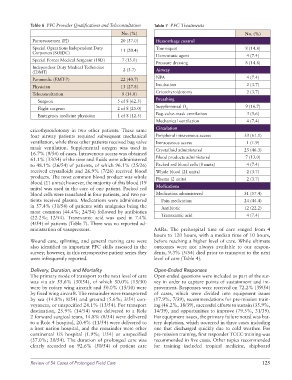
Table 6  PFC Provider Qualifications and Teleconsultation  Table 7  PFC Treatments
                                                   No. (%)                                            No. (%)
              Pararescuemen (PJ)                   20 (37.0)     Hemorrhage control
              Special Operations Independent Duty   11 (20.4)    Tourniquet                           8 (14.8)
              Corpsmen (SOIDC)
                                                                 Hemostatic agent                      4 (7.4)
              Special Forces Medical Sergeant (18D)  7 (13.0)
                                                                 Pressure dressing                    8 (14.8)
              Independent Duty Medical Technician   2 (3.7)
              (IDMT)                                             Airway
              Paramedic (EMT-P)                    22 (40.7)     NPA                                   4 (7.4)
              Physician                            15 (27.8)     Intubation                            2 (3.7)
              Teleconsultation                     8 (14.8)      Cricothyroidotomy                     2 (3.7)
                                                                 Breathing
                 Surgeon                          5 of 8 (62.5)
                 Flight surgeon                   2 of 8 (25.0)  Supplemental O 2                     9 (16.7)
                 Emergency medicine physician     1 of 8 (12.5)  Bag-valve-mask ventilation            3 (5.6)
                                                                 Mechanical ventilation                4 (7.4)

              cricothyroidotomy in two other patients. These same   Circulation
              four airway patients required subsequent mechanical   Peripheral intravenous access     33 (61.1)
              ventilation, while three other patients received bag valve   Intraosseous access         1 (1.9)
              mask ventilation. Supplemental oxygen was used in   Crystalloid administered            25 (46.3)
              16.7% (9/54) of cases. Intravenous access was obtained
              61.1% (33/54) of the time and fluids were administered   Blood products administered    7 (13.0)
              to 48.1% (26/54) of patients, of which 96.1% (25/26)   Packed red blood cells (8 units)  4 (7.4)
              received crystalloids and 26.9% (7/26) received blood   Whole blood (21 units)           2 (3.7)
              products. The most common blood product was whole   Plasma (2 units)                     2 (3.7)
              blood (21 units); however, the majority of this blood (19
              units) was used in the care of one patient. Packed red   Medications
              blood cells were transfused in four patients, and two pa-  Medication administered      31 (57.4)
              tients received plasma. Medications were administered   Pain medication                 24 (44.4)
              in 57.4% (31/54) of patients with analgesics being the   Antibiotic                     12 (22.2)
              most common (44.4%; 24/54) followed by antibiotics
              (22.2%; 12/54). Tranexamic acid was used in 7.4%      Tranexamic acid                    4 (7.4)
              (4/54) of patients (Table 7). There was no reported ad-
              ministration of vasopressors.                      AARs. The prehospital time of care ranged from 4
                                                                 hours to 120 hours, with a median time of 10 hours,
              Wound care, splinting, and general nursing care were   before reaching a higher level of care. While ultimate
              also identified as important PFC skills assessed in the   outcomes were not always available to our respon-
              survey; however, in this retrospective patient series they   dents, 9.3% (5/54) died prior to transport to the next
              were infrequently reported.                        level of care (Table 4).

              Delivery, Duration, and Mortality                  Open-Ended Responses
              The primary mode of transport to the next level of care   Open-ended questions were included as part of the sur-
              was via air 55.6% (30/54), of which 50.0% (15/30)   vey in order to capture points of sustainment and im-
              were by rotary wing aircraft and 50.0% (15/30) were   provement. Responses were received on 72.2% (39/54)
              by fixed wing aircraft. The remainder were transported   of cases, which were divided into equipment issues
              by sea (14.8%; 8/54) and ground (5.6%; 3/54) con-  (17.9%, 7/39), recommendations for pre-mission train-
              veyances, or unspecified 24.1% (13/54). For transport   ing (46.2%, 18/39), successful efforts to sustain (35.9%,
              destination, 25.9% (14/54) were delivered to a Role   14/39), and opportunities to improve (79.5%, 31/39).
              2 forward surgical team, 14.8% (8/54) were delivered   For equipment issues, the primary failure noted was bat-
              to a Role 4 hospital, 20.4% (11/54) were delivered to   tery depletion, which occurred in three cases including
              a host nation hospital, and the remainder were other   one that discharged quickly due to cold weather. For
              continental US hospital (1.9%; 1/54) or unspecified   pre-mission training, first responder TCCC training was
              (37.0%; 20/54). The duration of prolonged care was   recommended in five cases. Other topics recommended
              clearly recorded on 92.6% (50/54) of patient care   for training included tropical medicine,   shipboard


              Review of 54 Cases of Prolonged Field Care                                                     125

