


Page 24 - Journal of Special Operations Medicine - Winter 2015
P. 24
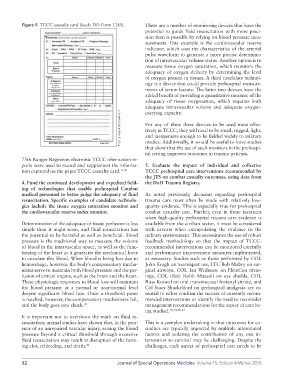
Figure 5  TCCC casualty card (back; DD Form 1380).  There are a number of monitoring devices that have the
                                                             potential to guide fluid resuscitation with more preci-
                                                             sion than is possible by relying on blood pressure mea-
                                                             surements. One example is the cardiovascular reserve
                                                             indicator, which uses the characteristics of the arterial
                                                             pulse waveform to generate a more precise determina-
                                                             tion of intravascular volume status. Another option is to
                                                             measure tissue oxygen saturation, which monitors the
                                                             adequacy  of  oxygen  delivery  by  determining  the  level
                                                             of oxygen present in tissues. A third candidate technol-
                                                             ogy is a device that could provide prehospital measure-
                                                             ments of serum lactate. The latter two devices have the
                                                             added benefit of providing a quantitative measure of the
                                                             adequacy of tissue oxygenation, which requires both
                                                             adequate intravascular volume and adequate oxygen-
                                                             carrying capacity.
                                                   Photo courtesy of US Government  For any of these three devices to be used most effec-


                                                             tively in TCCC, they will need to be small, rugged, light,
                                                             and inexpensive enough to be fielded widely to military
                                                             medics. Additionally, it would be useful to have studies
                                                             that show that the use of such monitors in the prehospi-
                                                             tal setting improves outcomes in trauma patients.
          75th Ranger Regiment: electronic TCCC after-action re-
          ports were used to record and supplement the informa-  5. Evaluate the impact of individual and collective
          tion captured on the paper TCCC casualty card. 17,25  TCCC prehospital care interventions recommended by
                                                             the JTS on combat casualty outcomes, using data from
          4. Fund the continued development and expedited field-  the DoD Trauma Registry.
          ing of technologies that enable prehospital Combat
          medical personnel to better judge the adequacy of fluid   As noted previously, decisions regarding prehospital
          resuscitation. Specific examples of candidate technolo-  trauma care must often be made with relatively low-
          gies include the tissue oxygen saturation monitor and   quality evidence. This is especially true for prehospital
          the cardiovascular reserve index monitor.          combat casualty care. Further, even in those instances
                                                             when high-quality prehospital trauma care evidence is
          Determination of the adequacy of tissue perfusion is less   available from the civilian sector, it must be considered
          simple than it might seem, and fluid resuscitation has   with caveats when extrapolating the evidence to the
          the potential to be harmful as well as beneficial. Blood   military environment. This necessitates the use of robust
          pressure is the traditional way to measure the volume   feedback  methodology  so  that  the  impact  of  TCCC-
          of blood in the intravascular space, as well as the func-  recommended interventions can be monitored carefully
          tioning of the heart as it generates the mechanical force   and performance improvement measures implemented,
          to circulate this blood. When blood is being lost due to   as necessary. Studies such as those performed by COL
          hemorrhage, however, the body’s compensatory mecha-  John Kragh on tourniquet use, LTC Bob Mabry on sur-
          nisms serve to maintain both blood pressure and the per-  gical airways, COL Ian Wedmore on HemCon dress-
          fusion of critical organs, such as the brain and the heart.   ings, COL (Ret) Robb Mazzoli on eye shields, COL
          These physiologic responses to blood loss will maintain   Russ Kotwal on oral transmucosal fentanyl citrate, and
          the blood pressure at a normal or near-normal level   Col Stacy Shackelford on prehospital analgesia are es-
            despite significant blood loss. Once a threshold point   sential to either confirm the success of currently recom-
          is reached, however, the compensatory mechanisms fail,   mended interventions or identify the need to reconsider
          and the body goes into shock. 41                   management recommendations for the aspect of care be-
                                                             ing studied. 18,20,43–47
          It is important not to overshoot the mark on fluid re-
          suscitation; animal studies have shown that, in the pres-  This is a complex undertaking in that outcomes for ca-
          ence of an unrepaired vascular injury, raising the blood   sualties are typically impacted by multiple interrelated
          pressure beyond a critical threshold through excessive   factors  and  isolating  the  contribution  of  any  one in-
          fluid resuscitation may result in disruption of the form-  tervention to survival may be challenging. Despite the
          ing clot, rebleeding, and death. 42                challenges, each aspect of prehospital care needs to be


          12                                     Journal of Special Operations Medicine  Volume 15, Edition 4/Winter 2015

