


Page 119 - Journal of Special Operations Medicine - Winter 2015
P. 119
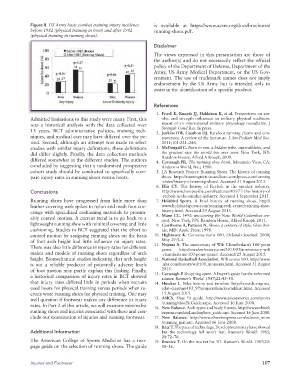
Figure 8  US Army basic combat training injury incidence   is available at  https://www.acsm.org/docs/brochures/
              before 1982 (physical training in boot) and after 1982   running-shoes.pdf.
              (physical training in running shoes).

                                                                 Disclaimer
                                                                 The views expressed in this presentation are those of
                                                                 the author(s) and do not necessarily reflect the official
                                                                 policy of the Department of Defense, Department of the
                                                                 Army, US Army Medical Department, or the US Gov-
                                                                 ernment. The use of trademark names does not imply
                                                                 endorsement by the US Army but is intended only to
                                                                 assist in the identification of a specific product.


                                                                 References

                                                                   1.  Friedl K, Knapik JJ, Hakkinen K, et al. Perspectives on aer-
              Admitted limitations to this study were many. First, this   obic and strength influences on military physical readiness:
              was a historical analysis with the data collected over   report of an international military physiology roundtable. J
                                                                    Strength Cond Res. In press.
              15 years. BCT administrative policies, training tech-    2.  Jenkins DW, Cauthon DJ. Barefoot running claims and con-
              niques, and medical care may have differed over the pe-  troversies. A review of the literature. J Am Podiatr Med Soc.
              riod. Second, although an attempt was made to select   2011;101:231–246.
              studies with similar injury definitions, these definitions     3.  McDougall C. Born to run. a hidden tribe, superathletes, and
              did differ slightly. Finally, the data collection methods   the greatest race the world has ever seen. New York, NY:
                                                                    Random House, Alfred A Knopf; 2009.
                differed somewhat in the different studies. The authors     4.  Cavanagh PR. The running shoe book. Mountain View, CA:
              concluded by suggesting that a randomized prospective   Anderson World, Inc.; 1980.
              cohort study should be conducted to specifically com-    5.  LA Research Project: Running Shoes. The history of running
              pare injury rates in running shoes versus boots.      shoes. https://runningtortoiseandhare.wordpress.com/running
                                                                    -shoes/history-of-running-shoes/. Accessed 31 August 2015.
                                                                   6.  Ellis  CY.  The history of  Reebok  in the  sneaker  industry.
              Conclusions                                           http://www.hoopsvibe.com/features/43977-the-history-of
                                                                    -reebok-in-the-sneaker-industry. Accessed 1 September 2015.
              Running shoes have progressed from little more than     7.  Holabird  Sports.  A  brief  history  of  running  shoes.  http://
              leather covering with spikes to nylon and mesh foot cov-  www.holabirdsports.com/running-tech-center/running-shoe-
              erings with specialized cushioning materials to presum-  history.html. Accessed 29 August 2015.
              ably control motion. A current trend is to go back to a     8.  Mann CC. 1493: uncovering the New World Columbus cre-
                                                                    ated. New York, NY: Random House, Alfred Knopf; 2011.
              lightweight running shoe with minimal covering and little     9.  Cawthorne A, Pattison N. Shoes: a century of style. Glen Bur-
              cushioning. Studies in BCT suggested that the effort to   nie, MD: Apple Press; 1998.
              control motion by assigning running shoes on the basis   10.  Hightower K. Converse turns 100. Orlando Sentinel. 2008;
              of foot arch height had little influence on injury rates.   May 29:3–4.
              There was also little difference in injury rates for different   11.  Nojima A. The anniversary of Wilt Chamberlain’s 100-point
                                                                    game.
                                                                           http://sneakerhistory.com/2015/03/anniversary-wilt
              makes and models of running shoes regardless of arch   -chamberlains-100-point-game/. Accessed 25 August 2015.
              height. Biomechanical studies indicating that arch height   12.  National Basketball Association. Wilt scores 100. http://www
              is  not  a  reliable  predictor  of  potentially  adverse  levels   .nba.com/history/wilt100_moments.html. Accessed 31 August
              of foot motion may partly explain this finding. Finally,   2015.
              a historical comparison of injury rates in BCT showed   13.  Cavanagh P. Shopping spree. A buyer’s guide for the informed
                                                                    runner. Runner’s World. 1987;22:43–55.
              that injury rates differed little in periods when recruits   14.  Hincker L. Nike history and timeline. http://xroads.virginia.
              used boots for physical training versus periods when re-  edu/~class/am483_97/projects/hincker/nikhist.html. Accessed
              cruits wore running shoes for physical training. One may   15 August 2015.
              well question if footwear makes any difference in injury   15.  ASICS. Shoe fit guide.  http://www.asicsamerica.com/sports
                                                                    /running/shoeFitGuide.aspx. Accessed 16 June 2008.
              rates. In Part 2 of this article, we will examine minimalist   16.  New Balance. Arch types and body frames. http://www.nbweb
              running shoes and injuries associated with these and con-  express.com/siteLanding/foot_guide.asp. Accessed 16 June 2008.
              clude our examination of injuries and running footwear.  17.  New  Balance.  http://www.nbwebexpress.com/achieve_more
                                                                    /running_gait.asp. Accessed 16 June 2008.
                                                                 18.  Baer T. The pace of technology. Developments may have slowed
              Additional Information                                but the technology lull won’t last.  Runner’s World.  1985;
                                                                    20:72–76.
              The American College of Sports Medicine has a two-  19.  Brunick T. On the market for ’87. Runner’s World. 1987;22:
              page guide on the selection of running shoes. The guide   50–56.


              Injuries and Footwear                                                                          107

