


Page 117 - Journal of Special Operations Medicine - Winter 2015
P. 117
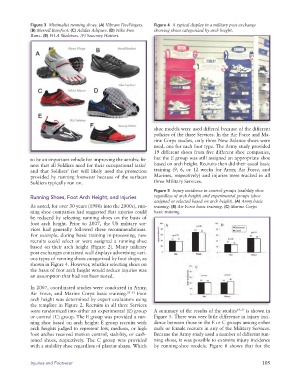
Figure 3  Minimalist running shoes. (A) Vibram FiveFingers.   Figure 4  A typical display in a military post exchange
              (B) Merrell Barefoot. (C) Adidas Adipure. (D) Nike Free   showing shoes categorized by arch height.
              Run+. (E) FILA Skeletoes. (F) Saucony Hattori.


                                                                 shoe models were used differed because of the different
                                                                 policies of the three Services. In the Air Force and Ma-
                                                                 rine Corps studies, only three New Balance shoes were
                                                                 used, one for each foot type. The Army study provided
                                                                 19 different shoes from five different shoe companies,
              to be an important vehicle for improving the aerobic fit-  but the E group was still assigned an appropriate shoe
              ness that all Soldiers need for their occupational tasks    based on arch height. Recruits then did their usual basic
                                                             1
              and that Soldiers’ feet will likely need the protection   training (9, 6, or 12 weeks for Army, Air Force, and
              provided by running footwear because of the surfaces   Marines, respectively) and injuries were tracked in all
              Soldiers typically run on.                         three Military Services.
                                                                 Figure 5  Injury incidence in control groups (stability shoe
              Running Shoes, Foot Arch Height, and Injuries      regardless of arch height) and experimental groups (shoe
                                                                 assigned or selected based on arch height). (A) Army basic
              As noted, for over 30 years (1980s into the 2000s), run-  training. (B) Air Force basic training. (C) Marine Corps
              ning shoe companies had suggested that injuries could   basic training.
              be reduced by selecting running shoes on the basis of
              foot arch height. Prior to 2007, the US military ser-
              vices had generally followed these recommendations.
              For example, during basic training in-processing, new
              recruits could select or were assigned a running shoe
              based on their arch height (Figure 2). Many military
              post exchanges contained wall displays advertising vari-
              ous types of running shoes categorized by foot shape, as
              shown in Figure 4. However, whether selecting shoes on
              the basis of foot arch height would reduce injuries was
              an assumption that had not been tested.

              In 2007, coordinated studies were conducted in Army,
              Air Force, and Marine Corps basic training. 29–31  Foot
              arch height was determined by expert evaluators using
              the template in Figure 2. Recruits in all three Services
              were randomized into either an experimental (E) group   A summary of the results of the studies 29–31  is shown in
              or control (C) group. The E group was provided a run-  Figure 5. There was very little difference in injury inci-
              ning shoe based on arch height: E group recruits with   dence between those in the E or C groups among either
              arch heights judged to represent low, medium, or high   male or female recruits in any of the Military Services.
              foot arches received motion control, stability, or cush-  Because the Army study used a number of different run-
              ioned shoes, respectively. The C group was provided   ning shoes, it was possible to examine injury incidence
              with a stability shoe regardless of plantar shape. Which   by running-shoe models. Figure 6 shows that for the


              Injuries and Footwear                                                                          105

