


Page 74 - Journal of Special Operations Medicine - Winter 2014
P. 74
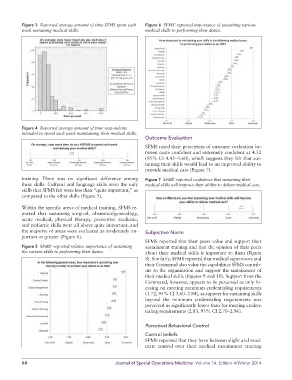
Figure 3  Reported average amount of time SFMS spent each   Figure 6  SFMS’ reported importance of sustaining various
          week sustaining medical skills.                    medical skills to performing their duties.


          Figure 4  Reported average amount of time respondents
          intended to spend each week maintaining their medical skills.
                                                             Outcome Evaluation
                                                             SFMS rated their perception of outcome evaluation be-
                                                             tween quite confident and extremely confident at 4.52
                                                             (95% CI 4.45–4.60), which suggests they felt that sus-
                                                             taining their skills would lead to an improved ability to
                                                             provide medical care (Figure 7).
          training. There was no significant difference among   Figure 7  SFMS’ reported confidence that sustaining their
          these skills. Cultural and language skills were the only   medical skills will improve their ability to deliver medical care.
          skills that SFMS felt were less than “quite important,” as
          compared to the other skills (Figure 5).

          Within the specific areas of medical training, SFMS re-
          ported that sustaining surgical, obstetrics/gynecology,
          acute medical, physical therapy, preventive medicine,
          and pediatric skills were all above quite important, and
          the majority of areas were evaluated as moderately im-  Subjective Norm
          portant or greater (Figure 6).
                                                             SFMS reported that their peers value and support their
          Figure 5  SFMS’ reported relative importance of sustaining   sustainment training and that the opinion of their peers
          the various skills to performing their duties.     about their medical skills is important to them (Figure
                                                             8). Similarly, SFMS reported that medical supervisors and
                                                             their Command also value the capabilities SFMS contrib-
                                                             ute to the organization and support the sustainment of
                                                             their medical skills (Figures 9 and 10). Support from the
                                                             Command,  however, appears to be perceived as only fo-
                                                             cusing on meeting minimum credentialing requirements
                                                             (3.72, 95% CI 3.60–3.84), as support for sustaining skills
                                                             beyond the minimum credentialing requirements was
                                                             perceived as significantly lower than for meeting creden-
                                                             tialing requirements (2.83, 95% CI 2.70–2.96).


                                                             Perceived Behavioral Control

                                                             Control beliefs
                                                             SFMS reported that they have between slight and mod-
                                                             erate control over their medical sustainment training


          64                                     Journal of Special Operations Medicine  Volume 14, Edition 4/Winter 2014

