


Page 77 - Journal of Special Operations Medicine - Winter 2014
P. 77
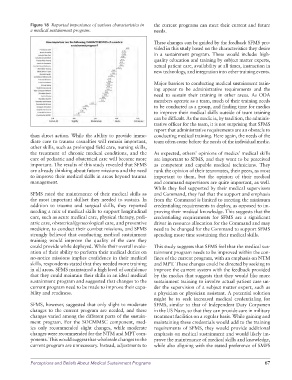
Figure 18  Reported importance of various characteristics in   the current programs can meet their current and future
              a medical sustainment program.                     needs.

                                                                 These changes can be guided by the feedback SFMS pro-
                                                                 vided in this study based on the characteristics they desire
                                                                 in a sustainment program. These would include: high-
                                                                 quality education and training by subject matter experts,
                                                                 actual patient care, availability at all times, instruction in
                                                                 new technology, and integration into other training events.

                                                                 Major barriers to conducting medical sustainment train-
                                                                 ing appear to be administrative requirements and the
                                                                 need to sustain their training in other areas. As ODA
                                                                 members operate as a team, much of their training needs
                                                                 to be conducted as a group, and finding time for medics
                                                                 to improve their medical skills outside of team training
                                                                 can be difficult. As the medic is, by tradition, the adminis-
                                                                 trative officer for the team, it is not surprising that SFMS
                                                                 report that administrative requirements are an obstacle to
              than  direct action. While the ability to provide imme-  conducting medical training. Here again, the needs of the
              diate care to trauma casualties will remain important,   team often come before the needs of the individual medic.
              other skills, such as prolonged field care, nursing skills,
              the treatment of chronic medical conditions, and the   As expected, others’ opinions of medics’ medical skills
              care of pediatric and obstetrical care will become more   are important to SFMS, and they want to be perceived
              important. The results of this study revealed that SFMS   as competent and capable medical technicians. They
              are already thinking about future missions and the need   rank the opinion of their teammates, their peers, as most
              to improve their medical skills in areas beyond trauma   important to them, but the opinion of their medical
              management.                                        and command supervisors are quite important, as well.
                                                                 While they feel supported by their medical supervisors
              SFMS rated the maintenance of their medical skills as   and Command, they feel that the support and emphasis
              the most important skillset they needed to sustain. In   from the Command is limited to meeting the minimum
              addition  to  trauma  and  surgical  skills,  they  reported   credentialing requirements to deploy, as opposed to im-
              needing a mix of medical skills to support longitudinal   proving their medical knowledge. This suggests that the
              care, such as acute medical care, physical therapy, pedi-  credentialing  requirements  for SFMS  are  a significant
              atric care, obstetrical/gynecological care, and preventive   driver in resource allocation for the Command and may
              medicine, to conduct their combat missions, and SFMS   need to be changed for the Command to support SFMS
              strongly believed that conducting medical sustainment   spending more time sustaining their medical skills.
              training would improve the quality of the care  they
              could provide while deployed. While their overall evalu-  This study suggests that SFMS feel that the medical sus-
              ation of their ability to perform their medical duties on   tainment program needs to be improved within the con-
              no-notice missions implies confidence in their medical   fines of the current program, with an emphasis on NTM
              skills, respondents stated that they needed more training   and MPT. These changes could be directed by seeking to
              in all areas. SFMS maintained a high level of confidence   improve the current system with the feedback  provided
              that they could maintain their skills in an ideal medical   by the medics that suggests that they would like more
              sustainment program and suggested that changes to the   sustainment training to involve actual patient care un-
              current program need to be made to improve their capa-  der the supervision of a subject matter expert, such as
              bility and readiness.                              a physician or physician assistant. A potential solution
                                                                 might be to seek increased medical credentialing for
              SFMS, however, suggested that only slight to moderate   SFMS, similar to that of Independent Duty Corpsmen
              changes to the current program are needed, and these   in the US Navy, so that they can provide care in military
              changes varied among the different parts of the sustain-  treatment facilities on a regular basis. While gaining and
              ment program. For the SOCMMSC component, med-      maintaining these credentials would add to the training
              ics  only  recommended  slight  changes,  while moderate   requirements of SFMS, they would provide additional
              changes were recommended for the NTM and MPT com-  emphasis on medical sustainment and would likely im-
              ponents. This would suggest that wholesale changes to the   prove the maintenance of medical skills and knowledge,
              current program are unnecessary. Instead,  adjustments to   while also aligning with the stated preference of SMFS


              Perceptions and Beliefs About Medical Sustainment Programs                                      67

