


Page 52 - Journal of Special Operations Medicine - Winter 2014
P. 52
use. These limitations include difficulty placing them at   Our study compared the efficacy of CG with NS in
          the  exact  site  of  a  hemorrhage  and  reactions  that  can   controlling arterial hemorrhage in a well-published and
          potentially cause tissue damage. Because of the issues   validated porcine traumatic femoral wound model.
          identified with using QuikClot, HemCon Bandage, and
          ChitoFlex, the current hemostatic agent of choice in com-
          bat, as recommended by the Defense Health Board Com-  Methods
          mittee on Tactical Combat Casualty Care (CoTCCC), is
          Combat Gauze (CG). 8–10                            Study Design
                                                             This study was a randomized, controlled, unblinded
          CG is a thin, flexible, nonwoven rayon–polyester blended   preclinical trial using a swine model of acute femoral
          (50% rayon and 50% polyester) gauze impregnated with   hemorrhage. Two intervention groups of eight animals
          mineral kaolin powder (Figure 1). Kaolin is a naturally   and seven animals were examined using two different
          occurring, inorganic mineral that does not contain any   hemostatic agents, NS and CG, respectively. Standard
          botanicals, biologic material, or shellfish products, and   dosages and techniques, as recommended by the man-
          has not been shown to produce an exothermic reaction   ufacturer, were used. Prior to the study, the individual
          or cause vascular complications. 8,9,11            applying the dressing (applicator) had previously done
                                                             so with each dressing more than 50 times. NS was pro-
                                                             vided directly from the manufacturer and CG was pur-
                                                             chased from Boundtree Medical (www.boundtree.com).
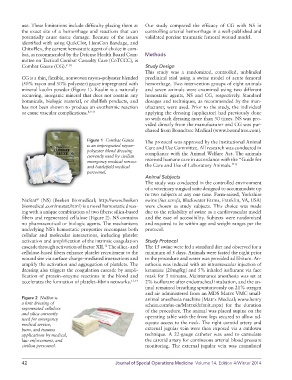
                                     Figure 1  Combat Gauze   The protocol was approved by the Institutional Animal
                                     is an impregnated rayon–  Care and Use Committee. All research was conducted in
                                     polyester blend dressing
                                     currently used by civilian   compliance with the Animal Welfare Act. The animals
                                     emergency medical service   received humane care in accordance with the “Guide for
                                     and battlefield medical   the Care and Use of Laboratory Animals.” 15
                                     personnel.
                                                             Animal Subjects
                                                             The study was conducted in the controlled environment
                                                             of a veterinary surgical suite designed to accommodate up
                                                             to two subjects at any one time. Farm-raised, Yorkshire
          NuStat  (NS) (Beeken Biomedical; http://www.beeken   swine (Sus scrofa, Blackwater Farms, Franklin, VA, USA)
                ®
          biomedical.com/nustat.html) is a novel hemostatic dress-  were chosen as study subjects. This choice was made
          ing with a unique combination of two fibers: silica-based   due to the reliability of swine as a cardiovascular model
          fibers and regenerated cellulose (Figure 2). NS contains   and the ease of accessibility. Subjects were randomized
          no pharmaceutical or biologic agents. The mechanisms   and required to be within age and weight ranges per the
          underlying NS’s hemostatic properties encompass both   protocol.
          cellular and molecular interactions, including platelet
          activation and amplification of the intrinsic coagulation   Study Protocol
          cascade through activation of factor XII.  The silica- and    The 15 swine were fed a standard diet and observed for a
                                            12
          cellulose-based fibers enhance platelet recruitment to the   minimum of 5 days. Animals were fasted the night prior
          wound site via surface-charge–mediated interactions and   to the procedure and water was provided ad libitum. An-
          amplify the activation and aggregation of platelets. The   esthesia was induced with an intramuscular injection of
          dressing also triggers the coagulation cascade by ampli-  ketamine (20mg/kg) and 5% inhaled isoflurane via face
          fication of protein–enzyme reactions in the blood and   mask for 3 minutes. Maintenance anesthesia was set at
          accelerates the formation of platelet–fibrin networks. 13,14  2% isoflurane after endotracheal intubation, and the an-
                                                             imal remained breathing spontaneously on 21% oxygen
                                                             and air administered from an MDS Matrx VMC small-
          Figure 2  NuStat is                                animal anesthesia machine (Matrx Medical; www.henry
          a knit dressing of                                 schein.com/us-en/Matrx/default.aspx) for the duration
          regenerated cellulose                              of the procedure. The animal was placed supine on the
          and silica currently
          used for emergency                                 operating table with the front legs secured to allow ad-
          medical service,                                   equate access to the neck. The right carotid artery and
          burn, and trauma                                   external jugular vein were then exposed via a cutdown
          applications by medical,                           technique. A 22-gauge catheter was used to cannulate
          law enforcement, and                               the carotid artery for continuous arterial blood pressure
          civilian personnel.                                monitoring. The external jugular vein was cannulated


          42                                     Journal of Special Operations Medicine  Volume 14, Edition 4/Winter 2014

