


Page 47 - Journal of Special Operations Medicine - Winter 2014
P. 47
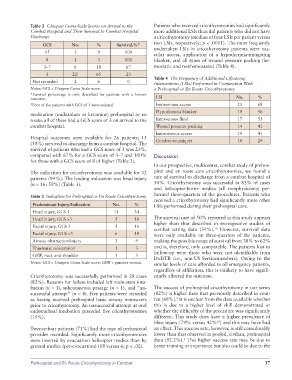
Table 2  Glasgow Coma Scale Scores on Arrival to the   Patients who received cricothyrotomies had significantly
              Combat Hospital and Their Survival to Combat Hospital   more additional LSIs than did patients who did not have
              Discharge                                          a cricothyrotomy (median of four LSIs per patient versus
                   GCS         No.       %       Survival,%*     two LSIs, respectively; p < .0011). The most frequently
                                                                 undertaken LSIs in cricothyrotomy patients were vas-
                    15          3        9           100
                                                                 cular access, application of a hypothermia- mitigating
                    8           1        3           100         blanket, and all types of wound pressure packing (he-
                   3–7          6        18          67          mostatic and nonhemostatic) (Table 4).
                    3          22 ‡      65          23
                                                                 Table 4  The Frequency of Additional Lifesaving
              Not recorded      2        6            0          Interventions (LSIs) Performed in Conjunction With
              Notes: GCS = Glasgow Coma Scale score.             a Prehospital or En Route Cricothyrotomy
              *Survival percentage is only described for patients with a known
                outcome.                                         LSI                               No.      %
              ‡ Four of the patients with GCS of 3 were sedated.   Intravenous access              23      68
                                                                 Hypothermia blanket               19      56
              medication (midazolam or ketamine) prehospital or en
              route; all of these had a GCS score of 3 on arrival to the   Intravenous fluid       17      53
              combat hospital.                                   Wound pressure packing            14      41
                                                                 Intraosseous access               14      41
              Hospital outcomes were available for 26 patients; 13   Combat tourniquet             10      29
              (50%) survived to discharge from a combat hospital. The
              survival of patients who had a GCS score of 3 was 23%,
              compared with 67% for a GCS score of 3–7 and 100%   Discussion
              for those with a GCS score of 8 of higher (Table 2).
                                                                 In our prospective, multicenter, combat study of prehos-
              The indication for cricothyrotomy was available for 32   pital and en route care cricothyrotomies, we found a
              patients (94%). The leading indication was head injury   rate of survival to discharge from a combat hospital of
              (n = 16; 50%) (Table 3).                           50%. Cricothyrotomy was successful in 82% of cases
                                                                 and helicopter-borne medics (all nonphysicians) per-
              Table 3  Indication for Prehospital or En Route Cricothyrotomy  formed three-quarters of the procedures. Patients who
                                                                 received a cricothyrotomy had significantly more other
              Predominant Injury/Indication     No.      %       LSIs performed during their prehospital care.
              Head injury, GCS 3                11      34
              Head injury, GCS >3                5      16       The survival rate of 50% reported in this study appears
                                                                 higher than that described in retrospective studies of
              Facial injury, GCS 3               5      16
                                                                 combat setting data (34%).  However, survival data
                                                                                          16
              Facial injury, GCS >3              6      19       were only available on three-quarters of the patients,
              Airway obstruction/injury          3       9       making the possible range of survival from 38% to 62%
              Traumatic evisceration             1       3       and is, therefore, only comparable. The patients lost to
                                                                 follow-up were those who were not identifiable from
              GSW, neck and shoulder             1       3
                                                                 DoDTR (i.e., non-US Servicemembers). Owing to the
              Notes: GCS = Glasgow Coma Scale score; GSW = gunshot wound.  similar levels of care afforded to all emergency patients,
                                                                 regardless of affiliation, this is unlikely to have signifi-
              Cricothyrotomy was successfully performed in 28 cases   cantly affected the outcome.
              (82%). Reasons for failure included left main-stem intu-
              bation (n = 1), subcutaneous passage (n = 1), and “un-  The success of prehospital cricothyrotomy in our series
              successful attempt” (n = 4). Five patients were recorded   (82%) is higher than that previously described in com-
                                                                          9
              as  having  received  prehospital basic  airway  maneuvers   bat (68%).  It is unclear from the data available whether
              prior to cricothyrotomy. An unsuccessful attempt at oral   this is due to a higher level of skill demonstrated or
              endotracheal intubation preceded five cricothyrotomies   whether the difficulty of the procedure was significantly
              (15%).                                             different. This study does have a higher prevalence of
                                                                 blast injury (79% versus 42% ) and this may have had
                                                                                           16
              Twenty-four patients (71%) had the type of prehospital   an effect. This success rate, however, is still considerably
              provider recorded. Significantly more cricothyrotomies   lower than that observed in pooled, civilian, prehospital
                                                                             3
              were inserted by evacuation helicopter medics than by   data (92.2%).  This higher success rate may be due to
              ground medics (pre-evacuation) (18 versus 6; p < .02).  better training or experience but also could be due to the


              Prehospital and En Route Cricothyrotomy in Combat                                               37

