


Page 55 - Journal of Special Operations Medicine - Winter 2014
P. 55
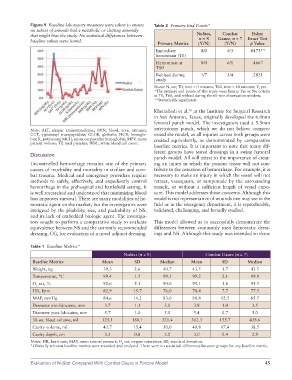
Figure 9  Baseline laboratory measures were taken to ensure   Table 2  Primary End Points*
              no subset of animals had a metabolic or clotting anomaly
              that might bias the study. No statistical differences between       NuStat,    Combat      Fisher
              baseline values were found.                                          n = 8   Gauze, n = 7  Exact Test
                                                                  Primary Metrics  (Y/N)      (Y/N)     p Value
                                                                 Immediate          8/0        4/3      .0475**
                                                                 hemostasis (T0)
                                                                 Hemostasis at      8/0        6/1       .4667
                                                                 T60
                                                                 Rebleed during     1/7        3/4       .2821
                                                                 study
                                                                 Notes: N, no; T0, time = 0 minutes; T60, time = 60 minutes; Y, yes.
                                                                 *The primary end points of this study were binary Yes or No criteria
                                                                 at T0, T60, and rebleed during the 60-min observation window.
                                                                 **Statistically significant.

                                                                 Kheirabadi et al.  at the Institute for Surgical Research
                                                                               16
                                                                 in San Antonio, Texas, originally developed the 6.0mm
                                                                 femoral punch model. The investigators used a 5.5mm
              Note:  ALT, alanine aminotransferase; BUN, blood, urea, nitrogen;   arteriotomy  punch,  which  we  do  not  believe  compro-
              GGT, γ-glutamyl transpeptidase; GLOB, globulin; HGB, hemoglo-  mised the model, as all injuries across both groups were
              bin; K, potassium; MCH, mean corpuscular hemoglobin; MPV, mean   created equivalently, as demonstrated by comparative
              platelet volume; TP, total platelets; WBC, white blood cell count.
                                                                 baseline metrics. It is important to note that many dif-
                                                                 ferent groups have tested dressings in a swine femoral
              Discussion
                                                                 punch model. All will attest to the importance of creat-
              Uncontrolled hemorrhage remains one of the primary   ing an injury in which the porcine tissue will not con-
              causes of morbidity and mortality in civilian and com-  tribute to the cessation of hemorrhage. For example, it is
              bat trauma. Medical and emergency providers require   necessary to make an injury in which the vessel will not
              methods to safely, effectively, and expediently control   retract, vasospasm, or tamponade by the   surrounding
              hemorrhage in the prehospital and battlefield setting. It   muscle,  or without  a  sufficient length  of vessel expo-
              is well researched and understood that minimizing blood   sure. This model addresses those concerns. Although this
              loss improves survival. There are many modalities of he-  model is not representative of wounds one may see in the
              mostatic agent on the market, but the investigators were   field or in the emergency department, it is reproducible,
              intrigued by the pliability, size, and packability of NS,   validated, challenging, and broadly studied.
              and its lack of embedded biologic agent. The investiga-
              tors sought to perform a comparative study to evaluate   This model allowed us to successfully demonstrate the
              equivalence between NS and the currently recommended   differences between commonly used hemostatic dress-
              dressing, CG, for evaluation of a novel adjunct dressing.   ings and NS. Although this study was intended to show


              Table 1  Baseline Metrics*
                                                    NuStat (n = 8)                    Combat Gauze (n = 7)
              Baseline Metrics             Mean          SD        Median       Mean         SD        Median
              Weight, kg                    39.3         2.6        40.7        43.5         1.7         43.5
              Temperature, °C               99.4         1.5        99.3        99.2         2.1         99.9
              O  sat, %                     92.6         5.1        94.0        95.1         1.8         95.5
                2
              HR, bpm                       82.9        15.7        76.0        78.4         7.7         77.5
              MAP, mmHg                     84.6        14.2        83.0        88.8        12.5         85.5
              Diameter pre-lidocaine, mm    3.7          1.1         3.0         3.8         1.0         3.5
              Diameter post-lidocaine, mm   5.7          1.0         5.0         5.4         0.7         5.0
              30-sec bleed volume, mL      325.1        188.1       320.4       362.3       155.7       438.6
              Cavity volume, mL             43.7        15.4        50.0        40.8        17.4         38.5
              Cavity depth, cm              3.3          0.8         3.0         3.0         0.4         2.9
              Notes: HR, heart rate; MAP, mean arterial pressure; O  sat, oxygen saturation; SD, standard deviation.
                                                   2
              *Clinically relevant baseline metrics were recorded and analyzed. There were no statistical differences between groups for any baseline metric.


              Evaluation of NuStat Compared With Combat Gauze in Porcine Model                                45

