


Page 76 - Journal of Special Operations Medicine - Fall 2014
P. 76
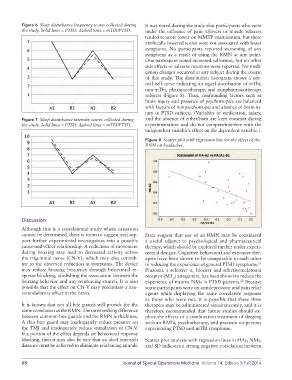
Figure 6  Sleep disturbance frequency scores collected during   It was noted during the study that participants who were
          the study. Solid lines = PTSD; dashed lines = mTBI/PTSD.  under the influence of pain relievers or muscle relaxers
                                                             tended to score lower on MMTP examination, but these
                                                             artificially lowered scores were not associated with lesser
                                                             symptoms. No participants reported worsening of any
                                                             symptoms as a result of using the RMN at any point.
                                                             One participant noted increased salivation, but no other
                                                             side effects or adverse reactions were reported. No medi-
                                                             cation changes occurred in any subject during the course
                                                             of this study. The distribution histogram shows a nor-
                                                             mal bell curve indicating an equal distribution of mTbi,
                                                             non-mTbi, pharmacotherapy, and nonpharmacotherapy
                                                             subjects (Figure 8). Thus, confounding factors such as
                                                             brain injury and presence of psychotropics are balanced
                                                             with factors of nonpsychotropic and absence of brain in-
                                                             jury in PTSD subjects. (Variables of medication, injury,
          Figure 7  Sleep disturbance intensity scores collected during   and the absence of either/both are kept constant during
          the study. Solid lines = PTSD; dashed lines = mTBI/PTSD.  experimentation and do not compete/interfere with the
                                                             independent variable’s effect on the dependent variable.)
                                                             Figure 8  Scatter plot with regression line for the effect of the
                                                             RNM on headaches.


          Discussion
          Although this is a correlational study where causation
          cannot be determined, there is room to suggest and sup-  Data suggest that use of an RMN may be considered
          port further experimental investigation into a possible   a  useful  adjunct  to psychological and  pharmaceutical
          cause-and-effect relationship. A reduction of movement   therapy, which should be explored further under experi-
          during bruxing may lead to decreased activity across   mental designs. Cognitive-behavioral and exposure ther-
          the trigeminal nerve (CN-V), which may also contrib-  apies have been shown to be comparable to each other
          ute to the observed reduction in symptoms. The device   in reducing the experience of general PTSD symptoms.
                                                                                                            21
          may reduce bruxing frequency through behavioral re-  Prazosin, a selective α  blocker and selectivemelatonin
                                                                                 1
          sponse blocking, abolishing the association between the   receptor (MT ) antagonist, has been shown to reduce the
                                                                         3
          bruxing behavior and any reinforcing stimuli. It is also   experience of trauma NMs in PTSD patients.  Because
                                                                                                    22
          possible that the effect on CN-V may precipitate a neu-  some participants were on antidepressant and pain relief
          romodulatory effect in the brain.                  agents while displaying the same correlative response
                                                             as those who were not, it is possible that these three
          It is known that not all bite guards will provide for the   therapies may be administered simultaneously, and it is
          same correlation as the RMN. The most striking  difference   therefore recommended that future studies should ex-
          between common bite guards and the RMN is thickness.   plore the effects of a combination treatment of sleeping
          A thin bite guard may inadequately reduce pressure on   with an RMN, psychotherapy, and prazosin on persons
          the TMJ and inadequately reduce stimulation of CN-V.   experiencing PTSD and mTBI symptoms.
          If a portion of the effect depends on behavioral response
          blocking, then it may also be true that an ideal interarch   Scatter plot analysis with regression lines in HAs, NMs,
          distance must be achieved to eliminate reinforcing stimuli.  and SD indicates a strong negative correlation between


          68                                       Journal of Special Operations Medicine  Volume 14, Edition 3/Fall 2014

