


Page 96 - Journal of Special Operations Medicine - Spring 2014
P. 96
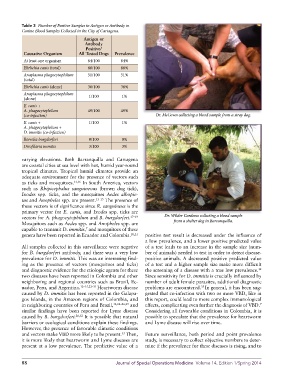
Table 3  Number of Positive Samples to Antigen or Antibody in
          Canine Blood Samples Collected in the City of Cartagena.
                                    Antigen or
                                    Antibody
                                    Positive/
           Causative Organism     All Tested Dogs  Prevalence
           At least one organism     84/100        84%
           Ehrlichia canis (total)   80/100        80%
           Anaplasma phagocytophilum   51/100      51%
           (total)
           Ehrlichia canis (alone)   30/100        30%
           Anaplasma phagocytophilum   1/100       1%
           (alone)
           E. canis +
           A. phagocytophilum        49/100        49%
           (co-infection)                                        Dr. McCown collecting a blood sample from a stray dog.
           E. canis +                 1/100        1%
           A. phagocytophilum +
           D. immitis (co-infection)
           Borrelia burgdorferi       0/100        0%
           Dirofilaria immitis        3/100        3%

          varying elevations. Both Barranquilla and Cartagena
          are coastal cities at sea level with hot, humid year-round
          tropical climates. Tropical humid climates provide an
          adequate environment for the presence of vectors such
          as ticks and mosquitoes. 11,16  In South America, vectors
          such  as  Rhipicephalus  sanguineous (brown  dog tick),
          Ixodes  spp. ticks, and the mosquitoes  Aedes albopic-
          tus and Anopheles spp. are present. 13–15  The presence of
          these vectors is of significance since R. sanguineus is the
          primary vector for E. canis, and Ixodes spp. ticks are
          vectors for A. phagocytophilum and B. burgdorferi. 17–19    Dr. Wilder Cardona collecting a blood sample
                                                                         from a shelter dog in Barranquilla.
          Mosquitoes such as Aedes spp. and Anopheles spp. are
          capable to transmit D. immitis,  and mosquitoes of these
                                    7
          genera have been reported in Ecuador and Colombia. 20,21  positive test result is decreased under the influence of
                                                             a low prevalence, and a lower positive predicted value
          All samples collected in this surveillance were negative   of a test leads to an increase in the sample size (num-
          for B. burgdorferi antibody, and there was a very low   ber of animals) needed to test in order to detect disease-
          prevalence for D. immitis. This was an interesting find-  positive animals. A decreased positive predicted value
          ing as the presence of vectors (mosquitoes and ticks)   of a test and a higher sample size make more difficult
          and diagnostic evidence for the etiologic agents for these   the screening of a disease with a true low prevalence.
                                                                                                            34
          two diseases have been reported in Colombia and other   Since sensitivity for D. immitis is crucially influenced by
          neighboring and regional countries such as Brazil, Ec-  number of adult female parasites, additional diagnostic
          uador, Peru, and Argentina. 12–15,22–31  Heartworm disease   problems are encountered. In general, it has been sug-
                                                                                    35
          caused by D. immitis has been reported in the Galapa-  gested that co-infection with two or more VBD, like in
          gos Islands, in the Amazon regions of Colombia, and   this report, could lead to more complex immunological
          in neighboring countries of Peru and Brazil, 12,24–26,29  and   effects, complicating even further the diagnosis of VBD.
                                                                                                            7
          similar findings have been reported for Lyme disease   Considering all favorable conditions in Colombia, it is
          caused by B. burgdorferi. 26,32  It is possible that natural   possible to speculate that the prevalence for heartworm
          barriers or ecological conditions explain these findings.   and Lyme disease will rise over time.
          However, the presence of favorable climatic conditions
          and vectors make VBD more likely to be present.  Then,   Future surveillance, both period and point prevalence
                                                   33
          it is more likely that heartworm and Lyme diseases are   study, is necessary to collect objective numbers to deter-
          present at a low prevalence. The predictive value of a   mine if the prevalence for these diseases is rising, and to


          88                                     Journal of Special Operations Medicine  Volume 14, Edition 1/Spring 2014

