


Page 62 - ATP-P 11th Ed
P. 62
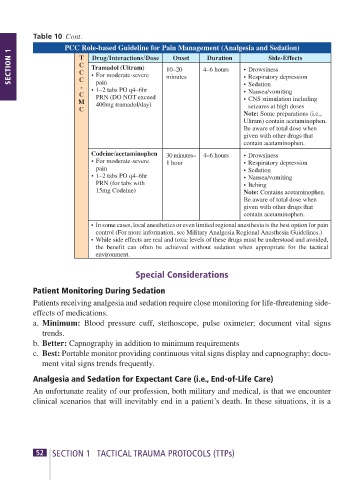
Table 10  Cont.
               PCC Role-based Guideline for Pain Management (Analgesia and Sedation)
   SECTION 1      T    Tramadol (Ultram)  10–20  4–6 hours  • Drowsiness
                     Drug/Interactions/Dose
                                              Duration
                                                           Side-Effects
                                       Onset
                  C
                  C
                     • For moderate-severe
                                     minutes
                                                      • Respiratory depression
                  C
                      pain
                   -   • 1–2 tabs PO q4–6hr           • Sedation
                  C    PRN (DO NOT exceed             • Nausea/vomiting
                  M   400mg tramadol/day)             • CNS stimulation including
                  C                                    seizures at high doses
                                                      Note: Some preparations (i.e.,
                                                      Ultram) contain acetaminophen.
                                                      Be aware of total dose when
                                                      given with other drugs that
                                                      contain acetaminophen.
                     Codeine/acetaminophen  30 minutes–  4–6 hours  • Drowsiness
                     • For moderate-severe   1 hour   • Respiratory depression
                      pain                            • Sedation
                     • 1–2 tabs PO q4–6hr             • Nausea/vomiting
                      PRN (for tabs with              • Itching
                      15mg Codeine)                   Note: Contains acetaminophen.
                                                      Be aware of total dose when
                                                      given with other drugs that
                                                      contain acetaminophen.
                     • In some cases, local anesthetics or even limited regional anesthesia is the best option for pain
                      control (For more information, see Military Analgesia Regional Anesthesia Guidelines.)
                     • While side effects are real and toxic levels of these drugs must be understood and avoided,
                      the benefit can often be achieved without sedation when appropriate for the tactical
                      environment.
                              Special Considerations
        Patient Monitoring During Sedation
        Patients receiving analgesia and sedation require close monitoring for life-threatening side-
        effects of medications.
        a.  Minimum: Blood pressure cuff, stethoscope, pulse oximeter; document vital signs
          trends.
        b. Better: Capnography in addition to minimum requirements
        c.  Best: Portable monitor providing continuous vital signs display and capnography; docu-
          ment vital signs trends frequently.
        Analgesia and Sedation for Expectant Care (i.e., End-of-Life Care)
        An unfortunate reality of our profession, both military and medical, is that we encounter
        clinical scenarios that will inevitably end in a patient’s death. In these situations, it is a


          52  SECTION 1   TACTICAL TRAUMA PROTOCOLS (TTPs)                                                                    ATP-P Handbook 11th Edition  53

