


Page 58 - ATP-P 11th Ed
P. 58
b. Difficult analgesia or sedation needed is for patients in whom standard analgesia does
          not achieve adequate pain control without suppressing respiratory drive or causing hy-
   SECTION 1  c.  Protected airway with mechanical ventilation is for patients who have a protected air-
          potension, OR when mission requirements necessitate sedating a patient to gain control
          over their actions to achieve patient safety, quietness, or necessary positioning.
          way and are receiving mechanical ventilatory support or are receiving full respiratory
          support via assisted ventilation (i.e., bag valve).
        d. Shock present is for patients who have hypotension, active hemorrhage, and/or
          tachycardia.
        Step  2.  Read  down the  column to the  row representing  your  available resources  and
        training.
        Step 3. Provide analgesia/sedation medication accordingly.
        Step 4. Consider using the Richmond Agitation-Sedation Scale (RASS) score (Appendix E)
        as a method to trend the patient’s sedation level.

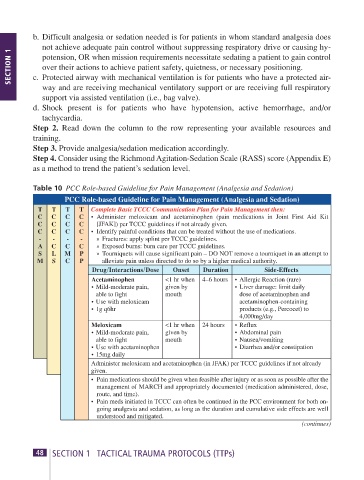
        Table 10  PCC Role-based Guideline for Pain Management (Analgesia and Sedation)
               PCC Role-based Guideline for Pain Management (Analgesia and Sedation)
         T   T   T    T  Complete Basic TCCC Communication Plan for Pain Management then:
         C   C   C   C  •  Administer meloxicam and acetaminophen (pain medications in Joint First  Aid Kit
         C   C   C   C   [JFAK]) per TCCC guidelines if not already given.
         C  C  C  C  •  Identify painful conditions that can be treated without the use of medications.
          -   -   -   -     » Fractures: apply splint per TCCC guidelines.
         A   C   C   C     » Exposed burns: burn care per TCCC guidelines.
         S   L   M   P     » Tourniquets will cause significant pain – DO NOT remove a tourniquet in an attempt to
         M  S  C  P    alleviate pain unless directed to do so by a higher medical authority.
                     Drug/Interactions/Dose  Onset  Duration  Side-Effects
                     Acetaminophen   <1 hr when  4–6 hours  • Allergic Reaction (rare)
                     • Mild-moderate pain,   given by   • Liver damage: limit daily
                      able to fight  mouth           dose of acetaminophen and
                     • Use with meloxicam              acetaminophen-containing
                     • 1g q6hr                         products (e.g., Percocet) to
                                                     4,000mg/day
                     Meloxicam       <1 hr when  24 hours  • Reflux
                     • Mild-moderate pain,   given by   • Abdominal pain
                      able to fight  mouth          • Nausea/vomiting
                     • Use with acetaminophen       • Diarrhea and/or constipation
                     • 15mg daily
                     Administer meloxicam and acetaminophen (in JFAK) per TCCC guidelines if not already
                     given.
                     •  Pain medications should be given when feasible after injury or as soon as possible after the
                      management of MARCH and appropriately documented (medication administered, dose,
                      route, and time).
                     •  Pain meds initiated in TCCC can often be continued in the PCC environment for both on-
                      going analgesia and sedation, as long as the duration and cumulative side effects are well
                      understood and mitigated.
                                                                   (continues)


          48  SECTION 1   TACTICAL TRAUMA PROTOCOLS (TTPs)                                                                    ATP-P Handbook 11th Edition  49

