


Page 50 - ATP-P 11th Ed
P. 50
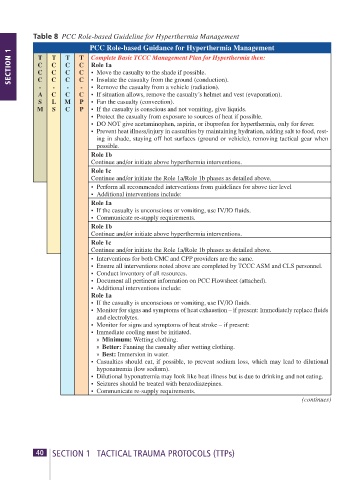
Table 8  PCC Role-based Guideline for Hyperthermia Management
                     PCC Role-based Guidance for Hyperthermia Management
   SECTION 1  T   T   T    T  Complete Basic TCCC Management Plan for Hyperthermia then:
               C   C  Role 1a
            C
         C
            C
         C
               C   C  •  Move the casualty to the shade if possible.
         C
          -   C -   C -   C -   •  Insulate the casualty from the ground (conduction).
                     •  Remove the casualty from a vehicle (radiation).
         A   C   C   C  •  If situation allows, remove the casualty’s helmet and vest (evaporation).
         S   L   M   P  •  Fan the casualty (convection).
         M  S  C  P  •  If the casualty is conscious and not vomiting, give liquids.
                     •  Protect the casualty from exposure to sources of heat if possible.
                     •  DO NOT give acetaminophen, aspirin, or ibuprofen for hyperthermia, only for fever.
                     •  Prevent heat illness/injury in casualties by maintaining hydration, adding salt to food, rest-
                      ing in shade, staying off hot surfaces (ground or vehicle), removing tactical gear when
                      possible.
                     Role 1b
                     Continue and/or initiate above hyperthermia interventions.
                     Role 1c
                     Continue and/or initiate the Role 1a/Role 1b phases as detailed above.
                     •  Perform all recommended interventions from guidelines for above tier level
                     •  Additional interventions include:
                     Role 1a
                     •  If the casualty is unconscious or vomiting, use IV/IO fluids.
                     •  Communicate re-supply requirements.
                     Role 1b
                     Continue and/or initiate above hyperthermia interventions.
                     Role 1c
                     Continue and/or initiate the Role 1a/Role 1b phases as detailed above.
                     •  Interventions for both CMC and CPP providers are the same.
                     •  Ensure all interventions noted above are completed by TCCC ASM and CLS personnel.
                     •  Conduct inventory of all resources.
                     •  Document all pertinent information on PCC Flowsheet (attached).
                     •  Additional interventions include:
                     Role 1a
                     •  If the casualty is unconscious or vomiting, use IV/IO fluids.
                     •  Monitor for signs and symptoms of heat exhaustion – if present: Immediately replace fluids
                      and electrolytes.
                     •  Monitor for signs and symptoms of heat stroke – if present:
                     •  Immediate cooling must be initiated.
                         » Minimum: Wetting clothing.
                         » Better: Fanning the casualty after wetting clothing.
                         » Best: Immersion in water.
                     •  Casualties should eat, if possible, to prevent sodium loss, which may lead to dilutional
                      hyponatremia (low sodium).
                     •  Dilutional hyponatremia may look like heat illness but is due to drinking and not eating.
                     •  Seizures should be treated with benzodiazepines.
                     •  Communicate re-supply requirements.
                                                                   (continues)


          40  SECTION 1   TACTICAL TRAUMA PROTOCOLS (TTPs)                                                                    ATP-P Handbook 11th Edition  41

