


Page 117 - JSOM Fall 2025
P. 117
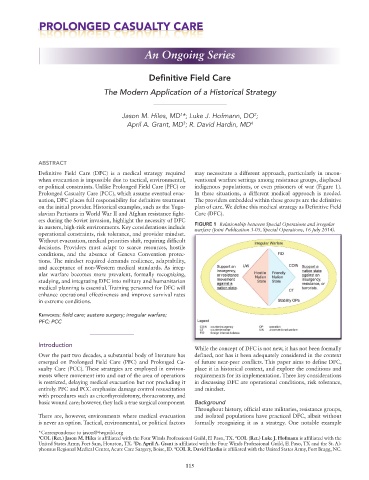
TABLE 4  World Health Organization – Informal Working Groups on Echinococcosis (WHO-IWGE) Classification of the Hydatid Cyst 3
           Stage                           Echographic aspect according to WHO-IWGE classification
           CL      Anechogenic uniloculated cyst, with no echoes or internal sepsis
           CE 1    Anechogenic cyst with fine echoes inside, representing the hydatic sand - active cyst
           CE 2    Cyst with multiple septae at the interior, giving it a multivesicular (“honeycomb”) aspect, with a uniloculated primary cyst –
                   active cyst
           CE 3    Uniloculated cyst with decolated proligere membrane (“waterlilly sign”) (CE3a) or daughter vesicles associating hypo/
                   hyperechogenic images (CE3b) – cyst in transition phase
           CE 4    Cyst with mixed content, hypo/hyperechogenic, without daughter vesicles - “wool clew” aspect – cyst in the degenerative phase
           CE 5    Cyst with partial or totally calcified wall – inactive cyst
          CE = cystic echinococcosis; CL = cystic lesion.


          TABLE 5  Therapy Protocol for Hydatid Cyst 3
           Stage and size                           First-option treatment           Alternative treatment
           Refusal of intervention or contraindications   ABZ (6 mo)
           for invasive treatment
           CE 1, CE 3a
            Small                          Only ABZ (6 mo)                   PAIR + ABZ (1 mo)
            Medium                         Surgery + ABZ (1–6 mo)            PAIR + ABZ (1 mo)
            Large                          Surgery + ABZ (1–6 mo)            MoCaT + ABZ (1 mo)
           CE 2, CE 3b
            Small                          Only ABZ (6 mo)                   MoCaT + ABZ (1 mo)
            Medium                         Surgery tx + ABZ (1–6 mo)         MoCaT + ABZ (1 mo)
            Large                          Surgery tx + ABZ (1–6 mo)         MoCaT + ABZ (1 mo)
           CE 4, CE 5                      “Watch and wait”                  “Watch and wait”
           Complicated cysts, no matter what stage  Surgery (+/– interventional endoscopy in    Surgery in case of rupture; percutaneous
                                           case of rupture into the biliary tract) + ABZ   drainage in case of infection + ABZ
                                           (6 mo)                            (1 month)
          ABZ = antibiotics; albendazole (adult dose: 400mg twice daily; pediatric dose: 15mg/kg/d (max 800mg) ; CE = cystic echinococcosis; MoCaT =
                                                                                  4
          modified catheterization technique; PAIR = puncture, aspiration, injection, re-aspiration technique (injection of 95% ethanol or hypertonic
          saline).


          Patients with a history of exposure to at-risk dogs and present-  2.  World Health Organization. Echinococcosis. World Health Orga-
          ing with space-occupying lesions and/or anaphylaxis without   nization. Updated May 17, 2021. Accessed May 25, 2024. https://
          apparent cause should be screened for hydatid disease.  www.who.int/news-room/fact-sheets/detail/echinococcosis
                                                              3.  Botezatu C, Mastalier B, Patrascu T. Hepatic hydatid cyst - diag-
                                                                nose and treatment algorithm. J Med Life. 2018;11(3): 203–209.
          Acknowledgments                                       doi:10.25122/jml-2018-0045
          The author would like to thank Sheldon Brown (Principal In-  4.  Despommier DD, Griffin DO, Gwadz RW, Hotez PJ, Knirsch CA.
          vestigator) and Ariana Paredes-Vincent, MPH (Project Man-  “Juvenile  Tapeworm Infections of Humans.” In:  Parasitic Dis-
          ager/Data Analyst) at the Veterans Health Administration for   eases. 6th ed. Parasites Without Borders; 2017:373–388.
          their report entitled  “Echinococcosis: Description of  VHA   5.  Khalili N, Iranpour P, Khalili N, Haseli S. Hydatid disease: a pic-
          diagnosis from FY2000 to FY2024.” This product was made   torial review of uncommon locations. Iran J Med Sci. 2023;48
                                                                (2):118–129. doi:10.30476/IJMS.2022.93123.2442
          possible by the SHIELD  Vector Borne, Environmental, and   6.  Swartzwelder C. Nematode and cestode infections. In: Coates
          Zoonotic Disease Workgroup.                           JD, ed. Preventive medicine in World War II. Vol 4. United States
                                                                Army Medical Department; 1958: 513–514.  https://achh.army.
          Disclaimer                                            mil/history/book-wwii-pm4-ch24-nematode
          The views expressed in this publication are those of the au-  7.  Jahani MR, Roohollahi G, Gharavi MJ. Splenic hydatid cysts in
          thor and do not reflect the official policy or position of the   a 20-year-old soldier. Mil Med. 2004;169(1):77–78. doi:10.7205/
                                                                milmed.169.1.77
          Department of the Army, Department of Defense, or the U.S.   8.  Kronmann KC, Shields WW, Sheer TA, Crum-Cianflone NF. Echi-
          Government.                                           nococcus in a U.S. Marine after deployment to Afghanistan. Am
                                                                J Gastroenterol. 2008;103(8):2151–2153. doi:10.1111/j.1572-
          Disclosures                                           0241.2008.01982_13.x
          The author has nothing to disclose.                 9.  Greenberg DJ, Canoy J, Tomac Pavosevic H, Epelbaum O. Pulmo-
                                                                nary cystic echinococcosis. Mayo Clin Proc. 2022;97(4):752–753.
                                                                doi:10.1016/j.mayocp.2022.01.034
          Funding                                            10.  Zenati H, Chaouch MA, Touir W, Jellali M, Gafsi B, Noomen F.
          No funding was received for this work.                Hydatid peritonitis caused by liver hydatid cyst rupture into the
                                                                peritoneal cavity: a case report. Int J Surg Case Rep. 2024;115:
          References                                            109239. doi:10.1016/j.ijscr.2024.109239
          1.  Heymann DL. Control of Communicable Diseases Manual. 20th
            ed. Alpha Press; 2015.                           PMID: 40944955; DOI: 10.55460/WGHA-6HET

          114  |  JSOM   Volume 25, Edition 3 / Fall 2025

