


Page 92 - JSOM Winter 2022
P. 92
overall between treatment groups at each time point or within   are challenging to manage due to their noncompressible nature
          treatment groups compared to their respective baselines.  and the limited and variable efficiencies of existing devices. 7,13
                                                             Controlling a junctional hemorrhage with direct pressure is
          Respiration Rate                                   an effective, and sometimes the only available, method. Here,
          The average of the three, baseline RR measures was not sig-  we show that in small, linear wounds pressure may also be
          nificantly different between treatment groups (p = .53). Within   provided by a mechanical wound closure device. The use of
          CG-treated swine, RR was significantly lower compared to   the iTClamp, both in isolation and in conjunction with he-
          their own baseline (5 minutes to 15 minutes) following CG   mostatic packing, resulted in faster application times without
          application (p < .05) (Figure 4B). There were no other signifi-  compromising hemostatic efficacy compared to manual pres-
          cant differences in RR between treatment groups at each time   sure with CG.
          point or within treatment groups compared to their respective
          baselines.                                         TABLE 3  Outcome Measures
                                                              Outcome    IT+XS     IT+CG      IT       CG
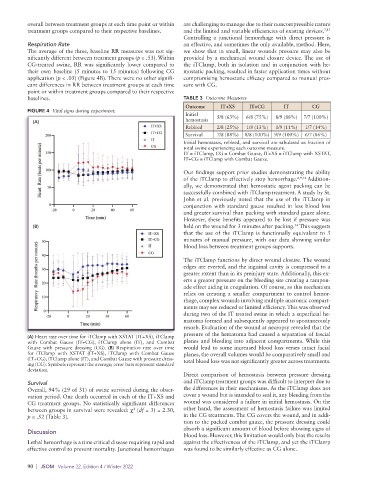
          FIGURE 4  Vital signs during experiment.
                                                              Initial   5/8 (63%)  6/8 (75%)  8/9 (88%)  7/7 (100%)
            (A)                                               hemostasis
                                                              Rebleed   2/8 (25%)  1/8 (13%)  1/9 (11%)  1/7 (14%)
                                                              Survival  7/8 (88%)  8/8 (100%) 9/9 (100%)  6/7 (86%)
                                                             Initial hemostasis, rebleed, and survival are tabulated as fraction of
                                                             total swine experiencing each outcome measure.
                                                             IT = iTClamp, CG = Combat Gauze, IT+XS = iTClamp with XSTAT,
                                                             IT+CG = iTClamp with Combat Gauze.
                                                             Our findings support prior studies demonstrating the ability
                                                             of the iTClamp to effectively stop hemorrhage. 6,9,14  Addition-
                                                             ally, we demonstrated that hemostatic agent packing can be
                                                             successfully combined with iTClamp treatment. A study by St.

                                                             John et al. previously noted that the use of the iTClamp in
                                                             conjunction with standard gauze  resulted in less blood loss
                                                             and greater survival than packing with standard gauze alone.
                                                             However, these benefits appeared to be lost if pressure was
                                                                                                 14
            (B)                                              held on the wound for 3 minutes after packing.  This suggests
                                                             that the use of the iTClamp is functionally equivalent to 3
                                                             minutes of manual pressure, with our data showing similar
                                                             blood loss between treatment groups supports.
                                                             The iTClamp functions by direct wound closure. The wound
                                                             edges are everted, and the inguinal cavity is compressed to a
                                                             greater extent than in its preinjury state. Additionally, this ex-
                                                             erts a greater pressure on the bleeding site creating a tampon-
                                                             ade effect aiding in coagulation. Of course, as this mechanism
                                                             relies on creating a smaller compartment to control hemor-
                                                             rhage, complex wounds involving multiple anatomic compart-
                                                             ments may see reduced or limited efficiency. This was observed
                                                             during two of the IT treated swine in which a superficial he-
                                                             matoma formed and subsequently appeared to spontaneously
                                                             resorb. Evaluation of the wound at necropsy revealed that the
                                                             pressure of the hematoma had caused a separation of fascial
          (A) Heart rate over time for iTClamp with XSTAT (IT+XS), iTClamp
          with Combat Gauze (IT+CG), iTClamp alone (IT), and Combat   planes and bleeding into adjacent compartments. While this
          Gauze with pressure dressing (CG).  (B) Respiration rate over time   would lead to some increased blood loss verses intact facial
          for iTClamp with XSTAT (IT+XS), iTClamp with Combat Gauze   planes, the overall volumes would be comparatively small and
          (IT+CG), iTClamp alone (IT), and Combat Gauze with pressure dress-  total blood loss was not significantly greater across treatments.
          ing (CG). Symbols represent the average; error bars represent standard
          deviation.
                                                             Direct comparison of hemostasis between pressure dressing

          Survival                                           and iTClamptreatment groups was difficult to interpret due to
          Overall, 94% (29 of 31) of swine survived during the obser-  the differences in their mechanisms. As the iTClamp does not
          vation period. One death occurred in each of the IT+XS and   cover a wound but is intended to seal it, any bleeding from the
          CG treatment groups. No statistically significant differences   wound was considered a failure in initial hemostasis. On the
          between groups in survival were revealed: χ  (df = 3) = 2.30,   other hand, the assessment of hemostasis failure was limited
                                             2
          p = .52 (Table 3).                                 in the CG treatments. The CG covers the wound, and in addi-
                                                             tion to the packed combat gauze, the pressure dressing could
                                                             absorb a significant amount of blood before showing signs of
          Discussion
                                                             blood loss. However, this limitation would only bias the results
          Lethal hemorrhage is a time critical disease requiring rapid and   against the effectiveness of the iTClamp, and yet the iTClamp
          effective control to prevent mortality. Junctional hemorrhages   was found to be similarly effective as CG alone.

          90  |  JSOM   Volume 22, Edition 4 / Winter 2022

