


Page 13 - JSOM Winter 2022
P. 13
200mL/min, but no recommendations for red cells. No
                                                                                                            11
                                                                   WB/PRBC or colloid experimental trials currently exist
                                                                   with the enFlow at this time.
                                                                 •  Saline. At 5°C input saline temperatures, the enFlow heated
                                                                   saline to a combined average output temperature of 39.5°C
                                                                                                    6
                                                                   for all flow rate groups (25–100mL/min).  At 10°C input
                                                                   saline temperatures, the enFlow warmed saline to >38°C
                                                                                            6–8
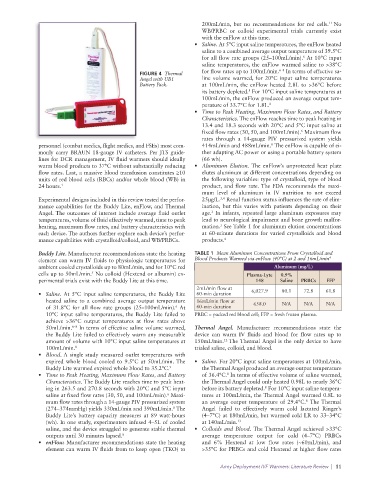
                                               FIGURE 4  Thermal   for flow rates up to 100mL/min.  In terms of effective sa-
                                               Angel with UB1      line volume warmed, for 20°C input saline temperatures
                                               Battery Pack.       at 100mL/min, the enFlow heated 2.8L to >36°C before
                                                                   its battery depleted.  For 10°C input saline temperatures at
                                                                                  8
                                                                   100mL/min, the enFlow produced an average output tem-
                                                                   perature of 33.7°C for 1.8L. 8
                                                                 •  Time to Peak Heating, Maximum Flow Rates, and Battery
                                                                   Characteristics. The enFlow reaches time to peak heating in
                                                                   13.4 and 18.3 seconds with 20°C and 5°C input saline at
                                                                   fixed flow rates (30, 50, and 100mL/min).  Maximum flow
                                                                                                   6
                                                                   rates through a 14-gauge PIV pressurized system yields
                                                                                          8
              personnel (combat medics, flight medics, and FSEs) most com-  414mL/min and 488mL/min.  The enFlow is capable of ei-
              monly carry BRAUN 18-gauge IV catheters. Per JTS guide-  ther adapting AC power or using a portable battery system
              lines for DCR management, IV fluid warmers should ideally   (66 wh).
              warm blood products to 37°C without substantially reducing   •  Aluminum Elution. The enFlow’s unprotected heat plate
              flow rates. Last, a massive blood transfusion constitutes ≥10   elutes aluminum at different concentrations depending on
              units of red blood cells (RBCs) and/or whole blood (WB) in   the following variables: type of crystalloid, type of blood
              24 hours. 1                                          product, and flow rate. The FDA recommends the maxi-
                                                                   mum level of aluminum in IV nutrition to not exceed
                                                                         3,4
              Experimental designs included in this review tested the perfor-  25µg/L.  Renal function status influences the rate of elim-
              mance capabilities for the Buddy Lite, enFlow, and Thermal   ination, but this varies with patients depending on their
                                                                      3
              Angel. The outcomes of interest include average fluid outlet   age.  In infants, repeated large aluminum exposures may
              temperatures, volume of fluid effectively warmed, time to peak   lead to neurological impairment and bone growth malfor-
                                                                         3
              heating, maximum flow rates, and battery characteristics with   mation.  See Table 1 for aluminum elution concentrations
              each device. The authors further explore each device’s perfor-  at 60-minute durations for varied crystalloids and blood
              mance capabilities with crystalloid/colloid, and WB/PRBCs.  products. 4
              Buddy Lite. Manufacturer recommendations state the heating   TABLE 1  Mean Aluminum Concentrations From Crystalloid and
              element can warm IV fluids to physiologic temperatures for   Blood Products Warmed via enFlow (40°C) at 2 and 16mL/min 4
              ambient cooled crystalloids up to 80mL/min, and for 10°C red                 Aluminum (mg/L)
              cells up to 50mL/min.  No colloid (Hextend or albumin) ex-          Plasma-Lyte   0.9%
                               5
              perimental trials exist with the Buddy Lite at this time.              148     Saline  PRBCs  FFP
                                                                 2mL/min flow at
              •  Saline.  At  5°C  input saline  temperatures, the Buddy  Lite   60-min duration  6,027.9  80.1  72.8  61.8
                heated saline to a combined average output temperature   16mL/min flow at
                of 31.8°C for all flow rate groups (25–100mL/min).  At   60-min duration  658.0  N/A  N/A   N/A
                                                          6
                10°C input saline temperatures, the Buddy Lite failed to   PRBC = packed red blood cell; FFP = fresh frozen plasma.
                achieve  >36°C  output  temperatures  at  flow  rates  above
                50mL/min.  In terms of effective saline volume warmed,   Thermal Angel.  Manufacturer recommendations state the
                         6–8
                the Buddy Lite failed to effectively warm any measurable   device can warm IV fluids and blood for flow rates up to
                amount of volume with 10°C input saline temperatures at   150mL/min. The Thermal Angel is the only device to have
                                                                          12
                100mL/min. 8                                     trialed saline, colloid, and blood.
              •  Blood. A single study measured outlet temperatures with
                expired whole blood cooled to 9.5°C at 50mL/min. The   •  Saline. For 20°C input saline temperatures at 100mL/min,
                Buddy Lite warmed expired whole blood to 35.2°C. 9  the Thermal Angel produced an average output temperature
              •  Time to Peak Heating, Maximum Flow Rates, and Battery   of 36.4°C.  In terms of effective volume of saline warmed,
                                                                           8
                Characteristics. The Buddy Lite reaches time to peak heat-  the Thermal Angel could only heated 0.98L to nearly 36°C
                ing in 263.5 and 270.8 seconds with 20°C and 5°C input   before its battery depleted.  For 10°C input saline tempera-
                                                                                        8
                saline at fixed flow rates (30, 50, and 100mL/min).  Maxi-  tures at 100mL/min, the Thermal Angel warmed 0.8L to
                                                        6
                mum flow rates through a 14-gauge PIV pressurized system   an average output temperature of 29.4°C.  The Thermal
                                                                                                     8
                (274–374mmHg) yields 330mL/min and 390mL/min.  The   Angel failed to effectively warm cold lactated Ringer’s
                                                          8
                Buddy Lite’s battery capacity measures at 89 watt-hours   (4–7°C) at 180mL/min, but warmed cold LR to 33–34°C
                (wh). In one study, experimenters infused 4–5L of cooled   at 140mL/min. 13
                saline, and the device struggled to generate stable thermal   •  Colloids and Blood. The Thermal Angel achieved >33°C
                outputs until 30 minutes lapsed. 8                 average temperature output for cold (4–7°C) PRBCs
              •  enFlow. Manufacturer recommendations state the heating   and 6% Hextend at low flow rates (~60mL/min), and
                element can warm IV fluids from to keep open (TKO) to   >35°C for PRBCs and cold Hextend at higher flow rates
                                                                         Army Deployment IVF Warmers: Literature Review  |  11

