


Page 12 - JSOM Winter 2022
P. 12
FSEs, carry limited quantities of cold (1–6°C) low-titer O whole   FIGURE 1  Search flow diagram.
          blood (LTOWB). Second, the Joint Trauma System (JTS) Clin-
          ical Practice Guidelines (CPGs) recommends warming blood
                                     1
          products to 37°C for transfusion.  This recommendation is
          secondary to battlefield casualties being the most susceptible
          to hypothermia due to prolonged evacuation times, significant
          injury patterns, altered intrinsic thermoregulation abilities,
          and environmental factors. Finally, cold blood administration
          would further influence a casualty to enter the triad of death,
          defined as hypothermia, coagulopathy, and acidosis. Profound
          hypothermia affects the triad of death by worsening coagulop-
          athy, decreasing drug elimination, and increasing overall hem-
          orrhage. Therefore, to mitigate the deleterious effects of cold
          blood administration, the far forward employment of bat-
          tery-operated IV fluid warmers is often used for early blood
          administration in patients that require resuscitation.

          In March 2019, the US FDA issued a Class 1 recall on en-
          Flow cartridges manufactured from January 2016 to March
               2
          2019.  Testing demonstrated aluminum elution from enFlow
          cartridges into IV solutions, thereby exposing patients to po-
                                   3,4
          tentially unsafe aluminum levels.  Despite this FDA recall, the   published two articles that demonstrated uncoated disposable
          enFlow delivery system and its components remain assigned to   aluminum heated plates elute aluminum into IV fluids.  The
                                                                                                        3,4
          FSEs, SOF units, and aeromedical units.            FDA subsequently announced a Class 1 recall on enFlow car-
                                                             tridges manufactured from January 2016 to March 2019.  The
                                                                                                         2
          This literature review seeks to determine  the ideal portable   Thermal Angel and Buddy Lite do not use uncoated aluminum
          battery-operated IV fluid warmer (Buddy Lite, enFlow, Ther-  heated plates. See Figures 2, 3, and 4 for device photographs
          mal  Angel) for trauma patients undergoing massive blood
          transfusions in austere settings. Additionally, the authors pro-  FIGURE 2  enFlow with battery accessory.
          vide a risk mitigation analysis for the enFlow delivery system.

          Search Strategies
          The authors systematically searched the following databases:
          EBSCO, Google Scholar, MEDLINE PubMed,  AHRQ EPC
          Evidence Reports, Cochrane Databases, Dynamed Plus, De-
          fense Technical Information Center (DTIC), Federal Research
          in Progress, Evidence-Based Medicine Reviews, Military and
          Government Collection, and the  New England Journal of
          Medicine. The search included the following MeSH terms and
          key words: portable fluid warmers, Buddy Lite, enFlow, Ther-
          mal Angel, blood warmer, and military massive transfusion.
          The authors also searched gray literature, to include the JTS
          Quarterly, which features literature reviews pertaining to com-  FIGURE 3  Buddy Lite.
          bat casualty care.

          Thirteen articles met the screening criteria. Four subject matter
          experts in deployment medicine independently graded ten ar-
          ticles with the Joanna Briggs Institute Critical Appraisal Tool.
          After independent appraisal, a unanimous decision determined
          if an article was included or excluded. The experts excluded
          two articles from this literature review: one article due to the
          inability to obtain a full-text copy while deployed, and the other
          due to its exploration of the mathematical energy requirements
          to treat hypothermia, rather than clinical applications for por-
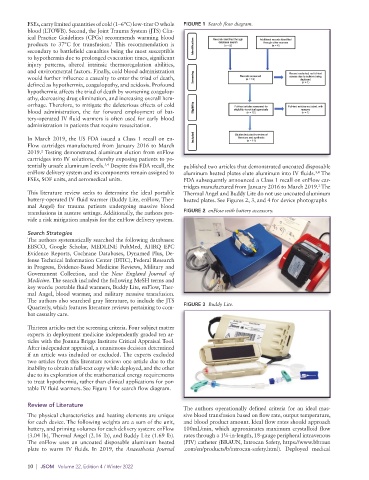
          table IV fluid warmers. See Figure 1 for search flow diagram.


          Review of Literature
                                                             The authors operationally defined criteria for an ideal mas-
          The physical characteristics and heating elements are unique   sive blood transfusion based on flow rate, output temperature,
          for each device. The following weights are a sum of the unit,   and blood product amount. Ideal flow rates should approach
          battery, and priming volumes for each delivery system: enFlow   100mL/min, which approximates maximum crystalloid flow
          (3.04 lb), Thermal Angel (2.16 lb), and Buddy Lite (1.69 lb).   rates through a 1¼-in-length, 18-gauge peripheral intravenous
          The enFlow uses an uncoated disposable aluminum heated   (PIV) catheter (BRAUN, Introcan Safety, https://www.bbraun
          plate to warm IV fluids. In 2019, the Anaesthesia  Journal     .com/en/products/b/introcan-safety.html).  Deployed  medical

          10  |  JSOM   Volume 22, Edition 4 / Winter 2022

