


Page 13 - JSOM Summer 2022
P. 13
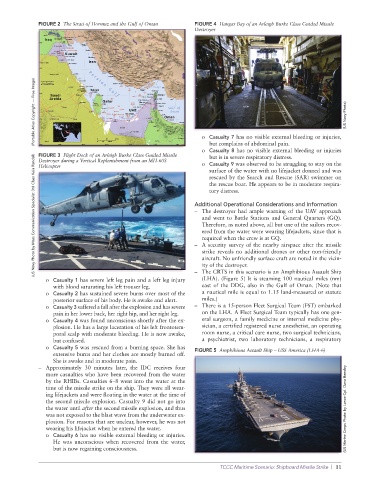
FIGURE 2  The Strait of Hormuz and the Gulf of Oman  FIGURE 4  Hangar Bay of an Arleigh Burke Class Guided Missile
                                                                 Destroyer


            (Portable Atlas Copyright — Free Image)                                                               (US Navy Photo)


                                                                      o Casualty 7 has no visible external bleeding or injuries,
                                                                     but complains of abdominal pain.
                                                                      o Casualty 8 has no visible external bleeding or injuries
              FIGURE 3  Flight Deck of an Arleigh Burke Class Guided Missile   but is in severe respiratory distress.
            (US Navy Photo by Mass Communication Specialist 3rd Class Keia Randall)
              Destroyer during a Vertical Replenishment from an MH-60S
              Helicopter                                              o Casualty 9 was observed to be struggling to stay on the
                                                                     surface of the water with no lifejacket donned and was
                                                                     rescued by the Search and Rescue (SAR) swimmer on
                                                                     the rescue boat. He appears to be in moderate respira-
                                                                     tory distress.

                                                                 Additional Operational Considerations and Information
                                                                   – The destroyer had ample warning of the UAV approach
                                                                   and went to Battle Stations and General Quarters (GQ).
                                                                   Therefore, as noted above, all but one of the sailors recov-
                                                                   ered from the water were wearing lifejackets, since that is
                                                                   required when the crew is at GQ.
                                                                   – A security survey of the nearby airspace after the missile
                                                                   strike reveals no additional drones or other non-friendly
                                                                   aircraft. No unfriendly surface craft are noted in the vicin-
                                                                   ity of the destroyer.
                                                                   – The CRTS in this scenario is an Amphibious Assault Ship
                   o Casualty 1 has severe left leg pain and a left leg injury   (LHA). (Figure 5) It is steaming 100 nautical miles (nm)
                  with blood saturating his left trouser leg.      east  of  the  DDG,  also  in  the  Gulf  of  Oman.  (Note  that
                   o Casualty 2 has sustained severe burns over most of the   a nautical mile is equal to 1.15 land-measured or statute
                  posterior surface of his body. He is awake and alert.  miles.)
                   o Casualty 3 suffered a fall after the explosion and has severe     – There is a 15-person Fleet Surgical Team (FST) embarked
                  pain in her lower back, her right hip, and her right leg.  on the LHA. A Fleet Surgical Team typically has one gen-
                   o Casualty 4 was found unconscious shortly after the ex-  eral surgeon, a family medicine or internal medicine phy-
                  plosion. He has a large laceration of his left frontotem-  sician, a certified registered nurse anesthetist, an operating
                  poral scalp with moderate bleeding. He is now awake,   room nurse, a critical care nurse, two surgical technicians,
                  but confused.                                    a psychiatrist, two laboratory technicians, a respiratory
                   o Casualty 5 was rescued from a burning space. She has   FIGURE 5  Amphibious Assault Ship – USS America (LHA-6)
                  extensive burns and her clothes are mostly burned off.
                  She is awake and in moderate pain.
                 – Approximately 30 minutes later, the IDC receives four
                more casualties who have been recovered from the water
                by the RHIBs. Casualties 6–8 went into the water at the
                time of the missile strike on the ship. They were all wear-
                ing lifejackets and were floating in the water at the time of
                the second missile explosion. Casualty 9 did not go into
                the water until after the second missile explosion, and thus                                      (US Marine Corps Photo by Lance Cpl. Dana Beesley
                was not exposed to the blast wave from the underwater ex-
                plosion. For reasons that are unclear, however, he was not
                wearing his lifejacket when he entered the water.
                   o Casualty 6 has no visible external bleeding or injuries.
                  He was unconscious when recovered from the water,
                  but is now regaining consciousness.

                                                                         TCCC Maritime Scenario: Shipboard Missile Strike  |  11

