


Page 83 - JSOM Winter 2021
P. 83
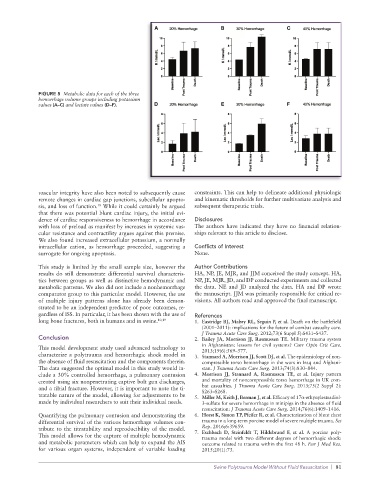
FIGURE 5  Metabolic data for each of the three
              hemorrhage volume groups including potassium
              values (A–C) and lactate values (D–F).


              vascular integrity have also been noted to subsequently cause   constraints. This can help to delineate additional physiologic
              remote changes in cardiac gap junctions, subcellular apopto-  and kinematic thresholds for further multivariate analysis and
                                 18
              sis, and loss of function.  While it could certainly be argued   subsequent therapeutic trials.
              that there was potential blunt cardiac injury, the initial evi-
              dence of cardiac responsiveness to hemorrhage in accordance   Disclosures
              with loss of preload as manifest by increases in systemic vas-  The authors have indicated they have no financial relation-
              cular resistance and contractility argues against this premise.   ships relevant to this article to disclose.
              We also found increased extracellular potassium, a normally
              intracellular cation, as hemorrhage proceeded, suggesting a   Conflicts of Interest
              surrogate for ongoing apoptosis.                   None.

              This study is limited by the small sample size, however the   Author Contributions
              results do still demonstrate differential survival characteris-  HA, NP, JE, MJR, and JJM conceived the study concept. HA,
              tics between groups as well as distinctive hemodynamic and   NP, JE, MJR, JD, and DP conducted experiments and collected
              metabolic patterns. We also did not include a nonhemorrhage   the data. NE and JD analyzed the data. HA and DP wrote
                comparator group to this particular model. However, the use   the manuscript. JJM was primarily responsible for critical re-
              of multiple injury patterns alone has already been demon-  visions. All authors read and approved the final manuscript.
              strated to be an independent predictor of poor outcomes, re-
              gardless of ISS. In particular, it has been shown with the use of   References
              long bone fractures, both in humans and in swine. 10,19  1.  Eastridge BJ, Mabry RL, Seguin P, et al. Death on the battlefield
                                                                   (2001–2011): implications for the future of combat casualty care.
                                                                   J Trauma Acute Care Surg. 2012;73(6 Suppl 5):S431–S437.
              Conclusion                                         2.  Bailey JA, Morrison JJ, Rasmussen TE. Military trauma system
                                                                   in Afghanistan: lessons for civil systems?  Curr Opin Crit Care.
              This model development study used advanced technology to   2013;19(6):569–577.
              characterize a polytrauma and hemorrhagic shock model in   3.  Stannard A, Morrison JJ, Scott DJ, et al. The epidemiology of non-
              the absence of fluid resuscitation and the components therein.   compressible torso hemorrhage in the wars in Iraq and Afghani-
              The data suggested the optimal model in this study would in-  stan. J Trauma Acute Care Surg. 2013;74(3):830–844.
              clude a 30% controlled hemorrhage, a pulmonary contusion   4.  Morrison JJ, Stannard A, Rasmussen TE, et al.  Injury pattern
              created using six nonpenetrating captive bolt gun discharges,   and mortality of noncompressible torso hemorrhage in UK com-
              and a tibial fracture. However, it is important to note the ti-  bat casualties. J Trauma Acute Care Surg.  2013;75(2 Suppl 2):
                                                                   S263–S268.
              tratable nature of the model, allowing for adjustments to be   5.  Miller M, Keith J, Berman J, et al. Efficacy of 17α-ethynylestradiol-
              made by individual researchers to suit their individual needs.  3-sulfate for severe hemorrhage in minipigs in the absence of fluid
                                                                   resuscitation: J Trauma Acute Care Surg. 2014;76(6):1409–1416.
              Quantifying the pulmonary contusion and demonstrating the   6.  Horst K, Simon TP, Pfeifer R, et al. Characterization of blunt chest
              differential survival of the various hemorrhage volumes con-  trauma in a long-term porcine model of severe multiple trauma. Sci
              tribute to the titratability and reproducibility of the model.   Rep. 2016;6:39659.
              This model allows for the capture of multiple hemodynamic   7.  Eschbach  D, Steinfeldt T,  Hildebrand F,  et al. A porcine  poly-
                                                                   trauma model with two different degrees of hemorrhagic shock:
              and metabolic parameters which can help to expand the AIS   outcome related to trauma within the first 48 h. Eur J Med Res.
              for  various organ  systems,  independent  of  variable loading   2015;20(1):73.

                                                                       Swine Polytrauma Model Without Fluid Resuscitation  |  81

