


Page 82 - JSOM Winter 2021
P. 82
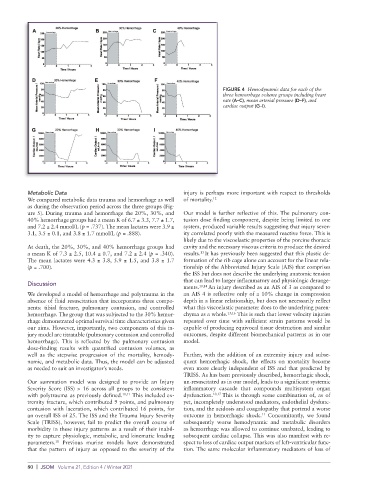
FIGURE 4  Hemodynamic data for each of the
                                                                          three hemorrhage volume groups including heart
                                                                          rate (A–C), mean arterial pressure (D–F), and
                                                                          cardiac output (G–I).


          Metabolic Data                                     injury is perhaps more important with respect to thresholds
          We compared metabolic data trauma and hemorrhage as well   of mortality. 12
          as during the observation period across the three groups (Fig-
          ure 5). During trauma and hemorrhage the 20%, 30%, and   Our model is further reflective of this. The pulmonary con-
          40% hemorrhage groups had a mean K of 6.7 ± 3.3, 7.7 ± 1.7,   tusion dose finding component, despite being limited to one
          and 7.2 ± 2.4 mmol/L (p = .737). The mean lactates were 3.9 ±   system, produced variable results suggesting that injury sever-
          3.1, 3.5 ± 0.1, and 3.8 ± 1.7 mmol/L (p = .888).   ity correlated poorly with the measured reactive force. This is
                                                             likely due to the viscoelastic properties of the porcine thoracic
          At death, the 20%, 30%, and 40% hemorrhage groups had   cavity and the necessary viscous criteria to produce the desired
          a mean K of 7.3 ± 2.5, 10.4 ± 0.7, and 7.2 ± 2.4 (p = .340).   results. It has previously been suggested that this plastic de-
                                                                   13
          The mean lactates were 4.3 ± 3.8, 5.9 ± 1.5, and 3.8 ± 1.7    formation of the rib cage alone can account for the linear rela-
          (p = .700).                                        tionship of the Abbreviated Injury Scale (AIS) that comprises
                                                             the ISS but does not describe the underlying anatomic tension
                                                             that can lead to larger inflammatory and physiologic derange-
          Discussion                                              10,14
                                                             ments.  An injury described as an AIS of 3 as compared to
          We developed a model of hemorrhage and polytrauma in the   an AIS 4 is reflective only of a 10% change in compression
          absence of fluid resuscitation that incorporates three compo-  depth in a linear relationship, but does not necessarily reflect
          nents: tibial fracture, pulmonary contusion, and controlled   what this viscoelastic parameter does to the underlying paren-
          hemorrhage. The group that was subjected to the 30% hemor-  chyma as a whole. 15,16  This is such that lower velocity injuries
          rhage demonstrated optimal survival time characteristics given   repeated over time with sufficient strain patterns would be
          our aims. However, importantly, two components of this in-  capable of producing equivocal tissue destruction and similar
          jury model are titratable (pulmonary contusion and controlled   outcomes, despite different biomechanical patterns as in our
          hemorrhage). This is reflected by the pulmonary contusion   model.
          dose-finding  results  with  quantified  contusion  volumes,  as
          well as the stepwise progression of the mortality, hemody-  Further, with the addition of an extremity injury and subse-
          namic, and metabolic data. Thus, the model can be adjusted   quent hemorrhagic shock, the effects on mortality become
          as needed to suit an investigator’s needs.         even more clearly independent of ISS and that predicted by
                                                             TRISS. As has been previously described, hemorrhagic shock,
          Our summation model was designed to provide an Injury   un-resuscitated as in our model, leads to a significant systemic
          Severity Score (ISS) > 16 across all groups to be consistent   inflammatory cascade that compounds multisystem organ
          with polytrauma as previously defined. 10,11  This included ex-  dysfunction. 10,17  This is through some combination of, as of
          tremity fracture, which contributed 9 points, and pulmonary   yet, incompletely understood mediators, endothelial dysfunc-
          contusion with laceration, which contributed 16 points, for   tion, and the acidosis and coagulopathy that portend a worse
                                                                                       11
          an overall ISS of 25. The ISS and the Trauma Injury Severity   outcome in hemorrhagic shock.  Concomitantly, we found
          Scale (TRISS), however, fail to predict the overall course of   subsequently worse hemodynamic and metabolic disorders
          morbidity in these injury patterns as a result of their inabil-  as hemorrhage was allowed to continue unabated, leading to
          ity to capture physiologic, metabolic, and kinematic loading   subsequent cardiac collapse. This was also manifest with re-
          parameters.  Previous murine models have demonstrated   spect to loss of cardiac output markers of left-ventricular func-
                   11
          that the pattern of injury as opposed to the severity of the   tion. The same molecular inflammatory mediators of loss of

          80  |  JSOM   Volume 21, Edition 4 / Winter 2021

