


Page 82 - JSOM Fall 2021
P. 82
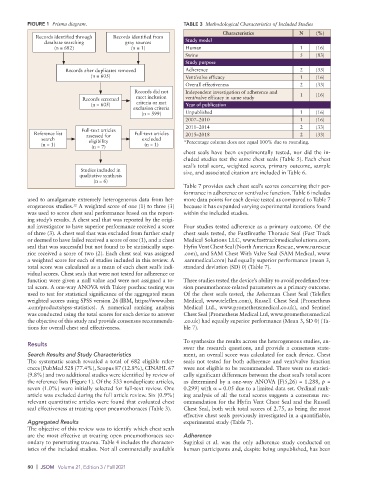
FIGURE 1  Prisma diagram.                          TABLE 3  Methodological Characteristics of Included Studies
                                                                          Characteristics          N    (%)
             Records identified through   Records identified from
               database searching         gray sources        Study model
                   (n = 682)                (n = 1)           Human                                1    (16)
                                                              Swine                                5    (83)
                                                              Study purpose
                      Records after duplicates removed        Adherence                            2    (33)
                               (n = 605)                      Vent/valve efficacy                  1    (16)
                                                              Overall effectiveness                2    (33)
                                             Records did not   Independent investigation of adherence and    1  (16)
                            Records screened   meet inclusion   vent/valve efficacy in same study
                               (n = 605)      criteria or met   Year of publication
                                             exclusion criteria
                                               (n = 599)      Unpublished                          1    (16)
                                                              2007–2010                            1    (16)
                                                              2011–2014                            2    (33)
                            Full-text articles
            Reference list   assessed for    Full-text articles   2015–2018                        2    (33)
               search         eligibility      excluded
              (n = 1)          (n = 7)          (n = 1)      *Percentage column does not equal 100% due to rounding.
                                                             chest seals have been experimentally tested, nor did the in-
                                                             cluded studies test the same chest seals (Table 5). Each chest
                                                             seal’s total score, weighted scores, primary outcome, sample
                           Studies included in               size, and associated citation are included in Table 6.
                           qualitative synthesis
                                (n = 6)
                                                             Table 7 provides each chest seal’s scores concerning their per-
                                                             formance in adherence or vent/valve function. Table 6 includes
          used to amalgamate extremely heterogeneous data from het-  more data points for each device tested as compared to Table 7
          erogeneous studies.  A weighted score of one (1) to three (3)   because it has expanded varying experimental iterations found
                         12
          was used to score chest seal performance based on the report-  within the included studies.
          ing study’s results. A chest seal that was reported by the origi-
          nal investigator to have superior performance received a score   Four studies tested adherence as a primary outcome. Of the
          of three (3). A chest seal that was excluded from further study   chest seals tested, the FastBreathe Thoracic Seal (Fast Track
          or deemed to have failed received a score of one (1), and a chest   Medical Solutions LLC, www.fasttrackmedicalsolutions.com,
          seal that was successful but not found to be statistically supe-  Hyfin Vent Chest Seal (North American Rescue, www.narescue

          rior received a score of two (2). Each chest seal was assigned   .com), and SAM Chest With Valve Seal (SAM Medical, www
          a weighted score for each of studies included in this review. A   .sammedical.com) had equally superior performance (mean 3,
          total score was calculated as a mean of each chest seal’s indi-  standard deviation (SD) 0) (Table 7).
          vidual scores. Chest seals that were not tested for adherence or
          function were given a null value and were not assigned a to-  Three studies tested the device’s ability to avoid predefined ten-
          tal score. A one-way ANOVA with Tukey posthoc testing was   sion pneumothorax-related parameters as a primary outcome.
          used to test for statistical significance of the aggregated mean   Of the chest seals tested, the Asherman Chest Seal (Teleflex

          weighted scores using SPSS version 26 (IBM, https://www.ibm   Medical, www.teleflex.com), Russell Chest Seal (Prometheus
          .com/products/spss-statistics). A numerical ranking analysis   Medical Ltd.,  www.prometheusmedical.co.uk), and Sentinel
          was conducted using the total scores for each device to answer   Chest Seal (Prometheus Medical Ltd, www.prometheusmedical
          the objective of this study and provide consensus recommenda-  .co.uk) had equally superior performance (Mean 3, SD 0) (Ta-
          tions for overall chest seal effectiveness.        ble 7).

                                                             To synthesize the results across the heterogeneous studies, an-
          Results
                                                             swer the research questions, and provide a consensus state-
          Search Results and Study Characteristics           ment, an overall score was calculated for each device. Chest
          The systematic search revealed a total of 682 eligible refer-  seals not tested for both adherence and vent/valve function
          ences [PubMed 528 (77.4%), Scopus 87 (12.8%), CINAHL 67   were not eligible to be recommended. There were no statisti-
          (9.8%) and two additional studies were identified by review of   cally significant differences between the chest seal’s total score
          the reference lists (Figure 1). Of the 533 nonduplicate articles,   as determined by a one-way ANOVA [F(5,26) = 1.288, p =
          seven (1.0%) were initially selected for full-text review. One   0.299] with α = 0.05 due to a limited data set. Ordinal rank-
          article was excluded during the full article review. Six (0.9%)   ing analysis of all the total scores suggests a consensus rec-
          relevant quantitative articles were found that evaluated chest   ommendation for the Hyfin Vent Chest Seal and the Russell
          seal effectiveness at treating open pneumothoraces (Table 3).  Chest Seal, both with total scores of 2.75, as being the most
                                                             effective chest seals previously investigated in a quantifiable,
          Aggregated Results                                 experimental study (Table 7).
          The objective of this review was to identify which chest seals
          are the most effective at treating open pneumothoraces sec-  Adherence
          ondary to penetrating trauma. Table 4 includes the character-  Supinksi et al. was the only adherence study conducted on
          istics of the included studies. Not all commercially available   human participants and, despite being unpublished, has been


          80  |  JSOM   Volume 21, Edition 3 / Fall 2021

