


Page 81 - JSOM Fall 2021
P. 81
The  authors intended  to  systematically  review  the  available   Study Selection and Data Collection
              evidence in the literature concerning chest seal adherence and   Studies were placed in the Rayyan QCRI (https://www.rayyan
              the ability to prevent tension pneumothoraces in patients with   .ai/) web-based systematic review application.  A blinded
                                                                                                      11
              penetrating chest trauma.                          initial screening was conducted by two investigators (RP, PA)
                                                                 using titles and abstracts,  based on inclusion and exclusion
                                                                 criteria in Table 2. For example, qualitative case reports of
              Research Question
                                                                 chest seals for penetrating chest trauma and articles in which
              The goal was to answer the following questions concerning   chest seals were applied for postoperative complications were
              chest seals when used to treat an open pneumothorax caused   excluded. A third blinded reviewer (MQ) was a tiebreaker on
              by penetrating trauma: 1) Which chest seals have superior ad-  two articles, and one was excluded for being a qualitative re-
              herence to skin as compared to other commercially available   view as it was an article discussing chest seal use in austere
              chest seals? 2) Which chest seals have a superior ability to pre-  environments. A full-text review of the remaining articles by
              vent tension pneumothoraces, as compared to other commer-  two investigators (RP, MQ) was conducted based on exclusion
              cially available chest seals?                      criteria. One study was excluded for being a qualitative update
                                                                 to treatment guidelines (Figure 1).
              Methods
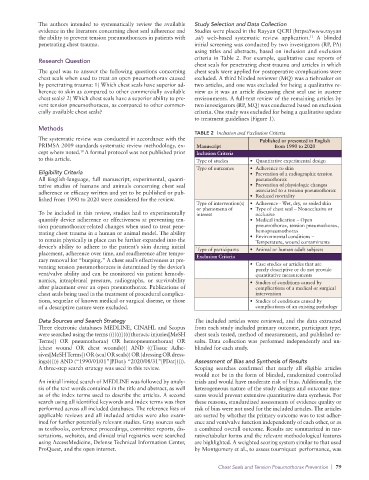
                                                                 TABLE 2  Inclusion and Exclusion Criteria
              The systematic review was conducted in accordance with the              Published or presented in English
              PRIMSA 2009 standards systematic review methodology, ex-  Manuscript         from 1990 to 2020
                           10
              cept where noted. A formal protocol was not published prior   Inclusion Criteria
              to this article.                                   Type of studies   •  Quantitative experimental design
                                                                 Type of outcomes  •  Adherence to skin
              Eligibility Criteria                                                 •  Prevention of a radiographic tension
              All English-language, full manuscript, experimental, quanti-           pneumothorax
              tative studies of humans and animals concerning chest seal           •  Prevention of physiologic changes
              adherence or efficacy written and yet to be published or pub-          associated to a tension pneumothorax
              lished from 1990 to 2020 were considered for the review.             •  Reduced mortality
                                                                 Type of intervention(s)  •  Adherence - Wet, dry, or soiled skin
                                                                 or phenomena of   •  Type of chest seal – Nonocclusive or
              To be included in this review, studies had to experimentally   interest  occlusive
              quantify device adherence or effectiveness at preventing ten-        •  Medical indication – Open
              sion pneumothorax-related changes when used to treat pene-             pneumothorax, tension pneumothorax,
              trating chest trauma in a human or animal model. The ability           hemopneumothorax
              to remain physically in place can be further expanded into the       •  Environmental conditions –
                                                                                     Temperature, wound contaminants
              device’s ability to adhere to the patient’s skin during initial   Type of participants  •  Animal or human adult subjects
              placement, adherence over time, and readherence after tempo-  Exclusion Criteria
              rary removal for “burping.” A chest seal’s effectiveness at pre-
              venting tension pneumothoraces is determined by the device’s         •  Case studies or articles that are
                                                                                     purely descriptive or do not provide
              vent/valve ability and can be monitored via patient hemody-            quantitative measurements
              namics, intrapleural pressure, radiographs, or survivability         •  Studies of conditions caused by
              after placement over an open pneumothorax. Publications of             complications of a medical or surgical
              chest seals being used in the treatment of procedural complica-        intervention
              tions, sequelae of known medical or surgical disease, or those       •  Studies of conditions caused by
              of a descriptive nature were excluded.                                 complications of an existing pathology

              Data Sources and Search Strategy                   The included articles were reviewed, and the data extracted
              Three electronic databases MEDLINE, CINAHL and Scopus   from each study included primary outcome, participant type,
              were searched using the terms ((((((((((((thoracic injuries[MeSH   chest seals tested, method of measurement, and published re-
              Terms]) OR pneumothorax) OR hemopneumothorax) OR   sults. Data collection was performed independently and un-
              (chest wound OR chest wounds))) AND (((Tissue Adhe-  blinded for each study.
              sives[MeSH Terms]) OR (seal OR seals)) OR (dressing OR dress-
              ings)))))) AND (“1990/01/01”[PDat]: “2020/08/31”[PDat])))).   Assessment of Bias and Synthesis of Results
              A three-step search strategy was used in this review.  Scoping searches confirmed that nearly all eligible articles
                                                                 would not be in the form of blinded, randomized controlled
              An initial limited search of MEDLINE was followed by analy-  trials and would have moderate risk of bias. Additionally, the
              sis of the text words contained in the title and abstract, as well   heterogeneous nature of the study designs and outcome mea-
              as of the index terms used to describe the articles. A second   sures would prevent extensive quantitative data synthesis. For
              search using all identified keywords and index terms was then   these reasons, standardized assessments of evidence quality or
              performed across all included databases. The reference lists of   risk of bias were not used for the included articles. The articles
              applicable reviews and all included articles were also exam-  are sorted by whether the primary outcome was to test adher-
              ined for further potentially relevant studies. Gray sources such   ence and vent/valve function independently of each other, or as
              as textbooks, conference proceedings, committee reports, dis-  a combined overall outcome. Results are summarized in nar-
              sertations, websites, and clinical trial registries were searched   rative/tabular forms and the relevant methodological features
              using AccessMedicine, Defense Technical Information Center,   are highlighted. A weighted scoring system similar to that used
              ProQuest, and the open internet.                   by Montgomery et al., to assess tourniquet  performance, was

                                                                        Chest Seals and Tension Pneumothorax Prevention  |  79

