


Page 122 - JSOM Fall 2021
P. 122
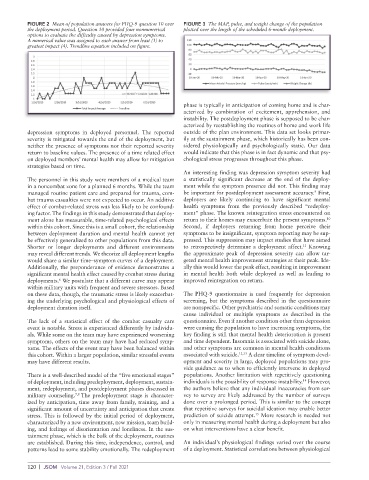
FIGURE 2  Mean of population answers for PHQ-9 question 10 over   FIGURE 3  The MAP, pulse, and weight change of the population
          the deployment period. Question 10 provided four nonnumerical   plotted over the length of the scheduled 6-month deployment.
          options to evaluate the difficulty caused by depression symptoms.
          A numerical value was assigned to each answer from least (1) to
          greatest impact (4). Trendline equation included on figure.


                                                             phase is typically in anticipation of coming home and is char-
                                                             acterized by combination of excitement, apprehension, and
                                                             instability. The postdeployment phase is supposed to be char-
                                                             acterized by reestablishing the routines of home and work life
          depression symptoms in deployed personnel. The reported   outside of the plan environment. This data set looks primar-
          severity is mitigated towards the end of the deployment, but   ily at the sustainment phase, which historically has been con-
          neither the presence of symptoms nor their reported severity   sidered physiologically and psychologically static. Our data
          return to baseline values. The presence of a time related effect   would indicate that this phase is in fact dynamic and that psy-
          on deployed members’ mental health may allow for mitigation   chological stress progresses throughout this phase.
          strategies based on time.
                                                             An interesting finding was depression symptom severity had
          The personnel in this study were members of a medical team   a statistically significant decrease at the end of the deploy-
          in a noncombat zone for a planned 6 months. While the team   ment while the symptom presence did not. This finding may
                                                                                                        9
          managed routine patient care and prepared for trauma, com-  be important for postdeployment assessment accuracy.  First,
          bat trauma casualties were not expected to occur. An additive   deployers are likely continuing to have significant mental
          effect of combat-related stress was less likely to be confound-  health symptoms from the previously described “redeploy-
          ing factor. The findings in this study demonstrated that deploy-  ment” phase. The known reintegration stress encountered on
                                                                                                            10
          ment alone has measurable, time-related psychological effects   return to their homes may exacerbate the present symptoms.
          within this cohort. Since this is a small cohort, the relationship   Second, if deployers returning from home perceive their
          between deployment duration and mental health cannot yet   symptoms to be insignificant, symptom reporting may be sup-
          be effectively generalized to other populations from this data.   pressed. This suppression may impact studies that have aimed
                                                                                                    11
          Shorter or longer deployments and different environments   to retrospectively determine a deployment affect.  Knowing
          may reveal different trends. We theorize all deployment lengths   the approximate peak of depression severity can allow tar-
          would share a similar time–symptom curves of a deployment.   geted mental health improvement strategies at their peak. Ide-
          Additionally, the preponderance of evidence demonstrates a   ally this would lower the peak effect, resulting in improvement
          significant mental health effect caused by combat stress during   in mental health both while deployed as well as leading to
          deployments.  We postulate that a different curve may appear   improved reintegration on return.
                    6
          within military units with frequent and severe stressors. Based
          on these data, though, the traumatic stress is likely exacerbat-  The PHQ-9 questionnaire is used frequently for depression
          ing the underlying psychological and physiological effects of   screening, but the symptoms described in the questionnaire
          deployment duration itself.                        are nonspecific. Other psychiatric and somatic conditions may
                                                             cause individual or multiple symptoms as described in the
          The lack of a statistical effect of the combat casualty care   questionnaire. Even if another condition other than depression
          event is notable. Stress is experienced differently by individu-  were causing the population to have increasing symptoms, the
          als. While some on the team may have experienced worsening   key finding is still that mental health deterioration is present
          symptoms, others on the team may have had reduced symp-  and time dependent. Insomnia is associated with suicide alone,
          toms. The effects of the event may have been balanced within   and other symptoms are common in mental health conditions
          this cohort. Within a larger population, similar stressful events   associated with suicide. 12,13  A clear timeline of symptom devel-
          may have different results.                        opment and severity in large, deployed populations may pro-
                                                             vide guidance as to when to efficiently intervene in deployed
          There is a well-described model of the “five emotional stages”   populations. Another limitation with repetitively questioning
          of deployment, including predeployment, deployment, sustain-  individuals is the possibility of response instability.  However,
                                                                                                    14
          ment, redeployment, and postdeployment phases discussed in   the authors believe that any individual inaccuracies from sur-
          military counseling. 7,8  The predeployment stage is character-  vey to survey are likely addressed by the number of surveys
          ized by anticipation, time away from family, training, and a   done over a prolonged period. This is similar to the concept
          significant amount of uncertainty and anticipation that create   that repetitive surveys for suicidal ideation may enable better
                                                                                    15
          stress. This is followed by the initial period of deployment,   prediction of suicide attempt.  More research is needed not
          characterized by a new environment, new mission, team build-  only in measuring mental health during a deployment but also
          ing, and feelings of disorientation and loneliness. In the sus-  on what interventions have a clear benefit.
          tainment phase, which is the bulk of the deployment, routines
          are established. During this time, independence, control, and   An individual’s physiological findings varied over the course
          patterns lead to some stability emotionally. The redeployment   of a deployment. Statistical correlations between physiological


          120  |  JSOM   Volume 21, Edition 3 / Fall 2021

