


Page 77 - JSOM Spring 2021
P. 77
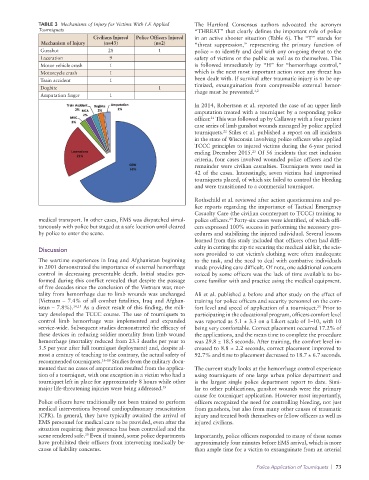
TABLE 3  Mechanisms of Injury for Victims With LE Applied   The Hartford Consensus authors advocated the acronym
              Tourniquets                                        “THREAT” that clearly defines the important role of police
                                Civilians Injured   Police Officers Injured    in an active shooter situation (Table 6). The “T” stands for
              Mechanism of Injury  (n=43)          (n=2)         “threat suppression,” representing the primary function of
              Gunshot               28               1           police – to identify and deal with any on-going threat to the
              Laceration             9                           safety of victims or the public as well as to themselves. This
              Motor vehicle crash    1                           is followed immediately by “H” for “hemorrhage control,”
              Motorcycle crash       1                           which is the next most important action once any threat has
              Train accident         1                           been dealt with. If survival after traumatic injury is to be op-
              Dogbite                                1           timized, exsanguination from compressible external hemor-
                                                                 rhage must be prevented.
                                                                                    1,2
              Amputation finger      1
                                                                 In 2014, Robertson et al. reported the case of an upper limb
                                                                 amputation treated with a tourniquet by a responding police
                                                                 officer.  This was followed up by Callaway with a four patient
                                                                      21
                                                                 case series of limb gunshot wounds managed by police applied
                                                                 tourniquets.  Stiles et al. published a report on all incidents
                                                                          22
                                                                 in the state of Wisconsin involving police officers who applied
                                                                 TCCC principles to injured victims during the 6-year period
                                                                 ending December 2015.  Of 56 incidents that met inclusion
                                                                                   23
                                                                 criteria, four cases involved wounded police officers and the
                                                                 remainder were civilian casualties. Tourniquets were used in
                                                                 42 of the cases. Interestingly, seven victims had improvised
                                                                 tourniquets placed, of which six failed to control the bleeding
                                                                 and were transitioned to a commercial tourniquet.

                                                                 Rothschild et al. reviewed after action questionnaires and po-
                                                                 lice reports regarding the importance of Tactical Emergency
                                                                 Casualty Care (the civilian counterpart to TCCC) training to
              medical transport. In other cases, EMS was dispatched simul-  police officers.  Forty-six cases were identified, of which offi-
                                                                            24
              taneously with police but staged at a safe location until cleared   cers expressed 100% success in performing the necessary pro-
              by police to enter the scene.                      cedures and stabilizing the injured individual. Several lessons
                                                                 learned from this study included that officers often had diffi-
                                                                 culty in cutting the zip tie securing the medical aid kit, the scis-
              Discussion
                                                                 sors provided to cut victim’s clothing were often inadequate
              The wartime experiences in Iraq and Afghanistan beginning   to the task, and the need to deal with combative individuals
              in 2001 demonstrated the importance of external hemorrhage   made providing care difficult. Of note, one additional concern
              control in decreasing preventable death. Initial studies per-  voiced by some officers was the lack of time available to be-
              formed during this conflict revealed that despite the passage   come familiar with and practice using the medical equipment.
              of five decades since the conclusion of the Vietnam war, mor-
              tality from hemorrhage due to limb wounds was unchanged   Ali et al. published a before and after study on the effect of
              (Vietnam – 7.4% of all combat fatalities, Iraq and Afghan-  training for police officers and security personnel on the com-
              istan – 7.8%). 14,15  As a direct result of this finding, the mili-  fort level and speed of application of a tourniquet.  Prior to
                                                                                                         25
              tary developed the TCCC course. The use of tourniquets to   participating in the educational program, officers comfort level
              control limb hemorrhage was implemented and expanded   was reported as 5.1 ± 3.3 on a Likert scale of 1–10, with 10
              service-wide. Subsequent studies demonstrated the efficacy of   being very comfortable. Correct placement occurred 17.2% of
              these devices in reducing soldier mortality from limb wound   the applications, and the mean time to complete the procedure
              hemorrhage (mortality reduced from 23.3 deaths per year to   was 29.8 ± 18.5 seconds. After training, the comfort level in-
              3.5 per year after full tourniquet deployment) and, despite al-  creased to 8.8 ± 2.2 seconds, correct placement improved to
              most a century of teaching to the contrary, the actual safety of   92.7% and time to placement decreased to 18.7 ± 6.7 seconds.
              recommended tourniquets. 16–18  Studies from the military docu-
              mented that no cases of amputation resulted from the applica-  The current study looks at the hemorrhage control experience
              tion of a tourniquet, with one exception in a victim who had a   using tourniquets of one large urban police department and
              tourniquet left in place for approximately 8 hours while other   is the largest single police department report to date. Simi-
              major life-threatening injuries were being addressed. 19  lar to other publications, gunshot wounds were the primary
                                                                 cause for tourniquet application. However most importantly,
              Police officers have traditionally not been trained to perform   officers recognized the need for controlling bleeding, not just
              medical interventions beyond cardiopulmonary resuscitation   from gunshots, but also from many other causes of traumatic
              (CPR). In general, they have typically awaited the arrival of   injury and treated both themselves or fellow officers as well as
              EMS personnel for medical care to be provided, even after the   injured civilians.
              situation requiring their presence has been controlled and the
              scene rendered safe.  Even if trained, some police departments   Importantly, police officers responded to many of these scenes
                             20
              have prohibited their officers from intervening medically be-  approximately four minutes before EMS arrival, which is more
              cause of liability concerns.                       than ample time for a victim to exsanguinate from an arterial

                                                                                     Police Application of Tourniquets  |  73

