


Page 83 - JSOM Spring 2020
P. 83
Kappa   (κ)  .87  .80  .76  .80  .59  .69  .59  .76  .74  .69       .58        .53      .46


 Quality   Score  (0–33) 35  14  13  16  12  20  15  11  16  14  15  17         18       17


 Main Findings (1)   Lower arithmetic and memorization score under DT practice trial  (2)   Higher visual monitoring score under DT practice trial compared  (3)   Higher arithmetic, memorization, and visual monitoring score  under DT post-practice trials compared to ST* (1)   Mean velocity in antero-posterior direction slower under DT than  (2)   No changes in reaction time between ST and DT (prefatigue only)   (1)   greater peak stance hip flexion moment during unanticipated


 compared to ST*  to ST*  ST (prefatigue only) (P = .026)  (P > .05)  compared to anticipated cut (P = .002)  unanticipated and anticipated cuts  unanticipated and anticipated cuts  participants  (P = .002)  ST and DT (P = .42)  and DT (P = .13))  (P = .37)  decision performance  DT than ST*  experts (P = .41)  (P = .76)  experts (P = .02)  walking  identification  DT than ST (P < .001)  DT than ST (P < .001)


 Multitask Paradigm  (1)   SynWin Multitasking  Assessment (concurrently  perform all single-task   assessments)  (1)   Postural stance while  simultaneously completing   vigilance task (“Go/No-  Go” trigger reaction)    over 720 s  (1)   Unanticipated single-leg   cut maneuver  (1)   Tracking task and systems   monitoring  (2) T  racking task, systems   monitoring, and   resource-management  (1)   Sternberg Memory Task   and Arrow Flanker  (1) Shooting and arithmetic (2)   S


 Single-Task Paradigm  Motor Task(s): None  Cognitive Task(s):  (1) Arithmetic  (2) Memorization task  (3) Listening task  (4) Visual monitoring  Motor Task(s): (1)   Stand in bipedal shooting   position  Cognitive Task(s): None  Motor Task(s): (1)   Anticipated single-leg cut   maneuver  Cognitive Task(s):None  Motor Task(s): (1) Visual tracking task  Cognitive Task(s): None  Motor Task(s): None  Cognitive Task(s): (1) Sternberg Memory Test  (2) Arrow Flanker Task  Motor Tas


 United States Air Force cadets   (n = 1090)  Soldiers (n = 19)  Age: 31.9 ± 1.3 y  Height: 179.2 ± 1.5 cm  Weight: 80.8 ± 1.9 kg  Years of rifle shooting  experience: 12.25 ± 3.6 y  Males: 100%  Military personnel (n = 15)  Age: 20.9 ± 3.1 y  Height: 1.8 ± .1 m  Weight: 75.6 ± 11.6 kg  Males: 100%  United States Air Force ROTC   cadets (n = 10)  Age: 21.4 ± 1.0 y  Noncadets (n = 18)  Age: 19.8 ± .9 y  Males: 53.6% Iraq and Afghanistan veterans   with PTSD (n = 17)  Age: 33.5
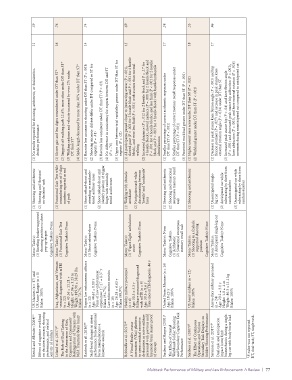
 TABLE 2  Description of Articles Selected for Review
 Participants            Iraq, Afghanistan, and Vietnam   Expert law enforcement officers   Time since mTBI diagnosis: .46 y


 Authors (Year) and Title  Barron and Rose (2017) 41  Multitasking as a Predictor  of Pilot Performance: Validity  Beyond Serial Single-Task   Assessments  Bermejo et al. (2018) 39  Fatigue does not conjointly  alter postural and cognitive  performance when standing in  a shooting position under dual-  task conditions  Brown et al. (2014) 42  Soldier-relevant loads impact  lower limb biomechanics   during anticipated and  unanticipated single-leg cutting   movements  Hardy an


                                                              Multitask Performance of Military and Law Enforcement: A Review  |  77

