


Page 88 - JSOM Winter 2019
P. 88
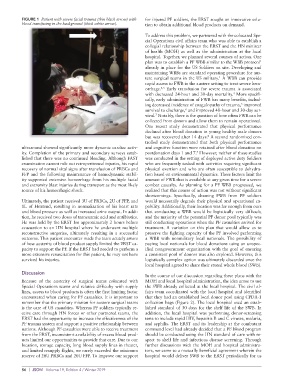
FIGURE 1  Patient with severe facial trauma (thin black arrow) with   for injured PF soldiers, the ERST sought an innovative solu-
          blood transfusing in the background (thick white arrow).  tion to obtain additional blood products on demand.
                                                             To address this problem, we partnered with the colocated Spe-
                                                             cial Operations civil affairs team who was able to establish a
                                                             collegial relationship between the ERST and the HN minister
                                                             of health (MOH) as well as the administration at the local
                                                             hospital. Together, we planned several courses of action. One
                                                             plan was to establish a PF WBB similar to the WBB protocol
                                                                                                            1
                                                             already in place for the US Soldiers on site. Developing and
                                                             maintaining WBBs are standard operating procedure for aus-
                                                             tere surgical teams in the US military.  A WBB can provide
                                                                                           1
                                                             rapid access to FWB in the austere setting to treat severe hem-
                                                             orrhage.  Early transfusion for severe trauma is associated
                                                                    2,3
                                                             with decreased 24-hour and 30-day mortality.  More specifi-
                                                                                                 4
                                                             cally, early administration of FWB has many benefits, includ-
                                                             ing decreased incidence of coagulopathy of trauma,  improved
                                                                                                     5
                                                             survival to discharge,  and improved 48-hour and 30-day sur-
                                                                              6
                                                             vival.  Notably, there is the question of how often FWB can be
                                                                 7
                                                             collected from donors and allow them to remain operational.
                                                             One recent study demonstrated that physical performance
                                                             declined after blood donation in young healthy male donors
                                                             but was recovered after 14 days.  A second randomized con-
                                                                                       8
                                                             trolled study demonstrated  that both physical performance
          ultrasound showed significantly more dynamic cardiac activ-  and cognitive function were retained after blood donation on
          ity. Completion of the primary and secondary surveys estab-  postdonation days 1 and 7.  However, neither of these studies
                                                                                  9
          lished that there was no continued bleeding. Although FAST   was conducted in the setting of deployed active duty Soldiers
          examination can not rule out retroperitoneal injuries, his rapid   who are frequently tasked with activities requiring significant
          recovery of normal vital signs after transfusion of PRBCs and   physical exertion and who are often susceptible to dehydra-
          FFP and the following maintenance of hemodynamic stabil-  tion based on environmental dynamics. These factors limit the
          ity supported extensive hemorrhage from his multiple facial   amount of FWB that is available at any given time for a severe
          and extremity blast injuries during transport as the most likely   combat casualty. As planning for a PF WBB progressed, we
          source of his hemorrhagic shock.                   realized that this course of action was not without significant
                                                             shortcomings. Specifically, drawing FWB from PF soldiers
          Ultimately, the patient received 3U of PRBCs, 2U of FFP, and   would necessarily degrade their physical and operational ca-
          1L of Hextend, resulting in normalization of his heart rate   pability. Additionally, their location was far enough from ours
          and blood pressure as well as increased urine output. In addi-  that conducting a WBB would be logistically very difficult;
          tion, he received two doses of tranexamic acid and antibiotics.   and the majority of the potential PF donor pool typically was
          He was held by the ERST for approximately 2 hours before   still conducting operations when the PF casualties arrived for
          evacuation to an HN hospital where he underwent multiple   treatment.  A variation on this  plan that would allow  us to
          reconstructive surgeries, ultimately resulting in a successful   preserve the fighting capacity of the PF involved performing
          outcome. This patient encounter made the team acutely aware   a WBB with nonmilitary local nationals. The possibility of
          of how austerity of blood product supply limited the ERST ca-  paying local nationals for blood donations using an unspec-
          pacity to support the PF. If the ERST had needed to perform a   ified nongovernment organization with the goal of ensuring
          more extensive resuscitation for this patient, he may not have   a consistent pool of donors was also explored. However, this
          survived his injuries.                             logistically complex option was ultimately discarded once the
                                                             local hospital agreed to share their stored whole blood (SWB).
          Discussion
                                                             In the course of our discussion regarding these plans with the
          Because of the austerity of surgical teams colocated with   MOH and local hospital administration, the idea arose to use
          Special Operations teams and relative difficulty with supply   the SWB already collected at the local hospital. The civil af-
          lines, access to blood products is often the first limiting factor   fairs team coordinated with the local hospital and identified
          encountered when caring for PF casualties. It is important to   that they had an established local donor pool using CPDA-1
          remember that the primary mission for austere surgical teams   collection bags (Figure 2). The local hospital used an estab-
          is the care of US casualties. Whereas PF soldiers typically re-  lished standard of 30 days for the shelf life of the SWB. In
          ceive care through HN forces or other partnered teams, the   addition, the local hospital was performing donor-screening
          ERST had the opportunity to increase the effectiveness of the   tests to include rapid HIV, hepatitis B and C viruses, malaria,
          PF trauma system and support a positive relationship between   and syphilis. The ERST and its leadership at the combatant
          nations. Although PF casualties were able to receive treatment   command level had already decided that a PF blood program
          from the ERST, inconsistent availability of excess blood prod-  should be conducted using the HN standard of care with re-
          ucts limited our opportunities to provide that care. Due to our   spect to shelf life and infectious disease screening. Through
          location, storage capacity, long blood supply lines in theater,   further discussions with the MOH and hospital administra-
          and limited resupply flights, we rarely exceeded the minimum   tors, we came to a mutually beneficial agreement wherein the
          reserve of 20U PRBCs and 20U FFP. To improve our support   hospital would deliver SWB to the ERST periodically for us


          86  |  JSOM   Volume 19, Edition 4 / Winter 2019

