


Page 85 - JSOM Winter 2019
P. 85
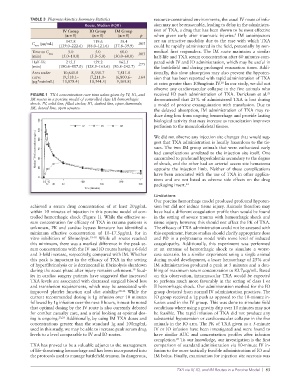
TABLE 3  Pharmacokinetics Summary Statistics       resource-constrained environments, the usual IV route of infu-
                                    Route, Median (IQR)          sion may not be reasonable, leading to delay in the administra-
                           IV Group    IO Group    IM Group      tion of TXA, a drug that has been shown to be most effective
                            (n = 5)    (n = 5)    (n = 5)  p     when given early after traumatic injuries.  IM autoinjectors
                                                                                                  9
                            147.8      119.6       39.4          are an attractive modality due to the ease with which TXA
              C max  (μg/mL)  (139.0–222.6)  (88.0–121.6)  (37.8–39.9)  .005  could be rapidly administered in the field, potentially by non-
              Time to C max   5.0       5.0        60.0   .003   medical first  responders. The IM route maintains a similar
              (min)        (5.0–10.0)  (5.0–5.0)  (30.0–60.0)    half-life and TXA serum concentration after 60 minutes com-
              Half-life     215.5      159.2      162.5          pared with IV and IO administration, which may be useful in
              (min)      (180.6–807.0) (128.9–163.6) (90.8–242.7)  .275  the battlefield and during prolonged evacuation times. Addi-
              Area under   10,641.8    8,350.7   7,811.8         tionally, this slow absorption may also prevent the hypoten-
              curve        (9,518.1–  (7,211.0–  (6,800.6–  .164  sion that has been reported with rapid administration of TXA
              (μg*min/mL)  10,878.4)  10,344.5)  9,369.8)        at rates greater than 100mg/min IV.  In our study, we did not
                                                                                            20
                                                                 observe any cardiovascular collapse in the five animals who
                                                                                                               25
              FIGURE 1  TXA concentration over time when given by IV, IO, and   received IO push administration of TXA. Derickson et al.
              IM routes in a porcine model of controlled class III hemorrhagic   demonstrated that 25% of administered TXA is lost during
              shock. IV, solid line, filled circles; IO, dashed line, open diamonds;   a model of porcine exsanguination with transfusion. Due to
              IM, dotted line, open squares.
                                                                 the delayed absorption, IM administration of TXA may re-
                                                                 duce drug loss from ongoing hemorrhage and provide lasting
                                                                 biological activity that may increase as resuscitation improves
                                                                 perfusion to the musculoskeletal tissues.
                                                                 We did not observe any injection site changes that would sug-
                                                                 gest that TXA administration is locally hazardous to the tis-
                                                                 sues. The two IM group animals that were euthanized early
                                                                 had  complications  unrelated  to  the  injection  site  itself.  One
                                                                 succumbed to profound hyperkalemia secondary to the degree
                                                                 of shock, and the other had an arterial access site hematoma
                                                                 opposite the injection limb. Neither of these complications
                                                                 have been associated with the use of TXA in other applica-
                                                                 tions and are not listed as adverse side effects on the drug
                                                                 packaging insert. 23

                                                                 Limitations
                                                                 Our porcine hemorrhage model produced profound hypoten-
              achieved a serum drug concentration of at least 20μg/mL   sion but did not induce tissue injury. Animals therefore may
              within 10 minutes of injection in this porcine model of con-  have had a different coagulation profile than would be found
              trolled hemorrhagic shock (Figure 1). While the effective se-  in the setting of severe trauma with hemorrhagic shock and
              rum concentration for efficacy of TXA in trauma patients is   tissue injury; however, this should not affect the PK of TXA.
              unknown, PK and cardiac bypass literature has identified a   The efficacy of TXA administration could not be assessed with
              minimum  effective  concentration  of  10–17.5μg/mL  for  in   this experiment. Future studies should clarify appropriate dose
                vitro inhibition of fibrinolysis. 15–18  While all routes reached   and PD in a polytrauma model with some level of induced
              this minimum, there was a marked difference in the peak se-  coagulopathy. Additionally, this experiment was performed
              rum concentrations with the IV and IO routes having a 6-fold   at an extreme of hemorrhagic shock to simulate a worst-
              and 3-fold increase, respectively, compared with IM. Whether   case scenario. In a similar experiment using a single animal
              this peak is important in the efficacy of TXA in the setting   during model development, a lesser hemorrhage of 25% and
              of hyperfibrinolysis or is detrimental in fibrinolysis shutdown   IM administration produced a peak at 5 minutes and a dou-
              during the acute phase after injury remains unknown.  Stud-  bling of maximum serum concentration to 83.7μcg/mL. Based
                                                        19
              ies in cardiac surgery patients have suggested that increased   on this observation, intramuscular TXA would be expected
              TXA levels are associated with decreased surgical blood loss   to perform much more favorably in the setting of class I or
              and transfusion requirements, which may be associated with   II hemorrhagic shock. Our administration method for the IO
              improved platelet function and clot stability. 20–22  While the   group deviated from normal IV administration practices. The
              current recommended dosing is 1g infusion over 10 minutes   IO group received a 1g push as opposed to the 10-minute in-
              followed by 1g infusion over the next 8 hours, it must be noted   fusion used in the IV group. This was done to simulate field
              that optimal dosing by the IV route is also currently debated   conditions where using a gravity drip over 10 minutes may not
              for combat casualty care, and a trial looking at optimal dos-  be feasible. The rapid infusion of TXA did not produce any
              ing is ongoing. 23,24  Additionally, by using IM TXA doses and   substantial hypotension or cardiovascular collapse in the five
              concentrations greater than the standard 1g and 100mg/mL   animals in the IO arm. The PK of TXA given as a 5- minute
              used in this study, we may be able to increase peak serum drug   IV or IO infusion have been investigated and were found to
              levels to a level comparable to IV and IO routes.  have similar AUC and concentration profiles after infusion
                                                                 completion.  To our knowledge, our investigation is the first
                                                                          26
              TXA has proved to be a valuable adjunct to the management   comparison of standard administration via 10-minute IV in-
              of life-threatening hemorrhage and has been incorporated into   fusion to the more tactically feasible administration of IO and
              the protocols used to manage battlefield trauma. In dangerous,   IM bolus. Finally, examination for injection site necrosis was

                                                                          TXA via IV, IO, and IM Routes in a Porcine Model  |  83

