


Page 49 - JSOM Winter 2019
P. 49
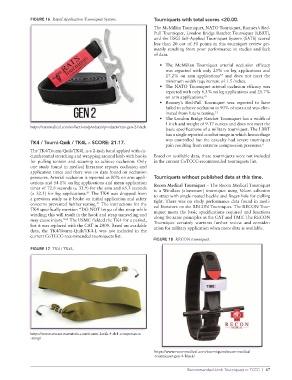
FIGURE 16  Rapid Application Tourniquet System.    Tourniquets with total scores <20.00.
                                                                 The McMillan Tourniquet, NATO Tourniquet, Ramsey’s Red-
                                                                 Pull Tourniquet, London Bridge Ratchet Tourniquet (LBRT),
                                                                 and the USGI Self-Applied Tourniquet System (SATS) scored
                                                                 less than 20 out of 50 points in this tourniquet review pri-
                                                                 marily resulting from poor performance in studies and lack
                                                                 of data.

                                                                   •  The McMillan Tourniquet arterial occlusion efficacy
                                                                     was reported with only 25% on leg applications and
                                                                                            67
                                                                     27.2% on arm applications  and does not meet the
                                                                     minimum width requirement of 1.5 inches.
                                                                   •  The NATO Tourniquet arterial occlusion efficacy was
                                                                     reported with only 8.3% on leg applications and 21.7%
                                                                     on arm applications. 67
                                                                   •  Ramsey’s Red-Pull Tourniquet was reported to have
                                                                     failed to achieve occlusion in 90% of tests and was elim-
                                                                     inated from future testing. 31
                                                                   •  The London Bridge Ratchet Tourniquet has a width of
                                                                     1 inch and weight of 9.17 ounces and does not meet the
              https://ratsmedical.com/collections/products/products/rats-gen-2-black
                                                                     basic specifications of a military tourniquet. The LBRT
                                                                     has a single reported combat usage in which hemorrhage
                                                                     was controlled but the casualty had severe tourniquet
              TK4 / Tourni-Quik / TK4L – SCORE: 21.17.
                                                                     pain resulting from extreme compression pressures. 6
              The TK4/Tourni-Quik/TK4L is a 2-inch band applied with cir-
              cumferential stretching and wrapping around limb with hooks   Based on available data, these tourniquets were not included
              for pulling tension and securing to achieve occlusion. Only   in the current CoTCCC-recommended tourniquets list.
              one study found in medical literature reports occlusion and
              application times and there was no data found on occlusion
              pressures. Arterial occlusion is reported as 80% on arm appli-  Tourniquets without published data at this time.
              cations and 54.1% on leg applications and mean application   Recon Medical Tourniquet – The Recon Medical Tourniquet
              times of 72.8 seconds (± 33.9) for the arm and 65.3 seconds   is a Windlass (aluminum) tourniquet using Velcro adhesion
              (± 32.5) for leg applications.  The TK4 was dropped from   to strap with single routed buckle and finger-hole for pulling
                                     67
              a previous study as it broke on initial application and safety   tight. There was no study performance data found in medi-
                                         31
              concerns prevented further testing.  The instructions for the   cal literature on the RECON Tourniquet. The RECON Tour-
              TK4 specifically mention “DO NOT let go of the strap while   niquet meets the basic specifications required and functions
              winding; this will result in the hook and strap unraveling and   along the same principles as the CAT and TMT. The RECON
                            64
              may cause injury.”  The USMC fielded the TK4 for a period,   Tourniquet certainly warrants further review and consider-
              but it was replaced with the CAT in 2009. Based on available   ation for military application when more data is available.
              data, the TK4/Tourni-Quik/TK4-L was not included in the
              current CoTCCC-recommended tourniquets list.
                                                                FIGURE 18  RECON tourniquet.

              FIGURE 17  TK4 / TK4L.


              https://www.rescue-essentials.com/tourni-kwik-4-tk4-compression
              -strap/


                                                                 https://www.reconmedical.com/tourniquets/recon-medical
                                                                 -tourniquet-gen-4-black/

                                                                              Recommended Limb Tourniquets in TCCC  |  47

