


Page 119 - JSOM Winter 2019
P. 119
Step 3: Evaluation                                 We identified the following four points as the most essential to
              Evaluations are necessary to assess whether a set training goal   enhance training efficiency:
              was achieved completely or only partially and to monitor the
              performance. The test has to be based on the previously con-  1.  During the learning phase, skills training must start with
              ducted trainings, with clear, unambiguous, and openly com-  a perfect example set by a proficient cadre, followed by
              municated parameters for passing or failing. The unsatisfying   step-by-step, hands-on, skill training by the students in an
              performance has to then be analyzed by the instructor—here   optimal environment and with all equipment to develop the
              it is crucial to ask WHY the student did not perform as ex-  aptitude.
              pected (Figure 3).                                 2.  In the learning and consolidation phases, it is crucial that
                                                                   only one way is correct, the proper equipment is available,
              Testing can vary from practically to verbally or written and   and all instructors are 100% standardized in how the skills
              can be conducted on an individual or a group level.  are taught and performed.
                                                                 3.  Do not move on to the application phase before the consol-
              Any grading scale will work as long as the students understand   idation phase is fully completed and the student skill profi-
              their ranking based on their performance.            ciencies meet standards.
                                                                 4.  If time is not sufficient to properly go through all phases of
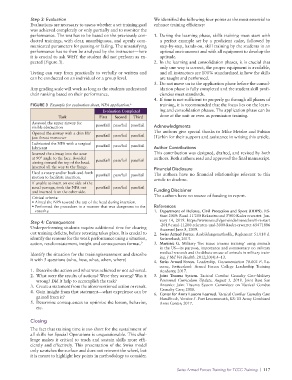
              FIGURE 3  Example for evaluation sheet, NPA application. 6  training, it is recommended that the focus lies on the learn-
                                           Evaluation Completed    ing and consolidation phases. The application phase can be
                         Task             First  Second  Third     done at the unit or even as premission training.
              Assessed the upper airway for
              visible obstruction        pass/fail pass/fail pass/fail  Acknowledgments
              Opened the airway with a chin lift/  pass/fail pass/fail pass/fail  The authors give special thanks to Mike Hetzler and Fabian
              jaw thrust maneuver                                Hürbin for their support and assistance in writing this article.
              Lubricated the NPA with a surgical   pass/fail pass/fail pass/fail
              lubricant                                          Author Contributions
              Inserted the airway into the nose                  This contribution was designed, drafted, and revised by both
              at 90° angle to the face. Avoided   pass/fail pass/fail pass/fail  authors. Both authors read and approved the final manuscript.
              aiming toward the top of the head.
              Inserted all the way to the flange.                Financial Disclosure
              Used a rotary and/or back-and-forth                The authors have no financial relationships relevant to this
              motion to facilitate insertion.  pass/fail pass/fail pass/fail  article to disclose.
              If unable to insert on one side of the
              nasal passage, took the NPA out   pass/fail pass/fail pass/fail
              and inserted it on the other side.                 Funding Disclaimer
              Critical criteria:                                 The authors have no source of funding to report.
              • Aimed the NPA toward the top of the head during insertion.
              •  Performed the procedure in a manner that was dangerous to the   References
               casualty.                                         1.  Department of Defense, Civil Protection and Sport (DDPS). RS-
                                                                   Start 2019: Rund 11’200 Rekruten und 3’000 Kader erwartet. Jan-
                                                                   uary 14, 2019. https://www.nau.ch/gemeinde/menschen/1-rs-start
              Step 4: Consequences                                 -2019-rund-11200-rekruten-und-3000-kader-erwartet-65471886
              Underperforming students require additional time for clearing   Accessed June 8, 2019.
              out training deficits, before retesting takes place. It is crucial to   2.  Swiss Armed Forces. Ausbildungsmethodik, Reglement 51.018 d.
              identify the reasons for the weak performance using a situation,   Switzerland; 2015.
              action, result—statement, insight and consequences format. 9  3.  Martinic G. Military ‘live tissue trauma training’ using animals
                                                                   in the US—its purpose, importance and commentary on military
              Identify the situation for the training/assessment and describe   medical research and the debate on use of animals in military train-
                                                                   ing. J Mil Vet Health. 2012;20(4):4–13.
              it with 5 questions (who, how, what, when, where)  4.  Swiss Armed Forces. Leadership, Documentation 70.002 E. Lu-
                                                                   cerne, Switzerland: Armed Forces College Leadership Training
              1.  Describe the action and what was achieved or not achieved.  Academy; 2017.
              2.  What were the results of actions? Were they wrong? Was it   5.  Joint Trauma System.  Tactical Combat Casualty Care-Military
                wrong? Did it help to accomplish the task?         Personnel Curriculum Update, August 1, 2018. Joint Base San
              3.  Create a statement from the aforementioned action or result.  Antonio: Joint Trauma System Committee on Tactical Combat
              4.  Gain insight from that statement—what experience can be   Casualty Care; 2018.
                gained from it?                                  6.  Center for Army Lessons Learned. Tactical Combat Casualty Care
                                                                   Handbook, Version 5. Fort Leavenworth, KS: US Army Combined
              5.  Determine consequences to optimize the lesson, behavior,   Arms Center; 2017.
                etc.

              Closing
              The fact that training time is too short for the sustainment of
              all skills for Special Operations is unquestionable. This chal-
              lenge makes it critical to teach and sustain skills more effi-
              ciently and effectively. This presentation of the Swiss model
              only scratches the surface and does not reinvent the wheel, but
              it is meant to highlight key points in methodology to consider.

                                                                          Swiss Armed Forces Training for TCCC Training  |  117

