


Page 123 - JSOM Winter 2019
P. 123
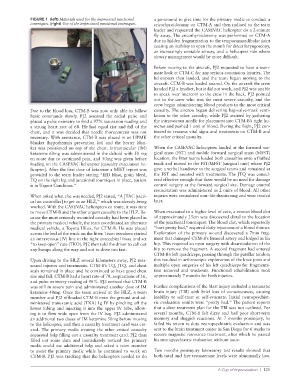
FIGURE 1  (left) Materials used for the improvised junctional   a go-around to give time for the primary medic to conduct a
              tourniquet. (right) Use of the improvised junctional tourniquet.  cricothyroidotomy on CTM-A and then radioed to the team
                                                                 leader and requested the CASEVAC helicopter do a 2-minute
                                                                 fly away. The cricothyroidotomy was performed on CTM-A
                                                                 due to hidden fragmentation to the temporomandibular joint
                                                                 causing an inability to open the mouth for direct laryngoscopy,
                                                                 an increasingly unstable airway, and a helicopter ride where
                                                                 airway management would be more difficult.

                                                                 Before moving to the aircraft, PJ2 requested to have a team-
                                                                 mate look at CTM-C for any serious concussion injuries. The
                                                                 helicopters then landed, and the team began moving to the
                                                                 aircraft. CTM-B was loaded second. On the aircraft the crew
                                                                 handed PJ2 a headset, but it did not work, and PJ2 was unable
                                                                 to speak over intercom to the crew in the back. PJ2 pointed
                                                                 out to the crew who was the most severe casualty, and the
                                                                 crew began administering blood products to the most critical
              Due to the blood loss, CTM-B was now only able to follow   casualty. The aircrew began delivering bag-valve-mask venti-
              basic commands slowly. PJ2 assessed the radial pulse and   lation to the other casualty, while PJ2 assisted by gathering
              placed a pulse oximetry to find a 97% saturation reading and   the intraosseous needle for placement into CTM-B’s right hu-
              a strong heart rate of 68. He had equal rise and fall of the   merus and pushed 1 unit of blood. During the flight, PJ2 con-
              chest, and it was decided that needle thoracentesis was not   tinued to reassess vital signs and treatments on CTM-B and
              necessary. With assistance, CTM-B was placed in an HPMK   the other critical casualty.
              blanket  (hypothermia  prevention  kit) and  the heater  blan-
              ket was positioned on top of the chest. Intramuscular (IM)   When the CASEVAC helicopters landed at the forward sur-
              ketamine 60mg was administered in the deltoid with 50 mg   gical team (FST) and mobile forward surgical team (MFST)
              en route due to continued pain, and 50mg was given before   location, the litter teams loaded both casualties onto a flatbed
              loading on the CASEVAC helicopter [casualty evacuation he-  truck and moved to the FST/MFST (surgical unit) where PJ2
              licopter]. After the first dose of ketamine a MIST report was   gave a verbal handover to the surgical teams and remained at
              provided to the team leader stating “IED blast, groin bleed,   the FST and assisted with treatments. The JTQ was consid-
              TQ on the right leg and junctional tourniquet in place, patient   ered effective enough that there would be no need for damage
              is in Urgent Condition.”                           control surgery at the forward surgical site. Damage control
                                                                 resuscitation was administered as 2 units of blood. All other
              When asked what else was needed, PJ2 stated, “A JTAC [tacti-  injuries were considered non–life threatening and were treated
              cal air controller] to get us an HLZ,” which was already being   later.
              worked. With the CASEVAC helicopters en route, it was time
              to move CTM-B and the other urgent casualty to the HLZ. Be-  When evacuated to a higher level of care, a venous blood clot
              cause the most seriously wounded casualty had been placed in   of approximately 25cm was discovered distal to the location
              the primary medical vehicle, the team coordinated an alternate   of the junctional tourniquet. The blood clot, which reportedly
              medical vehicle, a Toyota Hilux, for CTM-B. He was placed   “hurt pretty bad,” required daily injections of a blood thinner.
              across the bed of the truck on the litter. Team members started   Exploration of the primary wound discovered a 7mm frag-
              an intravenous (IV) line in the right antecubital fossa and set   ment that damaged CTM-B’s femoral artery and lodged in his
              “to keep open” rate (TKO). PJ2 then told the driver to call out   hip. This required an open surgery with disarticulation of the
              any bumps along the way and not to drive too fast.  hip to remove the fragment. A second fragment had entered
                                                                 CTM-B’s left quadriceps, passing through the patellar tendon;
              Upon driving to the HLZ several kilometers away, PJ2 reas-  this resulted in arthroscopic exploration of the knee joint and
              sessed injuries and treatments. CTM-B’s TQ, JTQ, and chest   multiple open surgeries of his left quadriceps for fragmenta-
              seals remained in place and he continued to have good chest   tion removal and washouts. Functional rehabilitation took
              rise and fall. CTM-B had a heart rate of 70, respirations of 16,   approximately 7 months for both injuries.
              and pulse oximetry reading of 98%. PJ2 noticed that CTM-B
              was still in severe pain and administered another dose of IM   Further complications of the blast injury included a traumatic
              ketamine 40mg. Once the team arrived at the HLZ, a team   brain injury (TBI) with brief loss of consciousness, causing
              member and PJ2 offloaded CTM-B onto the ground and ad-  inability to self-treat or self-evacuate. Initial neuropsychiat-
              ministered tranexamic acid (TXA) 1g IV by pinching off the   ric evaluation results were “pretty bad.” The patient reports
              lower tubing and injecting it into the upper IV tube, allow-  that a clear treatment plan for the TBI was not outlined. For
              ing it to flow wide open from the IV bag. PJ2 administered   several months, CTM-B felt dizzy and had poor short-term
              an additional two doses of IM ketamine 50mg before moving   memory and sluggish reactions. At 7 months postinjury, he
              to the helicopter, and then a casualty treatment card was cre-  failed his return to duty neuropsychiatric evaluation and was
              ated. The primary medic treating the other critical casualty   sent to the brain treatment center in San Diego for 6 weeks to
              requested help filling out a casualty treatment card. PJ2 then   receive magnetic resonance treatment, after which he passed
              filled out some data and immediately noticed the primary   his neuropsychiatric evaluation without issue.
              medic could use additional help and asked a team member
              to assist the primary medic while he continued to work on   Two months postinjury laboratory test results showed that
              CTM-B. PJ2 was tracking that the helicopters needed to do   both total and free testosterone levels were abnormally low.

                                                                                           A Cup of Improvisation  |  121

