


Page 77 - JSOM Summer 2019
P. 77
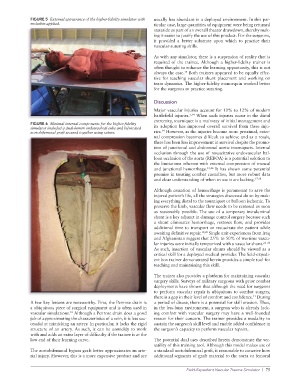
FIGURE 5  External appearance of the higher-fidelity simulator with   usually less abundant in a deployed environment. In this par-
              moleskin applied.                                  ticular case, large quantities of equipment were being returned
                                                                 stateside as part of an overall theater drawdown, thereby mak-
                                                                 ing it easier to justify the use of this product. For the surgeons,
                                                                 it provided a better substrate upon which to practice their
                                                                   vascular-suturing skills.

                                                                 As with any simulator, there is a suspension of reality that is
                                                                 required of the trainee. Although a higher-fidelity trainer is
                                                                 often thought to enhance the learning opportunity, this is not
                                                                 always the case.  Both trainers appeared to be equally effec-
                                                                             13
                                                                 tive for teaching vascular shunt placement and working on
                                                                 team dynamics. The higher-fidelity mannequin worked better
                                                                 for the surgeons to practice suturing.


                                                                 Discussion
                                                                 Major vascular injuries account for 10% to 12% of modern
                                                                 battlefield injuries. 1,14  When such injuries occur in the distal
                                                                 extremity, tourniquet is a mainstay of initial management and
              FIGURE 6  Minimal internal components for the higher-fidelity   its adoption has improved overall survival from these inju-
              simulator included a dual-lumen endotracheal tube and bifurcated
                                                                    14
              aortobifemoral graft secured together using suture.  ries.  However, as the injuries become more proximal, exter-
                                                                 nal compression becomes difficult to achieve and as a result,
                                                                 there has been less improvement in survival despite the promo-
                                                                 tion of junctional and abdominal aortic tourniquets. Internal
                                                                 occlusion through the use of resuscitative endovascular bal-
                                                                 loon occlusion of the aorta (REBOA) is a potential solution to
                                                                 the limitations inherent with external compression of truncal
                                                                 and junctional hemorrhage. 15,16  It has shown some potential
                                                                 promise in treating combat casualties, but more robust data
                                                                 and clear understanding of when to use it are lacking. 17,18
                                                                 Although cessation of hemorrhage is paramount to save the
                                                                 injured patient’s life, all the strategies discussed do so by mak-
                                                                 ing everything distal to the tourniquet or balloon ischemic. To
                                                                 preserve the limb, vascular flow needs to be restored as soon
                                                                 as reasonably possible. The use of a temporary intraluminal
                                                                 shunt is a key adjunct in damage control surgery because such
                                                                 a shunt eliminates hemorrhage, restores flow, and provides
                                                                 additional time to transport or resuscitate the patient while
                                                                 awaiting definitive repair. 19,20  Single unit experiences from Iraq
                                                                 and Afghanistan suggest that 25% to 50% of wartime vascu-
                                                                 lar injuries were initially temporized with a vascular shunt. 21–23
                                                                 As such, insertion of vascular shunts should be viewed as a
                                                                 critical skill for a deployed medical provider. The field-expedi-
                                                                 ent box trainer demonstrated herein provides a simple tool for
                                                                 teaching and maintaining this skill.
                                                                 The trainer also provides a platform for maintaining vascular
                                                                 surgery skills. Surveys of military surgeons with prior combat
                                                                 deployments have shown that although the need for surgeons
                                                                 to perform vascular repair is ubiquitous to combat surgery,
                                                                 there is a gap in their level of comfort and confidence.  During
                                                                                                          11
              A few key lessons are noteworthy. First, the Penrose drain is   a period of disuse, there is a potential for skill erosion. Thus,
              a ubiquitous piece of surgical equipment and is often used in   in the less-busy environment, a surgeon who is already lack-
              vascular simulations.  Although a Penrose drain does a good   ing comfort with vascular surgery may have a well-founded
                              12
              job of approximating the characteristics of a vein, it is less suc-  reason for their concern. The trainer provides a modality to
              cessful at mimicking an artery. In particular, it lacks the rigid   sustain the surgeon’s skill level and enable added confidence in
              structure of an artery. As such, it can be unwieldy to work   the surgeon’s capacity to perform vascular repairs.
              with and adds an extra layer of difficulty if the trainee is at the
              low end of their learning curve.                   The potential dual uses described herein demonstrate the ver-
                                                                 satility of this training tool. Although this model makes use of
              The aortobifemoral bypass graft better approximates an arte-  a standard aortobifemoral graft, it reasonable to conceive how
              rial injury. However, this is a more expensive product and are   additional segments of graft material to the aorta or femoral

                                                                              Field-Expedient Vascular Trauma Simulator  |  75

