


Page 89 - JSOM Fall 2018
P. 89
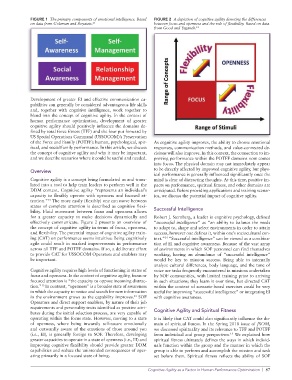
FIGURE 1 The primary components of emotional intelligence. Based FIGURE 2 A depiction of cognitive agility denoting the differences
on data from Goleman and Boyatzis. 23 between focus and openness and the role of flexibility. Based on data
from Good and Yeganeh. 13
Development of greater EI and effective communication ca
pabilities can generally be considered advantageous life skills
and, together with cognitive intelligence, work together to
blend into the concept of cognitive agility. In the context of
human performance optimization, development of greater
cognitive agility should positively influence the domains de
fined by total force fitness (TFF) and the four put forward by
US Special Operations Command (USSOCOM)’s Preservation
of the Force and Family (POTFF): human, psychological, spir As cognitive agility improves, the ability to choose emotional
itual, and social/family performance. In this article, we discuss responses, communication methods, and valueconnected de
the concept of cognitive agility and why it may be important, cisions will also improve. In this context, the connection to im
and we describe scenarios where it could be useful and needed. proving performance within the POTFF domains now comes
into focus. The physical domain may not immediately appear
Overview to be directly affected by improved cognitive agility, but phys
ical performance is generally influenced significantly once the
Cognitive agility is a concept being formulated as and trans mind is clear of distracting thoughts. At this time, positive im
lated into a tool to help train leaders to perform well in the pacts on performance, spiritual fitness, and other domains are
DDM context. Cognitive agility “represents an individual’s anticipated. Before providing applications and training scenar
capacity to flexibly operate with openness and focused at ios, we discuss the potential impact of cognitive agility.
tention.” The more easily (flexibly) one can move between
13
states of complete attention is described as cognitive flexi
bility. Fluid movement between focus and openness allows Successful Intelligence
for a greater capacity to make decisions dynamically and Robert J. Sternberg, a leader in cognitive psychology, defined
effectively communicate. Figure 2 presents an overview of “successful intelligence” as “an ability to balance the needs
the concept of cognitive agility in terms of focus, openness, to adapt to, shape and select environments in order to attain
and flexibility. The potential impact of cognitive agility train success, however one defines it, within one’s sociocultural con
ing (CAT) on performance seems intuitive: Being cognitively text.” “Successful intelligence” can be viewed as a combina
14
agile could result in marked improvements in performance tion of EI and cognitive awareness. Because of the vast array
across all TFF and POTFF domains. If so, a deliberate effort of environments in which SOF personnel can find themselves
to provide CAT for USSOCOM Operators and enablers may working, having an abundance of “successful intelligence”
be important. would be key to mission success. Being able to internally
analyze cultural differences, body language, and the tone of
Cognitive agility requires high levels of functioning in states of voice are tasks frequently encountered in missions undertaken
focus and openness. In the context of cognitive agility, focus or by SOF communities, with limited training prior to arriving
focused attention is “the capacity to oppose incoming distrac in such situations; they learn it over time, but directed CAT
tion.” In contrast, “openness” is a broader state of awareness within the context of scenariobased exercises could be very
13
in which the capacity to notice and search for new information useful for improving “successful intelligence” or integrating EI
in the environment grows as the capability improves. SOF with cognitive awareness.
13
Operators and direct support enablers, by nature of their job
requirements and personality traits identified as positive attri
butes during the initial selection process, are very capable of Cognitive Agility and Spiritual Fitness
operating within the focus state. However, moving to a state It is likely that CAT could also significantly influence the do
of openness, where being inwardly selfaware emotionally main of spiritual fitness. In the Spring 2018 issue of JSOM,
and outwardly aware of the emotions of those around you we discussed spirituality and its relevance to TFF and POTFF
(i.e., EI), is generally foreign to SOF. Therefore, developing from individual and group perspectives. We explained how
15
greater capacities to operate in a state of openness (i.e., EI) and spiritual fitness ultimately defines the ways in which individ
improving cognitive flexibility should provide greater DDM uals function within the group and the manner in which the
capabilities and reduce the unintended consequences of oper group is able to perform and accomplish the mission and task
ating primarily in a focused state of being. set before them. Spiritual fitness reflects the ability of SOF
Cognitive Agility as a Factor in Human Performance Optimization | 87

