


Page 84 - JSOM Summer 2018
P. 84
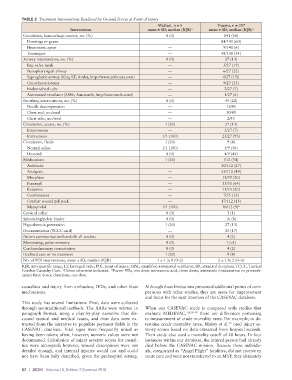
TABLE 2  Treatment Interventions Rendered by Ground Forces at Point of Injury
                                                                  Medical, n = 5           Trauma, n = 207
                              Intervention                    mean ± SD; median (IQR) a  mean ± SD; median (IQR) a
           Circulation, hemorrhage control, no. (%)                   0 (0)                  141 (68)
             Dressings or gauze                                                             84/141 (60)
             Hemostatic agent                                         —                      9/141 (6)
             Tourniquet                                               —                     48/141 (34)
           Airway interventions, no. (%)                              0 (0)                   27 (13)
             Bag-valve-mask                                           —                      5/27 (19)
             Nasopharyngeal airway                                    —                      6/27 (22)
             Supraglottic airway (King LT; Ambu, http://www.ambuusa.com)  —                  4/27 (15))
             Cricothyroidotomy                                        —                      9/27 (33)
             Endotracheal tube                                        —                       2/27 (7)
             Automated ventilator (SAVe; Automedx, http://automedx.com/)  —                   1/27 (4)
           Breathing interventions, no. (%)                           0 (0)                   45 (22)
             Needle decompression                                     —                       13/45
             Chest seal, no./total                                    —                       30/45
             Chest tube, no./total                                    —                        2/45
           Circulation, access, no. (%)                              1 (20)                   27 (13)
             Intraosseous                                             —                       2/27 (7)
             Intravenous                                            1/1 (100)                25/27 (93)
           Circulation, fluids                                       1 (20)                    9 (4)
             Normal saline                                          1/1 (100)                 5/9 (56)
             Hextend                                                  0 (0)                   4/9 (44)
           Medications                                               1 (20)                  112 (54)
             Antibiotic                                                                     30/112 (27)
             Analgesic                                                —                     55/112 (49)
             Morphine                                                 —                      11/55 (20)
             Fentanyl                                                 —                      35/55 (64)
             Ketamine                                                 —                      11/55 (20)
             Combination                                              —                      7/55 (13)
             Combat wound pill pack                                   —                     17/112 (15)
             Metoprolol                                             1/1 (100)                8/112 (9) b
           Cervical collar                                            0 (0)                    3 (1)
           Splint/sling/pelvic binder                                 0 (0)                   16 (8)
           Hypothermia prevention                                    1 (20)                   27 (13)
           Documentation (TCCC card)                                  —                       35 (17)
           Patient communication/handoff: all voxbox                  0 (0)                    4 (2)
           Monitoring, pulse oximetry                                 0 (0)                   1 (<1)
           Cardiopulmonary resuscitation                              0 (0)                    4 (2)
           Declined care or no treatment                             1 (20)                    9 (4)
           No. of POI interventions, mean ± SD; median (IQR)      1 ± 1.3; 0 (0–2)         2 ± 1.8; 2 (0–3)
          IQR, interquartile range; LT, laryngeal tube; POI, point of injury; SAVe, simplified automated ventilator; SD, standard deviation; TCCC, Tactical
          Combat Casualty Care.   Unless otherwise indicated.   Factor VIIa, one dose; tranexamic acid, three doses; antiemetic (ondansetron or prometh-
                           a
                                               b
          azine) three doses; diazepam, one dose.
          casualties and injury from ambushes, IEDs, and other blast   Although these limitations prevented additional points of com-
          mechanisms.                                        parisons with other studies, they are areas for improvement
                                                             and focus for the next iteration of the CASEVAC database.
          This study has several limitations. First, data were collected
          through nontraditional methods. The AARs were written in   When our CASEVAC study is compared with studies that
          paragraph format, using a play-by-play narrative that dis-  evaluate MEDEVAC, 3,4,15–19  there are differences pertaining
          cussed  tactical  and medical  issues,  and  then data  were  ex-  to measurement of crude mortality rates. For example, to de-
                                                                                               15
          tracted from the narrative to populate pertinent fields in the   termine crude mortality rates, Mabry et al.  used injury se-
          CASEVAC database. Vital signs were frequently noted as   verity scores based on data extracted from hospital records.
          having been taken; often, however, numeric values were not   Their study also used a mortality cutoff of 48 hours. In four
          documented. Calculation of injury severity scores for casual-  instances within our database, the injured person had already
          ties were attempted; however, wound descriptions were not   died before the CASEVAC mission. Because these individu-
          detailed enough, and internal injuries would not and could   als, categorized as “Angel Flight” fatalities, did not receive en
          not have been fully described, given the prehospital setting.   route care and were not transferred to an MTF, they ultimately


          82  |  JSOM   Volume 18, Edition 2/Summer 2018

