


Page 34 - JSOM Summer 2018
P. 34
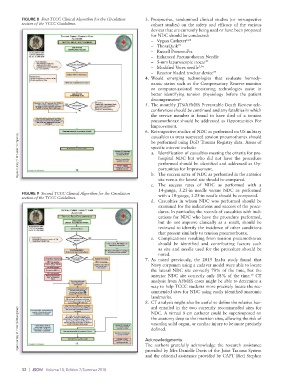
FIGURE 8  First TCCC Clinical Algorithm for the Circulation   3.  Prospective,  randomized  clinical studies  (or retrospective
          section of the TCCC Guidelines.                      cohort studies) on the safety and efficacy of the various
                                                               devices that are currently being used or have been proposed
                                                               for NDC should be conducted:
                                                               –  Vygon Catheter 6,66
                                                               –  ThoraQuik 73
                                                               –  Russell PneumoFix
                                                               –  Enhanced Pneumothorax Needle
                                                               –  5-mm laparoscopic trocar 72
                                                               –  Modified Veres needle 7,74
                                                               –  Reactor bladed trochar device 75
                                                             4.  Would  emerging  technologies  that  evaluate  hemody-
                                                               namic status such as the Compensatory Reserve monitor
                                                               or  computer-assisted  monitoring  technologies  assist  in
                                                               better identifying tension physiology before the patient
                                                               decompensates?
                                                             5.  The monthly JTS/AFMES Preventable Death Review tele-
                                                               conferences should be continued and any fatalities in which
                                                               the service member is found to have died of a tension
                                                               pneumothorax should be addressed as Opportunities For
                                                               Improvement.
                                                             6.  Retrospective studies of NDC as performed on US military
         Figure courtesy of Mr Harold Montgomery.              specific interest include:
                                                               casualties to treat suspected tension pneumothorax should
                                                               be performed using DoD Trauma Registry data. Areas of

                                                               a.   Identification of casualties meeting the criteria for pre-
                                                                  hospital NDC but who did not have the procedure
                                                                  performed should be identified and addressed as Op-
                                                                  portunities for Improvement.
                                                               b.   The success rates of NDC as performed in the anterior
                                                                  site versus the lateral site should be compared.
                                                               c.   The  success  rates  of  NDC  as  performed  with  a
                                                                  14-gauge, 3.25-in needle versus NDC as performed
          FIGURE 9  Second TCCC Clinical Algorithm for the Circulation   with a 10-gauge, 3.25-in needle should be compared.
          section of the TCCC Guidelines.
                                                               d.   Casualties in whom NDC was performed should be
                                                                  examined for the indications and success of the proce-
                                                                  dures. In particular, the records of casualties with indi-
                                                                  cations for NDC who have the procedure performed,
                                                                  but do not improve clinically as a result, should be
                                                                  reviewed to identify the incidence of other conditions
                                                                  that present similarly to tension pneumothorax.
                                                               e.   Complications resulting from tension pneumothorax
                                                                  should be identified and contributing factors such
                                                                  as site and needle used for the procedure should be
                                                                  noted.
                                                             7.  As  noted  previously,  the  2015 Inaba  study  found  that
                                                               Navy corpsmen using a cadaver model were able to locate
                                                               the lateral NDC site correctly 78% of the time, but the
                                                               anterior NDC site correctly only 18% of the time.  CT
                                                                                                         15
                                                               analysis from AFMES cases might be able to determine a
                                                               way to help TCCC students more precisely locate the rec-
                                                               ommended sites for NDC using easily identified anatomic
                                                               landmarks.
                                                             8.  CT analysis might also be useful to define the relative haz-
                                                               ard entailed  in the two  currently  recommended  sites for
         Figure courtesy of Mr Harold Montgomery.            Acknowledgments
                                                               NDC. A virtual 8-cm catheter could be superimposed on
                                                               the anatomy deep to the insertion sites, allowing the risk of
                                                               vascular, solid organ, or cardiac injury to be more precisely
                                                               defined.


                                                             The  authors  gratefully  acknowledge  the  research  assistance
                                                             provided by Mrs Danielle Davis of the Joint Trauma System
                                                             and the editorial assistance provided by CAPT (Ret) Stephen


          32  |  JSOM   Volume 18, Edition 2/Summer 2018

