


Page 39 - JSOM Summer 2018
P. 39
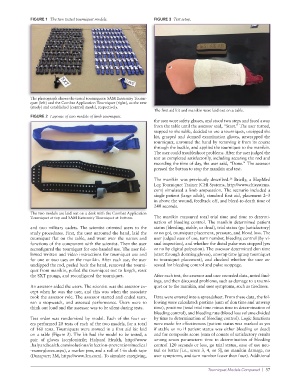
FIGURE 1  The two tested tourniquet models.        FIGURE 3  Test setup.


              The photograph shows the tested tourniquets: SAM Extremity Tourni-
              quet (left) and the Combat Application Tourniquet (right), as the new
              (study) and established (control) model, respectively.
                                                                 The first aid kit and manikin were laid out on a table.
              FIGURE 2  Layouts of two models of limb tourniquet.
                                                                 the user wore safety glasses, and stood two steps and faced away
                                                                 from the table until the assessor said, “Start.” The user turned,
                                                                 stepped to the table, decided to use a tourniquet, unzipped the
                                                                 kit, grasped and donned examination gloves, unwrapped the
                                                                 tourniquet, unrouted the band by removing it from its course
                                                                 through the buckle, and applied the tourniquet to the manikin.
                                                                 The user could troubleshoot problems. After the user judged the
                                                                 test as completed satisfactorily, including securing the rod and
                                                                 recording the time of day, the user said, “Done.” The assessor
                                                                 pressed the button to stop the manikin and test.

                                                                 The manikin was previously described.  Briefly, a HapMed
                                                                                                16
                                                                 Leg Tourniquet Trainer (CHI Systems, http://www.chisystems.
                                                                 com) simulated a limb amputation. The scenario included a
                                                                 single patient (large adult), standard first aid, placement 2–3
                                                                 in above the wound, feedback off, and bleed-to-death time of
                                                                 240 seconds.
              The two models are laid out on a desk with the Combat Application
              Tourniquet at top and SAM Extremity Tourniquet at bottom.  The manikin measured total trial time and time to determi-
                                                                 nation of bleeding control. The manikin determined patient
              and  two military  cadets.  The  scientist  oriented  users  to  the   status (bleeding, stable, or dead), trial status (go [satisfactory]
              study procedures. First, the user unrouted the band, laid the   or no go), tourniquet placement, pressure, and blood loss. The
              tourniquet flat on the table, and went over the names and   user judged ease of use, turn number, bleeding control (by vi-
              functions of the component with the scientist. Then the user   sual inspection), and whether the distal pulse was stopped (yes
              reconfigured the tourniquet for one-handed use. The user fol-  or no by digital palpation). The assessor determined don time
              lowed written and video instructions for tourniquet use and   (start through donning gloves), unwrap time (grasp tourniquet
              for one or two uses on the manikin. After each use, the user   to tourniquet placement), and checked whether the user as-
              unclipped the rod, peeled back the band, removed the tourni-  sessed for bleeding control and pulse stoppage.
              quet from manikin, pulled the tourniquet out to length, reset
              the SXT prongs, and reconfigured the tourniquet.   After each test, the assessor and user recorded data, noted find-
                                                                 ings, and then discussed problems, such as damage to a tourni-
              An assessor aided the users. The scientist was the assessor ex-  quet or to the manikin, and user symptoms, such as tiredness.
              cept when he was the user, and this was when the associate
              took the assessor role. The assessor started and ended tests,   Data were entered into a spreadsheet. From these data, the fol-
              ran a stopwatch, and assessed performance. Users were to   lowing were calculated: pretime (sum of don time and unwrap
              think out loud and the assessor was to be silent during tests.  time), posttime (total trial time minus time to determination of
                                                                 bleeding control), and bleeding rate (blood loss volume divided
              Test order was randomized by model. Each of the four us-  by time to determination of bleeding control). Logic functions
              ers performed 20 tests of each of the two models, for a total   were made for effectiveness (patient status was marked as yes
              of 160 tests. Tourniquets were stowed in a first aid kit laid   if stable or no if patient status was either bleeding or dead)
              on a table (Figure 3). The kit had the model to be tested, a   and for composite score (sum of counts of satisfactory results
              pair of gloves (acrylonitrile; Halyard Health,  http://www   among seven parameters: time to determination of bleeding
              .halyardhealth.com/solutions/infection-prevention/medical   control 120 seconds or less, go trial status, ease of use neu-
              -exam-gloves.aspx), a marker pen, and a roll of 1-in cloth tape   tral or better [i.e., score 3, 4, or 5], no manikin damage, no
              (Durapore; 3M, https://www.3m.com). To simulate caregiving,   user symptoms, and turn number fewer than four). Additional

                                                                                       Tourniquet Models Compared  |  37

