


Page 42 - JSOM Summer 2018
P. 42
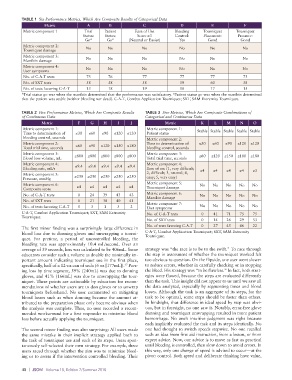
TABLE 1  Six Performance Metrics, Which Are Composite Results of Categorical Data
                   Metric            A        B             C               D           E             F
           Metric component 1       Trial   Patient      Ease of Use     Bleeding    Tourniquet   Tourniquet
                                   Status:  Status:       Score ≥3       Control:    Placement:    Pressure:
                                    Go A     Go B     (Neutral or Easier)  Yes         Good         Good
           Metric component 2:      No       No             No             No           No           No
           Tourniquet damage
           Metric component 3:      No       No             No             No           No           No
           Manikin damage
           Metric component 4:
           User symptoms            No       No             No             No           No           No
           No. of C-A-T tests        73       76            77             77           77           73
           No. of SXT tests          58       58            58             59           60           58
           No. of tests favoring C-A-T  13    18            19             18           17           15
          A  Trial status go was when the manikin determined that the performance was satisfactory.  Patient status go was when the manikin determined
                                                                         B
          that the patient was stable (neither bleeding nor dead). C-A-T, Combat Application Tourniquet; SXT, SAM Extremity Tourniquet.
          TABLE 2  Five Performance Metrics, Which Are Composite Results   TABLE 3  Five Metrics, Which Are Composite Combinations of
          of Continuous Data                                 Categorical and Continuous Data
                  Metric         F    G     H     I    J             Metric         K     L    M    N     O
           Metric component 1:                                Metric component 1:
           Time to determination of   ≤30  ≤60  ≤90  ≤120  ≤120  Patient status    Stable Stable Stable Stable Stable
           bleeding control, seconds                          Metric component 2:
           Metric component 2:    ≤60  ≤90  ≤120  ≤150  ≤180  Time to determination of   ≤30  ≤60  ≤90  ≤120  ≤120
           Total trial time, seconds                          bleeding control, seconds
           Metric component 3:    ≤800  ≤800  ≤800  ≤800  ≤800  Metric component 3:    ≤60  ≤120  ≤150  ≤180  ≤180
           Blood loss volume, mL                              Total trial time, seconds
           Metric component 4:                                Metric component 4:
           Bleeding rate, mL/s  ≤9.4  ≤9.4  ≤9.4  ≤9.4  ≤9.4  Ease of use (1, very difficult;   ≥4  ≥4  ≥4  ≥4  ≥3
           Metric component 5:                                2, difficult; 3, neutral; 4,
           Pressure, mmHg       ≥250  ≥250  ≥250  ≥250  ≥250  easy; 5, very easy)
           Metric component 6:                                Metric component 5:    No  No   No    No   No
           Composite score       ≥4   ≥4    ≥4   ≥4   ≥4      Tourniquet damage
           No. of C-A-T tests    0    24    39   43   43      Metric component 6:    No  No   No    No   No
                                                              Manikin damage
           No. of SXT tests      0    21    38   40   41
                                                              Metric component 7:
           No. of tests favoring C-A-T  0  3  1  3     2      User symptoms         No   No   No    No   No
          C-A-T, Combat Application Tourniquet; SXT, SAM Extremity    No. of C-A-T tests  0  41  71  75  75
          Tourniquet.
                                                              No. of SXT tests      0    14    26   29   53
          The first minor finding was a surprisingly large difference in   No. of tests favoring C-A-T  0  27  45  46  22
          blood loss due to donning gloves and unwrapping a tourni-  C-A-T, Combat Application Tourniquet; SXT, SAM Extremity
          quet. For pretime, a period of uncontrolled bleeding, the     Tourniquet.
          bleeding rate was approximately 10.4 mL/second. Over an
          average of 39 seconds, loss was calculated to be 406mL. Some   strategy was “the race is to be to the swift.” To race through
          educators consider such a volume as double the minimally im-  the step in assessment of whether the tourniquet worked felt
          portant amount indicating tourniquet use in the first place,   too obvious to question. On the flipside, one user went slower
          specifically, half of a 12-oz can of soda (6 oz [177mL]).  Pars-  to reduce errors, whether in carefully checking or in stopping
                                                    17
          ing loss by time segment, 59% (240mL) was due to donning   the bleed. His strategy was “to be flawless.” In fact, both strat-
          gloves, and 41% (166mL) was due to unwrapping the tour-  egies were flawed, because the steps are evaluated differently
          niquet. These points are actionable by educators for recom-  than the task. This insight did not appear to us until we saw all
          mendations of whether users are to don gloves or to unwrap   the data analyzed, especially by segmenting times and blood
          tourniquets  beforehand.  No  user  commented  on  mitigating   losses. Although the task is an aggregate of its steps, for the
          blood losses such as when donning because the amount at-  task to be optimal, some steps should be faster than others.
          tributed to the preparation phase only became obvious when   In hindsight, that difference in ideal speed by step was obvi-
          the analysis was complete. Thus, no user recorded a recom-  ous, but in foresight, no one saw it. Notably, error-free glove
          mended workaround for a first responder to minimize blood   donning and tourniquet unwrapping resulted in more patient
          loss before actually applying the tourniquet.      hemorrhage. No one’s intuitive judgment was right because
                                                             each implicitly evaluated the task and its steps identically. No
          The second minor finding was also surprising: All users made   one had thought to switch speeds stepwise. No one recalled
          the  same  mistake  in their  implicit  strategy  applied both  to   such an idea from first aid instruction, from a lesson, or from
          the task of tourniquet use and each of its steps. Users spon-  expert advice. Now, our advice is to move as fast as practical
          taneously self-selected their own strategy. For example, three   until bleeding is controlled, then slow down to avoid errors. In
          users raced through whether the aim was to minimize bleed-  this way, only one change of speed is advised to occur—at the
          ing or to assess if the intervention controlled bleeding. Their   pivot: control. Both speed and deliberate thinking have value,


          40  |  JSOM   Volume 18, Edition 2/Summer 2018

