


Page 70 - JSOM Spring 2018
P. 70
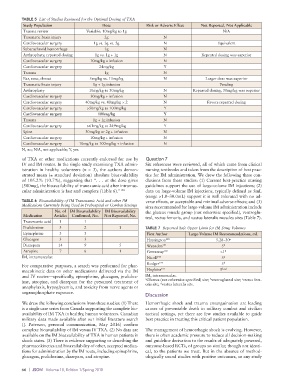
TABLE 5  List of Studies Reviewed for the Optimal Dosing of TXA
           Study Population                Dose              Risk or Adverse Effect  Not Reported, Not Applicable
           Trauma review             Variable: 10mg/kg to 1g                                 N/A
           Traumatic brain injury           2g                       N
           Cardiovascular surgery       1g vs. 3g vs. 5g             N                     Equivalent
           Subarachnoid hemorrhage          1g                       N
           Arthroplasty, repeated dosing  1g vs. 1g + 1g             N              Repeated dosing was superior
           Cardiovascular surgery     10mg/kg + infusion             N
           Cardiovascular surgery         24mg/kg                    Y
           Trauma                           1g                       N
           Ear, nose, throat          5mg/kg vs. 15mg/kg             N                Larger dose was superior
           Traumatic brain injury      1g + 1g infusion                                     Pending
           Arthroplasty               10mg/kg to 30mg/kg             N           Repeated dosing, 30mg/kg was superior
           Cardiovascular surgery     30mg/kg + infusion             N
           Cardiovascular surgery   40mg/kg vs. 40mg/kg × 2          N                 Favors repeated dosing
           Cardiovascular surgery    >50mg/kg to 100mg/kg            Y
           Cardiovascular surgery        100mg/kg                    Y
           Trauma                      1g + 1g infusion              N
           Cardiovascular surgery    >61mg/kg to 249mg/kg            Y
           Spine                    30mg/kg or 2g + infusion         N
           Cardiovascular surgery     10mg/kg + infusion             N
           Cardiovascular surgery  10mg/kg to 100mg/kg + infusion    N
          N, no; N/A, not applicable; Y, yes.
          of TXA or other medications currently endorsed for use by   Question 7
          IV and IM routes. In the single study examining TXA admin-  Six references were reviewed, all of which came from clinical
          istration in healthy volunteers (n = 3), the authors demon-  nursing textbooks and taken from the description of best prac-
          strated mean (± standard deviation) absolute bioavailability   tice for IM administration. We drew the following three con-
          of 105.2% (10.7%), suggesting that “. . . at the dose given   clusions from these studies: (1) Current best-practice nursing
          [500mg], the bioavailability of tranexamic acid after intramus-  guidelines support the use of large-volume IM injections; (2)
          cular administration is fast and complete (Table 6).” 158  data on large-volume IM injections, typically defined as 5mL
                                                             (range >1.0–30.0mL) support it is well tolerated with no ad-
          TABLE 6  Bioavailability of IM Tranexamic Acid and other IM   verse effects, or acceptable and minimal adverse effects; and (3)
          Medications Currently Being Used in Prehospital or Combat Settings  sites recommended for large-volume IM administration include
                        No. of  IM Bioavailability  IM Bioavailability   the gluteus muscle group (not otherwise specified), ventroglu-
           Medication  Articles  Confirmed, No.  Not Reported, No.  teal, rectus femoris, and vastus lateralis muscles sites (Table 7).
           Tranexamic acid  1       1
           Pralidoxime    3         2             1          TABLE 7  Reported Safe Upper Limit for IM Drug Volumes
           Epinephrine    3         3                         First Author     Large-Volume IM Recommendations, mL
           Glucagon       3         3                         Harrington                  5.28–30 a
                                                                     190
           Diazepam      14         9             5           Wynaden 191                    5 b
           Atropine       7         6             1           Greenway 192                  >1 b
          IM, intramuscular.                                  Nicoll 193                     5 b
          For comparative purposes, a search was performed for phar-  Rodger 194             5 b
          macokinetic data on other medications delivered via the IM   Hopkins 195          5 b,c,d
          and IV routes—specifically, epinephrine, glucagon, pralidox-  IM, intramuscular.
                                                              Gluteus (not otherwise specified) site;  ventrogluteal site;  rectus fem-
          ime, atropine, and diazepam for the presumed treatment of   a oris site;  vastus lateralis site.  b  c
                                                                   d
          anaphylaxis, hypoglycemia, and toxicity from nerve agents or
          organophosphate exposure.
                                                             Discussion
          We drew the following conclusions from these studies: (1) There   Hemorrhagic shock and trauma exsanguination are leading
          is a single case series from Canada supporting the complete bio-  causes  of  preventable  death  in  military  combat  and  civilian
          availability of IM TXA in healthy, human volunteers. Canadian   tactical settings, yet there are few studies available to guide
          military data made available after our initial literature search   best practice in treating this critical patient population.
          (J. Paterson, personal communication, May 2016) confirm
          complete bioavailability of IM versus IV TXA. (2) No data are   The management of hemorrhagic shock is evolving. However,
          available on the IM bioavailability of TXA in human patients in   there is often academic pressure to reduce all decision-making
          shock states. (3) There is evidence supporting or describing the   and guideline derivation to the results of adequately powered,
          pharmacokinetics and bioavailability of other, accepted medica-  outcome-based RCTs, of groups so similar, though not identi-
          tions for administration by the IM route, including epinephrine,   cal, to the patients we treat. But in the absence of method-
          glucagon, pralidoxime, diazepam, and atropine.     ologically sound studies with positive outcomes, or any study


          66  |  JSOM   Volume 18, Edition 1/Spring 2018

