


Page 75 - JSOM Spring 2018
P. 75
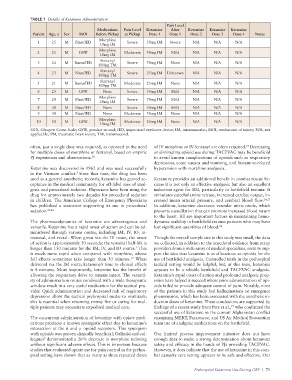
TABLE 1  Details of Ketamine Administration
                                                                      Pain Level
                                         Medications   Pain Level   Ketamine   After   Ketamine   Ketamine   Ketamine
               Patient  Age, y  Sex  MOI  Before Pickup  at Pickup  Dose 1  Dose 1  Dose 2  Dose 3  Dose 4  Notes
                                          Morphine
                 1    25    M   Blast/IED  10mg IM    Severe  50mg IM  Severe    N/A     N/A      N/A
                                          Morphine
                 2    25    M     GSW               Moderate  50mg IM   Mild     N/A     N/A      N/A
                                          10mg IM
                                          Fentanyl
                 3    24    M   Burns/IED             Severe  50mg IM   None     N/A     N/A      N/A
                                          800μg TM
                                          Fentanyl
                 4    23    M   Blast/IED             Severe  25mg IM  Unknown   N/A     N/A      N/A
                                          800μg TM
                                          Fentanyl
                 5    21    M   Burns/IED           Moderate  25mg IM   None     N/A     N/A      N/A
                                          800μg TM
                 6    25    M     GSW       None      Severe  50mg IM   Mild     N/A     N/A      N/A
                                          Morphine
                 7    20    M   Blast/IED             Severe  50mg IM   Mild     N/A     N/A      N/A
                                          20mg IM
                 8    30    M   Blast/IED   None      Severe  50mg IM   Mild     N/A     N/A      N/A
                 9    30    M   Blast/IED   None    Moderate  50mg IM   None     N/A     N/A      N/A
                                          Morphine
                10    20    M     GSW               Moderate  25mg IM   None     N/A     N/A      N/A
                                          10mg IM
              GCS, Glasgow Coma Scale; GSW, gunshot wound; IED, improvised explosive device; IM, intramuscular; MOI, mechanism of injury; N/A, not
              applicable; TBI, traumatic brain injury; TM, transmucosal.

                                                                                                       23
              often, just a single dose was required, as opposed to the need   of IV morphine or IV fentanyl are often required. Decreasing
              for multiple doses of morphine or fentanyl, based on empiric   or eliminating opioid use during TACEVAC may be beneficial
              PJ experiences and observations. 20                to avoid known complications of opioids such as respiratory
                                                                 depression, acute nausea and vomiting, and histamine-related
              Ketamine was discovered in 1962 and was used successfully   hypotension with morphine analgesia.
                                 3
              in the Vietnam conflict. Since that time, the drug has been
              used as a general anesthetic; recently, ketamine has gained ac-  Ketamine provides an additional benefit in combat rescue be-
              ceptance in the medical community for off-label uses of anal-  cause it is not only an effective analgesic but also an excellent
              gesia and procedural sedation. Physicians have been using the   induction agent for RSI, particularly in battlefield trauma: It
              drug for approximately two decades for procedural sedation   stimulates catecholamine release, increased cardiac output, in-
              in children. The American College of Emergency Physicians   creased mean arterial pressure, and cerebral blood flow. 24,25
              has published a statement  supporting its use in procedural   In addition, ketamine decreases vascular nitric oxide, which
              sedation. 21,22                                    prevents vasodilation that can promote increased blood return
                                                                 to the heart. All are important factors in maintaining hemo-
              The pharmacodynamics of ketamine are advantageous and   dynamic stability in battlefield trauma patients who may have
              versatile. Ketamine has a rapid onset of action and can be ad-  lost significant quantities of blood. 26
              ministered through various routes, including IM, IV, IO, in-
              tranasal, and rectal. When given via the IV route, the onset   Though the overall sample size in this study was small, the data
              of action is approximately 30 seconds; the terminal half-life is   we collected, in addition to the anecdotal evidence from many
                                                         5
              longer than 150 minutes for the IM, IV, and IO routes.  This   providers from a wide array of medical specialties, seem to sup-
              is much more rapid when compared with morphine, whose   port the idea that ketamine is as efficacious as opioids for the
                                                       17
              full effects sometimes take longer than 30 minutes.  When   use of battlefield analgesia. Controlled trials in the prehospital
              delivered via the IM route, ketamine’s time to clinical effects   tactical setting would be helpful, but, at this time, ketamine
              is 4 minutes. More importantly, ketamine has the benefit of   appears to be a reliable battlefield and TACEVAC analgesic.
              allowing the respiratory drive to remain intact. The versatil-  Ketamine’s rapid onset of action and profound analgesic prop-
              ity of administration routes combined with a wide therapeutic   erties have helped it succeed where prior administration of opi-
              window result in a very useful medication for the tactical pro-  oids failed to provide adequate control of pain. Notably, none
              vider. Quick administration and decreased risk of respiratory   of the patients in this study had hallucinations or emergence
              depression allow the tactical prehospital medic to multitask;   phenomenon, which has been associated with the anesthetic in-
              this is essential when returning enemy fire or caring for mul-  duction doses of ketamine. These conclusions are supported by
                                                                                                27
              tiple patients may necessitate expedited medical care.  findings of a recent study from Petz et al.,  who confirmed the
                                                                 successful use of ketamine in the current Afghanistan conflict
              The concurrent administration of ketamine with opiate medi-  examining MERT, Pararescue, and US Air Medical Evacuation
              cations produces a known synergistic effect due to ketamine’s   team use of analgesic medications on the battlefield.
              interaction at the  δ and  μ opioid receptors. This synergism
              with opioids was proven clinically beneficial; Galinski and col-  Our limited process improvement initiative does not have
              leagues  demonstrated a 26% decrease in morphine redosing   enough data to make a strong determination about ketamine
                   8

              without significant adverse effects. This is important because   safety and efficacy in the hands of PJs providing TACEVAC.
              studies that evaluated opiate use for pain control in the prehos-  However, it does indicate that the use of ketamine in this com-
              pital setting have shown that as many as three repeated doses   bat casualty care setting appears to be safe and effective. Our
                                                                                 Prehospital Ketamine Use During OEF  |  71

