


Page 80 - JSOM Spring 2018
P. 80
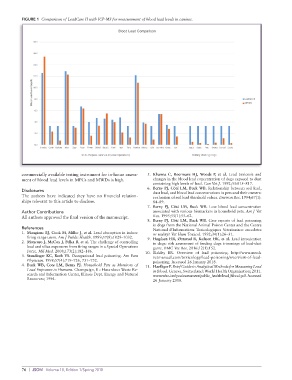
FIGURE 1  Comparison of LeadCare II with ICP-MS for measurement of blood lead levels in canines.


                                                  Blood Lead Comparison
               18.0

               16.0

               14.0

               12.0
              Blood Lead Level (ug/dl)  10.0                                                          LeadCare II


               8.0

               6.0                                                                                    ICP-MS

               4.0

               2.0

               0.0
                  Chucky Carlo Dakota  Max  Zigo  Paco  Timon  Bikkel Duco2  Fem  Iuar  Taru  RamboMarco  Lilly  Jasmine Cross  Joy  Jagus  Suzie  Roy  BrutusDenzelCapka
                                   Multi-Purpose Canines (Special Operations)    Military Working Dogs


          commercially available testing instrument for in-house assess-    5.  Khanna C, Boermans HJ, Woods P, et al. Lead toxicosis and
          ment of blood lead levels in MPCs and MWDs is high.   changes in the blood lead concentration of dogs exposed to dust
                                                                containing high levels of lead. Can Vet J. 1992;33:815–817.
                                                               6.  Berny PJ, Côté LM, Buck WB. Relationship between soil lead,
          Disclosures                                           dust lead, and blood lead concentrations in pets and their owners:
          The authors have indicated they have no financial relation-  evaluation of soil lead threshold values. Environ Res. 1994;67(1):
          ships relevant to this article to disclose.           84–89.
                                                               7.  Berny PJ, Côté LM, Buck WB. Low blood lead concentration
          Author Contributions                                  associated with various biomarkers in household pets. Am J Vet
          All authors approved the final version of the manuscript.  Res. 1995;55(1):55–62.
                                                               8.  Berny PJ, Côté LM, Buck WB. Case reports of lead poisoning
                                                                in dogs from the National Animal Poison Center and the Centre
          References                                            National d’Informations Toxicologiques Veterinaires: anecdotes
          1.  Mangione EJ, Cook M, Miller J, et al. Lead absorption in indoor   or reality? Vet Hum Toxicol. 1992;34(1):26–31.
            firing range users. Am J Public Health. 1989;57(8):1029–1032.    9.  Høgåsen HR, Ørnsrud R, Kultsen HK, et al. Lead intoxication
          2.  Mancuso J, McCoy J, Pelka B, et al. The challenge of controlling   in dogs: risk assessment of feeding dogs trimmings of lead-shot
            lead and silica exposures from firing ranges in a Special Operations   game. BMC Vet Res. 2016;12(1):152.
            Force. Mil Med. 2008;173(2):182–186.             10.  Blakley  BR.  Overview  of  lead  poisoning.  http://www.merck
          3.  Staudinger KC, Roth VS. Occupational lead poisoning. Am Fam   vetmanual.com/toxicology/lead-poisoning/overview-of-lead-
            Physician. 1998;57(4):719–726, 731–732.             poisoning. Accessed 26 January 2018.
          4.  Buck WB, Cote LM, Berny PJ.  Household Pets as Monitors of   11.  Haefliger P. Brief Guide to Analytical Methods for Measuring Lead
            Lead Exposure to Humans. Champaign, IL: Hazardous Waste Re-  in Blood. Geneva, Switzerland: World Health Organization; 2011.
            search and Information Center, Illinois Dept. Energy and Natural   www.who.int/ipcs/assessment/public_health/lead_blood.pdf. Accessed
            Resources; 1994.                                    26 January 2018.


          76  |  JSOM   Volume 18, Edition 1/Spring 2018

