


Page 68 - JSOM Spring 2018
P. 68
in nontraumatized patients undergoing urgent or emergency   performed in high-risk patient populations, including patients
          surgery. Eleven articles specifically studied the use of TXA in a   undergoing spinal surgery, pelvic surgery, arthroplasty, and or-
          prehospital trauma population or included specific discussion   thopedic surgery. Other patient populations included those with
          about TXA use in the prehospital environment. Six articles   TBI, hemoptysis, spontaneous bleeding, upper gastrointestinal
          specifically studied the use of TXA in trauma patients with   bleeding, and undergoing orthotopic liver transplantation. Of
          traumatic brain injuries (TBIs) or included specific discussion   significance, despite the heterogeneity of the pooled population,
          about TXA use in trauma patients with TBIs. Table 1 lists the   there was a consistent lack of signal of risk or harm from TXA.
          studies and their authors’ conclusions.
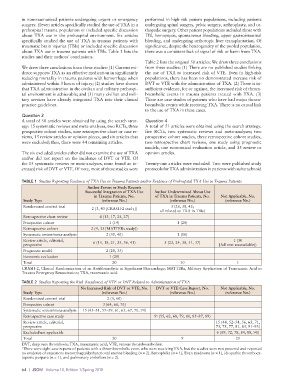
                                                             Table 2 lists the original 50 articles. We drew three conclusions
          We drew three conclusions from these studies: (1) Current evi-  from these studies: (1) There are no published studies linking
          dence supports TXA as an effective medication in significantly   the use of TXA to increased risk of VTE. Even in high-risk
          reducing mortality in trauma patients with hemorrhage when   populations, there has been no demonstrated increase risk of
          administered within 3 hours of injury; (2) studies have shown   DVT or VTE with the administration of TXA. (2) There is in-
          that TXA administration in the civilian and military prehospi-  sufficient evidence, for or against, the increased risk of throm-
          tal environment is achievable; and (3) many civilian and mili-  boembolic events in trauma patients treated with TXA. (3)
          tary services have already integrated TXA into their clinical   There are case studies of patients who have had major throm-
          practice guidelines.                               boembolic events while receiving TXA. There is no causal link
                                                             to the use of TXA in these cases.
          Question 3
          A total of 50 articles were obtained by using the search strat-  Question 4
          egy: 15 systematic reviews and meta-analyses, two RCTs, three   A total of 51 articles were obtained using the search strategy:
          prospective cohort studies, nine retrospective chart or case re-  five RCTs, two systematic reviews and meta-analyses; two
          views, 15 review articles or opinion pieces, and six articles that   prospective cohort studies, three retrospective cohort studies,
          were excluded; thus, there were 44 remaining articles.  two retrospective chart reviews, one study using prognostic
                                                             models, one economical evaluation article, and 35 review or
          The six excluded articles either did not examine the use of TXA   opinion articles.
          and/or did not report on the incidence of DVT or VTE. Of
          the 15 systematic reviews or meta-analyses, none found an in-  Twenty-one articles were excluded. Two were published study
          creased risk of DVT or VTE. Of note, most of these studies were   protocols for TXA administration in patients with subarachnoid

          TABLE 1  Studies Reporting Evidence of TXA Use in Trauma Patients and/or Evidence of Prehospital TXA Use in Trauma Patients
                                     Author Favors or Study Reports
                                    Successful Integration of TXA Use    Author Undetermined About Use
                                        in Trauma Patients, No.    of TXA in Trauma Patients, No.   Not Applicable, No.
           Study Type                      (reference No.)             (reference No.)        (reference No.)
           Randomized control trial                                     3 (26, 38, 42;
                                       2 (3, 43 [CRASH-2 study])
                                                                   all related to TXA in TBIs)
           Retrospective chart review     4 (13, 17, 23, 27)
           Prospective cohort                 1 (14)                      1 (20)
           Retrospective cohort        2 (4, 33 [MATTERs study])
           Systematic review/meta-analysis   2 (39, 40)                   1 (16)
           Review article, editorial,                                                            1 (30
           perspective                 6 (15, 18, 21, 25, 36, 41)    5 (22, 24, 30, 31, 37)  [full text unavailable])
           Prognostic model                  2 (28, 35)
           Economic evaluation                1 (29)
           Total                               20                          10                      1
          CRASH-2, Clinical Randomization of an Antifibrinolytic in Significant Hemorrhage; MATTERs, Military Application of Tranexamic Acid in
          Trauma Emergency Resuscitation; TXA, tranexamic acid.
          TABLE 2  Studies Reporting the Risk (Incidence) of VTE or DVT Related to Administration of TXA
                                  No Increased Risk of DVT or VTE, No.   DVT or VTE Case Report, No.   Not Applicable, No.
           Study Type                      (reference No.)             (reference No.)        (reference No.)
           Randomized control trial          2 (3, 60)
           Prospective cohort              3 (64, 66, 76)
           Systematic review/meta-analysis  15 (45–51, 57–59, 61, 63, 67, 70, 74)
           Retrospective case study                              9  (55, 62, 68, 79, 80, 85–87, 89)
                                                                  a
           Review article, editorial,                                                     15 (44, 52–54, 56, 65, 71,
           perspective                                                                    73, 75, 77, 81, 83, 91–93)
           Excluded/not applicable                                                        6 (69, 72, 78, 84, 88, 90)
           Total                               20                           9                     21
          DVT, deep vein thrombosis; TXA, tranexamic acid; VTE, venous thromboembolism.
          a There were eight case reports of patients with a thromboembolic event who were receiving TXA, but the studies were not powered and reported
          no evidence of causation: menorrhagia/dysfunctional uterine bleeding (n = 2), hemophilia (n = 1), Evan syndrome (n = 1), idiopathic thrombocy-
          topenic purpura (n = 1), and pulmonary embolism (n = 2).


          64  |  JSOM   Volume 18, Edition 1/Spring 2018

