


Page 45 - JSOM Spring 2018
P. 45
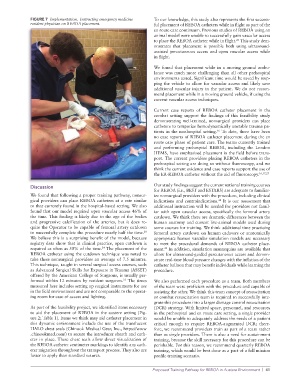
FIGURE 7  Implementation.  Instructing emergency medicine   To our knowledge, this study also represents the first success-
              resident physician on REBOA placement.             ful placement of REBOA catheters while in flight as part of the
                                                                 en route care continuum. Previous studies of REBOA using an
                                                                 animal model were unable to successfully gain vascular access
                                                                 to place the REBOA catheter while in flight.  This study dem-
                                                                                                   26
                                                                 onstrates that placement is possible both using ultrasound-
                                                                 assisted percutaneous access and open vascular access while
                                                                 in flight.

                                                                 We found that placement while in a moving ground ambu-
                                                                 lance was much more challenging than all other prehospital
                                                                 environments tested. Significant time would be saved by stop-
                                                                 ping the vehicle to allow for vascular access and likely save
                                                                 additional vascular injury to the patient. We do not recom-
                                                                 mend placement while in a moving ground vehicle, if using the
                                                                 current vascular access techniques.

                                                                 Current case reports of REBOA catheter  placement in the
                                                                 combat setting support the findings of this feasibility study
                                                                 demonstrating well-trained, nonsurgical providers can place
                                                                 catheters to temporize hemodynamically unstable trauma pa-
                                                                 tients  in  the  nonhospital  setting.   To  date,  there  have  been
                                                                                           16
                                                                 no case reports of REBOA catheter placement during the en
                                                                 route care phase of patient care. The teams currently trained
                                                                 and performing prehospital REBOA, including the London
                                                                 HEMS, have emphasized placement in the field before trans-
                                                                 port. The current providers placing REBOA catheters in the
                                                                 prehospital setting are doing so without fluoroscopy, and we
                                                                 think the current evidence and case reports support the use of
                                                                 the ER-REBOA catheter without the aid of fluoroscopy. 16,17,27

              Discussion                                         Our study findings suggest the current national training courses
                                                                 for REBOA (i.e., BEST and ESTARS) are adequate to familiar-
              We found that following a proper training pathway, nonsur-  ize nonsurgical providers with the procedure, including clinical
              gical providers can place REBOA catheters at a rate similar   indications and contraindications.  It is our assessment that
                                                                                           28
              to that currently found in the hospital-based setting. We also   additional instruction will be needed for providers not famil-
              found that our model required open vascular access 46% of   iar with open vascular access, specifically the femoral artery
              the time. This finding is likely due to the age of the bodies   cutdown. We think there are dramatic differences between the
              and progressive calcification of the arteries, but it does re-  human anatomy and current live-animal models used during
              quire the Operator to be capable of femoral artery cutdown   some courses for training. We think additional time practicing
              to successfully complete the procedure nearly half the time. 20   femoral artery cutdown on human cadavers or anatomically
              We believe this is a surprising benefit of the model, because   appropriate human vascular simulation models are necessary
              registry data show that in clinical practice, open cutdown is   to meet the procedural demands of REBOA catheter place-
                                           24
              required as often as 50% of the time.  The placement of the   ment.  In addition, simulation mannequins are available that
                                                                     25
              REBOA catheter using the cutdown technique was noted to   allow for ultrasound-guided percutaneous access and demon-
              take these nonsurgical providers an average of 7.5 minutes.   strate real-time blood pressure changes with the inflation of the
              This technique, taught in several surgical access courses, such   catheter balloon that may benefit individuals while learning the
              as Advanced Surgical Skills for Exposure in Trauma (ASSET)   procedure.
              offered by the American College of Surgeons, is usually per-
              formed within 12 minutes by resident surgeons.  The times   We also performed each procedure as a team. Both members
                                                    25
              measured here includes setting up surgical instruments for use   of the team were proficient with the procedure and capable of
              in the field environment and are not comparable to the operat-  assisting the other. We think this team concept of resuscitation
              ing room for ease of access and lighting.          or combat resuscitation team is required to successfully inte-
                                                                 grate this procedure into a larger damage control resuscitation
              As part of the feasibility project, we identified items necessary   (DCR) strategy. With limited space, personnel, and resources
              to aid the placement of REBOA in the austere setting (Fig-  in the prehospital and en route care setting, a single provider
              ure 2; Table 1). Items we think may aid catheter placement in   would be unable to adequately address the needs of a patient
              this dynamic environment include the use of the translucent   critical enough to require REBOA-augmented DCR; there-
              HALO chest seals (Chinook Medical Gear, Inc., https://www   fore, we recommend providers train as part of a team rather
              .chinookmed.com/) to secure the introducer sheath and cath-  than as single providers. There is also a need for sustainment
              eter in place. These chest seals allow direct visualization of   training, because the skill necessary for this procedure can be
              the REBOA catheter centimeter markings to identify any cath-  perishable. For this reason, we recommend quarterly REBOA
              eter migration throughout the transport process. They also are   training, which would be best done as a part of a full mission
              faster to apply than standard sutures.             profile training scenario.

                                                                Proposed Training Pathway for REBOA in Austere Environment  |  41

